Representative Aaron Van Schaick Cochrane
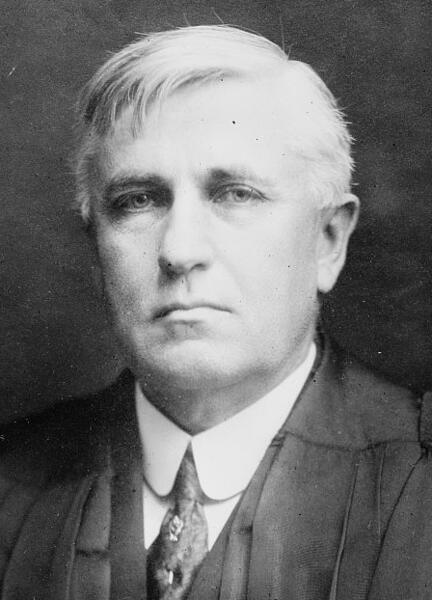
Here you will find contact information for Representative Aaron Van Schaick Cochrane, including email address, phone number, and mailing address.
| Name | Aaron Van Schaick Cochrane |
| Position | Representative |
| State | New York |
| District | 19 |
| Party | Republican |
| Status | Former Representative |
| Term Start | March 15, 1897 |
| Term End | March 3, 1901 |
| Terms Served | 2 |
| Born | March 14, 1858 |
| Gender | Male |
| Bioguide ID | C000568 |
About Representative Aaron Van Schaick Cochrane
Aaron Van Schaick Cochrane (March 14, 1858 – September 7, 1943) was a Republican U.S. Representative from New York and a longtime jurist on the Supreme Court of New York. A nephew of Isaac Whitbeck Van Schaick, he served two terms in the United States House of Representatives from 1897 to 1901, representing New York’s 19th congressional district during a significant period in American political and economic development.
Cochrane was born in Coxsackie, Greene County, New York, on March 14, 1858. He attended the local common schools and pursued further studies at the Hudson River Institute in Claverack, New York, an academy that prepared many students for collegiate education. Demonstrating early academic promise, he went on to Yale College, from which he graduated in 1879. His education at Yale provided him with a broad liberal-arts foundation and prepared him for a professional career in the law.
Immediately after his graduation in 1879, Cochrane moved to Hudson, New York, where he undertook the study of law. He was admitted to the bar in 1881 and commenced legal practice in Hudson. His abilities as a lawyer and his growing reputation in the community led to early involvement in public service. He served as city judge of Hudson in 1887 and 1888, presiding over local judicial matters, and then advanced to county office as district attorney of Columbia County from 1889 to 1892, where he was responsible for prosecuting criminal cases and advising county officials.
Cochrane’s legal and local government experience provided the foundation for his entry into national politics. A member of the Republican Party, he was elected to the United States House of Representatives as a Republican to the Fifty-fifth and Fifty-sixth Congresses, serving from March 4, 1897, to March 3, 1901. During these two terms in office, he represented New York’s 19th congressional district and participated in the legislative process at a time marked by issues arising from industrial expansion, monetary policy debates, and the aftermath of the Spanish–American War. As a member of the House of Representatives, Aaron Van Schaick Cochrane contributed to the democratic process and represented the interests of his constituents in New York. He chose not to be a candidate for renomination in 1900, thus concluding his congressional service after four years.
After leaving Congress, Cochrane returned to New York and continued his public career in the judiciary. In 1901 he was elected associate justice of the Supreme Court of New York, one of the state’s principal trial and appellate courts. He was re-elected in 1915 for another 14-year term, reflecting sustained confidence in his judicial temperament and legal acumen. In 1922 Governor Nathan L. Miller designated him Presiding Justice of the Appellate Division, elevating him to a leading role in overseeing appellate review within his department of the state’s highest intermediate court.
Cochrane resigned from the bench in January 1928, formally ending his tenure as a sitting justice, but he continued to serve the judiciary as an official referee until 1941. In this capacity he handled referred cases and special judicial matters, extending his influence in New York’s legal system well into his eighties. He spent his later years in Hudson, New York, where he had built his legal and political career. Aaron Van Schaick Cochrane died in Hudson on September 7, 1943, and was interred in Riverside Cemetery in his native Coxsackie, New York, closing a long life of public service in law and government.