Senator Aaron Harrison Cragin
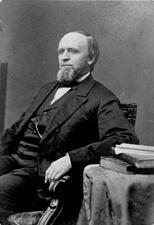
Here you will find contact information for Senator Aaron Harrison Cragin, including email address, phone number, and mailing address.
| Name | Aaron Harrison Cragin |
| Position | Senator |
| State | New Hampshire |
| Party | Republican |
| Status | Former Representative |
| Term Start | December 3, 1855 |
| Term End | March 3, 1877 |
| Terms Served | 4 |
| Born | February 3, 1821 |
| Gender | Male |
| Bioguide ID | C000852 |
About Senator Aaron Harrison Cragin
Aaron Harrison Cragin (February 3, 1821 – May 10, 1898) was an American politician who served as both a United States Representative and a United States Senator from New Hampshire. Over the course of four terms in Congress, he represented New Hampshire in the House of Representatives from 1855 to 1859 and in the Senate from 1865 to 1877, participating in the legislative process during a significant period in American history and advancing the interests of his constituents as a member of the Republican Party.
Cragin was born in Weston, Vermont, on February 3, 1821, the son of Aaron Cragin and Sarah Whitney. He completed preparatory studies in his youth before turning to the study of law. After reading law, he was admitted to the bar in Albany, New York, in 1847. Soon thereafter he moved to Lebanon, New Hampshire, where he commenced the practice of law and established the professional and community ties that would underpin his later political career.
Cragin entered public life in New Hampshire state politics. He was a member of the New Hampshire House of Representatives from 1852 to 1855, gaining legislative experience and visibility in state affairs. His service in the state legislature prepared him for national office and coincided with the turbulent political realignments of the 1850s, as sectional tensions over slavery and national policy intensified.
In 1854 Cragin was elected to the United States House of Representatives. He entered Congress as a member of the American Party and served in the Thirty-fourth Congress, then was reelected as a Republican to the Thirty-fifth Congress. His tenure in the House extended from March 4, 1855, to March 3, 1859. While in the House of Representatives, he served as chairman of the Committee on Expenditures in the Department of War during the Thirty-fourth Congress, overseeing aspects of federal military spending at a time of growing national strain. After leaving the House, he resumed the practice of law in Lebanon and returned to the New Hampshire House of Representatives in 1859. He also became active in national party affairs, serving as a delegate to the Republican National Convention in Chicago in 1860, which nominated Abraham Lincoln for the presidency, and later as a delegate to the Philadelphia loyalists’ convention in 1866, which supported Reconstruction and the Union cause.
Cragin was elected as a Republican to the United States Senate in 1864 and was reelected in 1870, serving from March 4, 1865, to March 3, 1877. His Senate career thus spanned the closing months of the Civil War, the entirety of Reconstruction, and the early years of the postwar era. As a senator from New Hampshire, he contributed to the legislative process during four terms in Congress—two in the House and two in the Senate—at a time when the nation grappled with reunification, civil rights, and economic development. In the Senate he held several important committee assignments. He was chairman of the Committee on Engrossed Bills in the Thirty-ninth Congress, ensuring the accuracy of legislation before final passage. He served on the Committee to Audit and Control the Contingent Expense of the Senate during the Fortieth and Forty-first Congresses, overseeing internal Senate expenditures. He was also a member of the Committee on Naval Affairs in the Forty-first and Forty-third Congresses, participating in oversight of the postwar Navy, and of the Committee on Railroads in the Forty-third and Forty-fourth Congresses, during a period of rapid expansion of the national rail network.
After leaving the Senate in 1877, Cragin continued in federal public service. President Rutherford B. Hayes appointed him one of the commissioners for the purchase of the Hot Springs Reservation in Arkansas, a federal effort to regulate and develop the famous thermal springs. Cragin served as chairman of this commission from 1877 to 1879, helping to shape federal policy over the reservation and its future use.
In his personal life, Cragin married Isabella Tuller. The couple had a son, Harry Wilton Cragin, who graduated from Yale University and was appointed third assistant in the United States Patent Office, reflecting the family’s continued engagement in public service and professional life. Aaron Harrison Cragin spent his later years in Washington, D.C., where he remained connected to the political and legal communities shaped by his long career.
Cragin died in Washington, D.C., on May 10, 1898, at the age of 77 years and 96 days. He was interred at School Street Cemetery in Lebanon, New Hampshire, the community where he had first established his law practice and from which he rose to state and national prominence.