Representative Aaron Matson
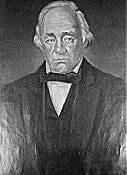
Here you will find contact information for Representative Aaron Matson, including email address, phone number, and mailing address.
| Name | Aaron Matson |
| Position | Representative |
| State | New Hampshire |
| District | -1 |
| Party | Unknown |
| Status | Former Representative |
| Term Start | December 3, 1821 |
| Term End | March 3, 1825 |
| Terms Served | 2 |
| Gender | Male |
| Bioguide ID | M000247 |
About Representative Aaron Matson
Aaron Matson (1770 – July 18, 1855) was a United States Representative from New Hampshire and a long-serving state legislator and local judicial officer in the early nineteenth century. He was born in 1770 in Plymouth, Massachusetts, during the colonial period, and came of age as the American Revolution and the formation of the new republic reshaped political life in New England. Little is recorded about his parents or early upbringing, but his subsequent public career suggests that he received sufficient education and legal or administrative training to participate actively in local and state governance.
As a young man, Matson moved from Massachusetts to Cheshire County, New Hampshire, a region that was developing rapidly in the post-Revolutionary era. Establishing himself there, he became involved in local affairs and the administration of justice. In Cheshire County he served as county judge of probate, a position that placed him in charge of matters relating to wills, estates, and guardianships. This role reflected both his standing in the community and the trust placed in him to oversee sensitive legal and financial questions affecting local families.
Matson’s state-level political career began in the New Hampshire House of Representatives, where he served multiple, often consecutive terms over more than two decades. He was a member of the New Hampshire House from 1806 to 1808, again from 1810 to 1814, and then in 1817 and 1818. During these years he participated in the legislative work of a state adjusting to the economic and political changes of the early republic, including issues of internal improvements, state finance, and the evolving party system. His repeated elections indicate that he maintained a durable base of support among his constituents.
In addition to his service in the lower house of the state legislature, Matson was a member of the New Hampshire Executive Council from 1819 to 1821. The Executive Council, a distinctive institution in New Hampshire’s government, advised the governor and shared in important executive functions such as appointments and certain financial decisions. Matson’s selection to this body underscored his prominence within state politics and his alignment with the dominant political currents of the period.
Matson advanced to national office in 1821. He was elected as a Democratic-Republican to the Seventeenth Congress and then reelected as an Adams-Clay Republican to the Eighteenth Congress, serving in the U.S. House of Representatives from March 4, 1821, to March 3, 1825. His shift in party designation reflected the broader realignment of national politics in the wake of the decline of the Federalist Party and the factionalization of the Democratic-Republicans around figures such as John Quincy Adams and Henry Clay. During his two terms in Congress, Matson represented New Hampshire at a time when debates over tariffs, internal improvements, and the balance of sectional interests were increasingly prominent, although specific details of his committee assignments and floor activity are not extensively documented.
After leaving Congress in 1825, Matson returned to New Hampshire politics and resumed his legislative career at the state level. He was again a member of the New Hampshire House of Representatives in 1827 and 1828, continuing his long record of public service. His repeated returns to the state legislature after national service suggest an ongoing engagement with local and regional issues and a sustained commitment to representing his community’s interests within the state government.
In his later years, Matson appears to have left New Hampshire, and he died in Newport, Vermont, on July 18, 1855. His family maintained connections to public life in New England. His granddaughter Ann Matson became the first wife of Edmund Burke, a New Hampshire lawyer and Democratic congressman who served in the United States House of Representatives in the mid-nineteenth century. Through both his own career and the subsequent public service of his descendants, Aaron Matson was linked to the evolving political life of New Hampshire and the broader New England region over the course of the early republic and antebellum period.