Senator Aaron Ogden
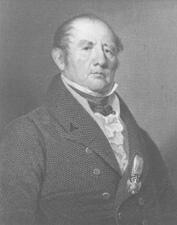
Here you will find contact information for Senator Aaron Ogden, including email address, phone number, and mailing address.
| Name | Aaron Ogden |
| Position | Senator |
| State | New Jersey |
| Party | Federalist |
| Status | Former Representative |
| Term Start | December 7, 1801 |
| Term End | March 3, 1803 |
| Terms Served | 1 |
| Born | December 3, 1756 |
| Gender | Male |
| Bioguide ID | O000041 |
About Senator Aaron Ogden
Aaron Ogden (December 3, 1756 – April 19, 1839) was an American soldier, lawyer, United States Senator, and the fifth governor of New Jersey. A member of the Federalist Party, he served one term in the United States Senate from 1801 to 1803 and later became a central figure in the landmark Supreme Court case Gibbons v. Ogden (1824), which destroyed the monopoly power of steamboats on the Hudson River and significantly expanded the interpretation of the Commerce Clause of the United States Constitution. He was also a long‑time leader in The Society of the Cincinnati and a prominent figure in New Jersey’s legal and political life. Ogden was a slaveholder.
Ogden was born in Elizabethtown, in the Province of New Jersey (now Elizabeth, New Jersey), the son of Robert Ogden, a lawyer and public official who served as Speaker of the New Jersey lower house immediately preceding the American Revolution, and Phebe (née Hatfield) Ogden. Raised in a Presbyterian family, he belonged to a politically active and militarily distinguished lineage. His older brother, Matthias Ogden (1754–1791), served as a Revolutionary War officer, and his nephew Daniel Haines would later serve twice as governor of New Jersey. Ogden graduated from the College of New Jersey (now Princeton University) in 1773 and remained there as a grammar school tutor from 1773 to 1775, just as tensions between the American colonies and Great Britain were escalating toward open conflict.
With the outbreak of the American Revolutionary War, Ogden entered military service. He was appointed a lieutenant in the 1st New Jersey Regiment, in which his brother Matthias served as lieutenant colonel. Ogden saw extensive action and held various posts during the war, rising to the rank of brigade major. In 1778, he visited the Pennsylvania home of diarist Sally Wister, who described him as “a genteel young fellow, with an aquiline nose,” a contemporary glimpse of his character and appearance. He was wounded at the siege of Yorktown in 1781, the decisive campaign that effectively ended major combat operations. In 1783, he became an original member of The Society of the Cincinnati in the state of New Jersey, an organization of Continental Army officers, and he later served as President of the New Jersey Society from 1824 until his death and as President General of The Society of the Cincinnati from 1829 until his death in 1839.
After the war, Ogden read law and was admitted to the bar in 1784, commencing practice in Elizabeth. He quickly entered public life, serving as clerk of Essex County from 1785 to 1803. In national politics, he aligned with the emerging Federalist Party and served as a presidential elector in the 1796 electoral college that elected John Adams. Ogden also sought election to the United States House of Representatives from New Jersey’s at‑large district multiple times, finishing sixth in 1800 when only the top five candidates were elected, and running again in 1803, 1804, 1806, and in both the regular and special elections of 1808, as well as in 1810, though he was never successful in securing a House seat.
Ogden’s principal federal legislative service came in the United States Senate. He was elected as a Federalist to fill the vacancy caused by the resignation of Senator James Schureman and served from February 28, 1801, to March 3, 1803. During this single term, he represented New Jersey in the upper chamber during a significant transitional period in American politics, as power shifted from the Federalists to the Jeffersonian Republicans. As a member of the Senate, Ogden participated in the legislative process and the broader democratic governance of the early republic, advocating Federalist principles and representing the interests of his New Jersey constituents. He lost his bid for re‑election in 1802, ending his brief tenure in Congress.
Following his Senate service, Ogden remained deeply involved in New Jersey state politics and public affairs. In 1803, he was elected to the New Jersey General Assembly, where he served until 1812. That same year he was elected a trustee of his alma mater, the College of New Jersey (later Princeton University), a position he held for the rest of his life, underscoring his long‑standing connection to higher education in the state. In 1812, amid widespread Federalist opposition to the War of 1812, Ogden was elected governor of New Jersey in a wave of Federalist victories across the state. He had been nominated repeatedly by his Federalist colleagues for the governorship from 1803 onward, but Republican majorities in the Assembly had previously blocked his election. As governor, he oversaw the securing of funds for the state’s military use in the war against Britain. After an unsuccessful campaign for re‑election, the Federalists lost their majority in the Assembly, and Ogden retired from elective political life. In 1813, President James Madison nominated him as a major general of the United States Army, but Ogden declined the appointment.
Parallel to his political career, Ogden became a key participant in the early development of steamboat navigation. In 1811, he built the steamboat Sea Horse to operate between Elizabeth and New York City. At that time, New York had granted a steamboat monopoly on the Hudson River to Chancellor Robert Livingston and Robert Fulton. In the 1812 case Livingston v. Van Ingen, New York courts upheld this monopoly, and in 1813 the New York State Legislature further entrenched it. In response, Ogden agreed to pay Livingston and Fulton for a ten‑year exclusive right to run his line under their monopoly. A dispute soon arose with his neighbor and rival steamboat operator, Thomas Gibbons, who began operating a competing service in violation of the statutory monopoly. Ogden sought to enjoin Gibbons from operating on New York waters, leading to the famous case Gibbons v. Ogden. In 1824, the United States Supreme Court, with arguments presented by Samuel L. Southard and Joseph Hopkinson for Ogden, Thomas Addis Emmet for Livingston’s interests, and Daniel Webster and U.S. Attorney General William Wirt for Gibbons, declared New York’s steamboat monopoly unconstitutional as an infringement on Congress’s power to regulate interstate commerce. Although Ogden himself lost the practical benefit of the monopoly, the decision became a foundational precedent in American constitutional law.
In his later years, Ogden continued to practice law and hold federal office. He moved to Jersey City in 1829 and resumed legal practice there. Financial difficulties led to his arrest for debt and confinement in a debtors’ prison, a striking reversal for a former governor and senator. He was released several months later under a special act of the New Jersey Legislature providing that no Revolutionary officer or soldier should be imprisoned for debt; the law was drafted specifically to cover his case. In 1830, Congress created the office of Collector of Customs of Jersey City expressly for him, and he was appointed to that position, which he held until his death. Throughout this period, he also continued his leadership roles in The Society of the Cincinnati.
Ogden married Elizabeth Chetwood (1766–1826), daughter of attorney John Chetwood and Mary (née Emott) Chetwood, and sister of William Chetwood, who later served as a U.S. Representative and mayor of Elizabeth. Aaron and Elizabeth Ogden were the parents of several children: Mary Chetwood Ogden (1789–1863), who married George Clinton Barber; Phebe Ann Ogden (1790–1865), who became Vice Regent of the Mount Vernon Ladies’ Association; Matthias Ogden (1792–1860), who married Lucille Robert; John Robert Ogden (1794–1845); Elias Bailey Dayton Ogden (1797–1799), who died young; Elias Bailey Dayton Ogden (1800–1865), named for his deceased brother, who married three times and served as an associate justice of the New Jersey Supreme Court from 1842 until his death; and Aaron Ogden Jr. (1803–1803), who died in infancy. Through his son Elias, Ogden was the grandfather of Frederick Beasley Ogden (1827–1893), mayor of Hoboken, New Jersey, from 1865 to 1867; Aaron Ogden (1828–1896), who married Harriet Emily Travers; and Susan Dayton Ogden (1831–1878), who married William Shepard Biddle and became the mother of U.S. Army General John Biddle.
Aaron Ogden died in Jersey City, New Jersey, on April 19, 1839, while serving as Collector of Customs. He was interred in the burial ground of the First Presbyterian Church of Elizabeth, reflecting his lifelong ties to his native community and his Presbyterian faith. His legacy is commemorated in New Jersey, including by the naming of Ogden Street in Trenton, and in the broader history of the United States through his military service in the Revolution, his tenure in the United States Senate and as governor, his leadership in The Society of the Cincinnati, and his central role in the seminal Supreme Court case Gibbons v. Ogden.