Representative Aaron Shaw
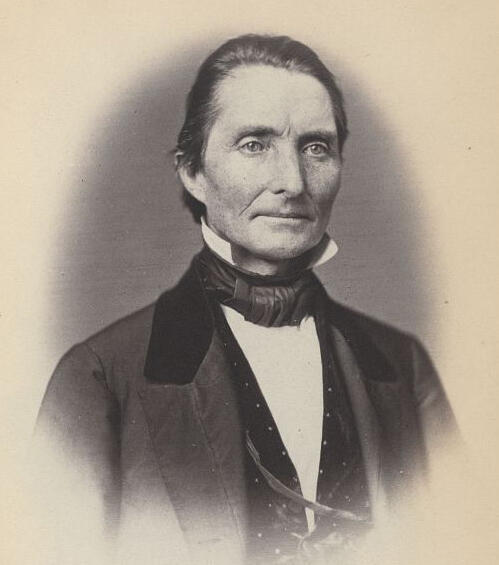
Here you will find contact information for Representative Aaron Shaw, including email address, phone number, and mailing address.
| Name | Aaron Shaw |
| Position | Representative |
| State | Illinois |
| District | 16 |
| Party | Democratic |
| Status | Former Representative |
| Term Start | December 7, 1857 |
| Term End | March 3, 1885 |
| Terms Served | 2 |
| Born | December 19, 1811 |
| Gender | Male |
| Bioguide ID | S000301 |
About Representative Aaron Shaw
Aaron Shaw was a nineteenth-century American lawyer, jurist, and politician who served as a Democratic Representative from Illinois in the United States Congress from 1857 to 1885. A member of the Democratic Party, he contributed to the legislative process during two terms in office and represented the interests of his Illinois constituents during a significant period in American history. Aaron Shaw (representative) (1811–1887) is distinct from several later individuals and fictional characters who share his name, including Aaron Shaw, an American bagpipe player in the Wicked Tinkers; Aaron Grady Shaw, an actor sometimes credited as Aaron Shaw, who appeared in the 2006 film Dirty Laundry; Aaron Shore, a fictional character in the television series Designated Survivor; and Aaron Shaw, a fictional character in the television series NCIS (Season 17, episode 7).
Aaron Shaw was born on December 19, 1811, in Goshen, Orange County, New York. He spent his early years in New York, where he received a basic education in the local schools. As a young man he pursued the study of law, a common path for ambitious men of his generation who sought advancement through the legal profession and public service. After completing his legal studies, he was admitted to the bar, which enabled him to begin a professional career that would eventually lead him into politics and the national legislature.
Following his admission to the bar, Shaw moved west to Illinois, part of the broader migration of Americans into the Old Northwest during the early and mid-nineteenth century. He settled in Lawrenceville, Lawrence County, Illinois, where he commenced the practice of law. In addition to his legal work, he became active in local affairs and built a reputation as a capable attorney and community leader. His standing in the community and his affiliation with the Democratic Party positioned him for election to public office at a time when Illinois was rapidly developing and its political institutions were still taking shape.
Shaw’s national political career began when he was elected as a Democrat to the Thirty-fifth Congress, serving as a U.S. Representative from Illinois from March 4, 1857, to March 3, 1859. His first term in the House of Representatives took place in the tense years immediately preceding the American Civil War, when debates over slavery, sectionalism, and the future of the Union dominated national politics. As a member of the House, he participated in the democratic process and contributed to the legislative work of the chamber, representing the interests of his Illinois constituents during this critical era. After the expiration of his first term, he returned to Illinois and resumed his legal and public activities.
In addition to his congressional service, Shaw continued to hold positions of responsibility in Illinois. He served as a judge of the circuit court, reflecting the confidence placed in his legal judgment and integrity. His judicial service further solidified his status as a respected figure in the state’s legal and political circles. During these years, he remained aligned with the Democratic Party, which in Illinois and nationally was grappling with the consequences of the Civil War, Reconstruction, and the shifting balance of political power in the postwar period.
Shaw returned to national office when he was elected again as a Democrat to the Forty-eighth Congress, serving from March 4, 1883, to March 3, 1885. This second term in the House of Representatives occurred during the Gilded Age, a time marked by rapid industrialization, westward expansion, and growing debates over economic policy, civil service reform, and federal authority. Once more, he took part in the legislative process and represented his Illinois district in the national legislature. His service from 1857 to 1885, though not continuous, spanned nearly three decades of American political development, from the antebellum crisis through the post–Civil War transformation of the nation.
After completing his final term in Congress in 1885, Shaw retired from national office and returned to his home in Illinois. He lived out his remaining years in Lawrenceville, where he had long been a prominent citizen. Aaron Shaw died on January 7, 1887, in Olney, Illinois. He was interred in Lawrenceville Cemetery in Lawrenceville, Lawrence County, Illinois. His career as a lawyer, judge, and Democratic Representative from Illinois placed him among the many nineteenth-century public servants who helped shape state and national institutions during a formative period in United States history.