Representative Aaron Fletcher Stevens
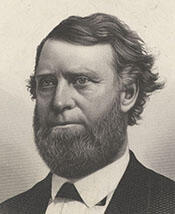
Here you will find contact information for Representative Aaron Fletcher Stevens, including email address, phone number, and mailing address.
| Name | Aaron Fletcher Stevens |
| Position | Representative |
| State | New Hampshire |
| District | 2 |
| Party | Republican |
| Status | Former Representative |
| Term Start | March 4, 1867 |
| Term End | March 3, 1871 |
| Terms Served | 2 |
| Born | August 9, 1819 |
| Gender | Male |
| Bioguide ID | S000875 |
About Representative Aaron Fletcher Stevens
Aaron Fletcher Stevens (August 9, 1819 – May 10, 1887) was a Union Army officer during the American Civil War and a two-term United States Representative from New Hampshire. A member of the Republican Party, he served in Congress from 1867 to 1871, representing his state in the House of Representatives during the critical years of Reconstruction.
Stevens was born in Londonderry, New Hampshire, on August 9, 1819. He spent his childhood in both Londonderry and nearby Peterborough, New Hampshire. He attended Pinkerton Academy in Derry, New Hampshire, receiving the education that prepared him for professional and public life. In his early years he learned the trade of machinist, a background that gave him practical experience before he turned to the study of law.
By the mid-1840s Stevens had entered the legal profession. He was admitted to the New Hampshire bar in 1845 and commenced practice in the state. Alongside his legal work he became active in public affairs and served as a state legislator in New Hampshire. In the turbulent political realignments of the 1850s, he was among those who helped found the New Hampshire Republican Party, aligning himself with the emerging antislavery and Unionist movement that would soon dominate Northern politics.
When the American Civil War began in 1861, Stevens entered military service on the Union side. He joined the 1st New Hampshire Volunteer Infantry as a major and was mustered into service with that regiment early in the conflict. His initial term of service with the 1st New Hampshire concluded when he was mustered out of the volunteers on August 9, 1861. After a brief interval out of uniform, he returned to the Union Army on September 23, 1862, as colonel of the newly organized 13th New Hampshire Infantry Regiment. Under his command, the regiment saw hard service, including participation in the disastrous Union assault on Marye’s Heights during the Battle of Fredericksburg in December 1862.
As the war progressed, Stevens rose to higher responsibilities in the field. He commanded Brigade 1, Division 1, IX Corps, Department of Virginia, from January to February 1863. Later in the war he commanded Brigade 3, Division 1, XVIII Corps, Army of the James, from July 31, 1864, to September 29, 1864. During the operations around Richmond and Petersburg he was wounded at the Battle of Fort Harrison on September 29, 1864, an engagement that formed part of the Union effort to break Confederate defenses north of the James River. In recognition of his service, President Abraham Lincoln on December 12, 1864, nominated Stevens for appointment as a brevet brigadier general of volunteers, to rank from December 8, 1864. The United States Senate confirmed this brevet promotion on March 10, 1865. Stevens was mustered out of the volunteer service on June 29, 1865, having served through nearly the entire duration of the conflict.
After the war, Stevens turned from military to national legislative service. A committed Republican, he was elected to the United States House of Representatives and served two consecutive terms from March 4, 1867, to March 3, 1871. As a Representative from New Hampshire, he participated in the legislative process during a significant period in American history, when Congress was grappling with Reconstruction, the reintegration of the former Confederate states, and the definition of civil and political rights in the postwar nation. During his tenure he represented the interests of his New Hampshire constituents while taking part in the broader debates that shaped federal policy in the late 1860s and early 1870s.
In his later years, Stevens resided in Nashua, New Hampshire. He remained a figure identified with his Civil War service and his role in Republican politics and congressional affairs. Aaron Fletcher Stevens died in Nashua on May 10, 1887. He was buried in the Universalist Church Cemetery in Nashua, New Hampshire, closing a life that had encompassed work as a machinist and lawyer, service as a state legislator and party organizer, command as a Union Army officer and brevet brigadier general, and two terms in the United States Congress.