Representative Abbott Lawrence
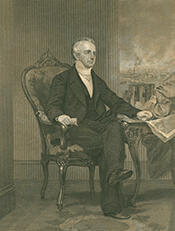
Here you will find contact information for Representative Abbott Lawrence, including email address, phone number, and mailing address.
| Name | Abbott Lawrence |
| Position | Representative |
| State | Massachusetts |
| District | 1 |
| Party | Whig |
| Status | Former Representative |
| Term Start | December 7, 1835 |
| Term End | March 3, 1841 |
| Terms Served | 2 |
| Born | December 16, 1792 |
| Gender | Male |
| Bioguide ID | L000130 |
About Representative Abbott Lawrence
Abbott Lawrence (December 16, 1792 – August 18, 1855) was an American businessman, politician, and philanthropist who played a significant role in the early industrial development of New England and in national politics as a Whig. He was born on December 16, 1792, in Groton, Massachusetts, the son of Samuel Lawrence, an officer in the American Revolutionary War. Raised in a family that would become prominent in commerce and manufacturing, Abbott Lawrence grew up in an environment that combined public service, enterprise, and civic responsibility, influences that shaped his later career in both business and government.
Lawrence received his education at Groton Academy in Groton, Massachusetts, an institution later renamed Lawrence Academy in honor of the family. Upon his graduation in 1808, he entered the world of commerce as an apprentice to his older brother, Amos Lawrence, serving as chief clerk in his brother’s Boston mercantile firm. This early training provided him with practical business experience and exposure to international trade at a formative age, laying the groundwork for his later prominence as a leading New England industrialist.
At the conclusion of his apprenticeship in 1814, Abbott and Amos Lawrence formed a partnership that would become one of the most important mercantile and manufacturing houses in the United States. Initially styled A. & A. Lawrence, and later A. & A. Lawrence and Co., the firm specialized in imports from Britain and China and subsequently expanded into textile manufacturing. The business prospered even during the difficult years surrounding the War of 1812, and by the 1820s it had become the greatest wholesale mercantile house in the country. In 1818, A. & A. Lawrence purchased 50 shares of the Suffolk Bank on State Street in Boston, reflecting the firm’s growing financial influence. The Lawrences were instrumental in establishing the cotton textile industry in New England; in 1830, their firm helped rescue financially distressed mills in Lowell, Massachusetts, and participated in the creation of the Suffolk, Tremont, and Lawrence companies there, with their brother Luther Lawrence representing the firm’s interests. When Amos retired from business in 1831 due to ill health, Abbott Lawrence became head of the firm and continued to expand its industrial reach.
Lawrence’s rising prominence in business was accompanied by increasing public visibility. In 1819, he married Katherine Bigelow, daughter of Timothy Bigelow and sister of John P. Bigelow, thereby aligning himself with another influential Massachusetts family. During the 1820s he emerged as a vocal advocate of railroad construction as a driver of economic growth and an ardent protectionist in national economic policy. He represented Massachusetts at the Harrisburg protectionist convention in 1827 and became highly influential among Massachusetts Whigs. His industrial leadership culminated in his role in founding the city of Lawrence, Massachusetts, on the Merrimack River. Between 1845 and 1847, as a director of the Essex Company, which controlled the water power at the site, he helped establish and build up the new manufacturing center that was named in his honor. He later served as president of the Atlantic Cotton Mills and the Pacific Mills in Lawrence, further consolidating the Lawrence family’s central place in New England’s textile industry.
Lawrence’s political career developed alongside his business activities. A committed member of the Whig Party, he was first elected to the United States House of Representatives from Massachusetts in 1834 as a Whig, serving in the 24th Congress. According to the congressional record, Abbott Lawrence served as a Representative from Massachusetts in the United States Congress from 1835 to 1841, contributing to the legislative process during two terms in office. He did not seek re-election in 1836, but was again elected in 1838 and served in the 26th Congress. His service in Congress occurred during a significant period in American history, and as a member of the House of Representatives he participated in the democratic process and represented the interests of his Massachusetts constituents. A prominent Whig, he took an active part in the successful presidential campaign of William Henry Harrison in 1840, reinforcing his status as a key party leader in his state.
After leaving Congress, Lawrence continued to play an important role in national affairs. In 1842, he was appointed a commissioner to help settle the Northeastern Boundary Dispute between the United States and British North America (Canada), a sensitive diplomatic issue that required careful negotiation. He supported Henry Clay’s presidential campaign in 1844 and served as a presidential elector that year. His standing in the intellectual and cultural life of the country was recognized when he was elected a member of the American Antiquarian Society in 1846 and a Fellow of the American Academy of Arts and Sciences in 1847. In 1848, he was an unsuccessful candidate for the Whig vice-presidential nomination on the ticket headed by Zachary Taylor. After Taylor’s election, Lawrence was offered a choice of positions in the new administration; declining a cabinet post, he accepted appointment as United States minister to Great Britain. In that capacity he was involved in the negotiations leading to the Clayton–Bulwer Treaty, a key agreement concerning potential canal routes in Central America. He resigned the post in October 1852 and returned to the United States to participate in the 1852 presidential campaign of General Winfield Scott. Increasingly dissatisfied with the Whig Party’s stance on slavery, he ultimately abandoned the party in the early 1850s.
In his later years, Lawrence devoted substantial energy and resources to philanthropy, particularly in Boston and in the field of education. A committed member of Boston’s Unitarian community, he contributed to religious, civic, and charitable causes. He supported his old school, Lawrence Academy in Groton, and was a benefactor of affordable housing initiatives in Boston and of the Boston Public Library. His most notable educational benefaction was a gift of $50,000 to Harvard College to establish the Lawrence Scientific School, one of the earliest formal scientific schools in the United States; he provided a similar sum for the school in his will, ensuring its continued support. His family connections extended into another generation of Boston’s elite when his daughter, Katherine Bigelow Lawrence, married Augustus Lowell on June 1, 1854. Abbott Lawrence died in Boston, Massachusetts, on August 18, 1855, at the age of 62, and was interred in Mount Auburn Cemetery in Cambridge, Massachusetts. His differenced coat of arms—Argent, a cross raguly gules, on a chief gules a leopard or—became well known after its publication in 1887 in American Heraldica, reflecting the enduring public interest in the Lawrence family and its legacy in American commerce, politics, and philanthropy.