Representative Abiel Foster
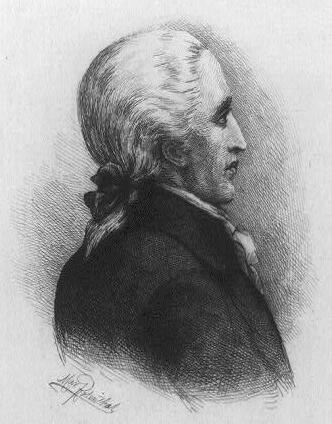
Here you will find contact information for Representative Abiel Foster, including email address, phone number, and mailing address.
| Name | Abiel Foster |
| Position | Representative |
| State | New Hampshire |
| District | -1 |
| Party | Federalist |
| Status | Former Representative |
| Term Start | March 4, 1789 |
| Term End | March 3, 1803 |
| Terms Served | 5 |
| Born | August 8, 1735 |
| Gender | Male |
| Bioguide ID | F000297 |
About Representative Abiel Foster
Abiel Foster (August 8, 1735 – February 6, 1806) was an American clergyman and politician from Canterbury, in the Province of New Hampshire, who became a prominent public figure during the formative years of the United States. Born in the mid-eighteenth century in colonial New England, he came of age in a period of growing tension between the American colonies and Great Britain. His early life in Canterbury, a small but active community in New Hampshire, shaped his later commitment to public service and religious leadership. Although specific details of his family background and early upbringing are sparse in the historical record, his subsequent career as a minister and legislator indicates a solid education and standing within his community.
Foster pursued a vocation in the ministry and entered the clergy at a time when religious leaders often played central roles in local governance and public affairs. As an American clergyman, he would have been deeply involved in the spiritual and civic life of Canterbury and its surrounding areas, offering guidance to parishioners while also engaging with the broader questions of colonial governance and rights. His clerical work helped establish his reputation for judgment and integrity, attributes that later recommended him to his fellow citizens for political office as the colonies moved toward independence and the creation of new republican institutions.
With the onset of the American Revolution and the subsequent reorganization of political authority in the former colonies, Foster transitioned from purely ecclesiastical responsibilities into formal political service. He represented New Hampshire in the Continental Congress, participating in the national deliberations that guided the United States through the closing years of the Revolutionary era and the uncertain period under the Articles of Confederation. In this capacity, he contributed to the early legislative and diplomatic efforts of the emerging nation, helping to shape policies at a time when the new states were defining their relationship to one another and to the federal authority.
Following the adoption of the United States Constitution and the establishment of the new federal government, Foster continued his national service as a member of the United States House of Representatives. He served as a Representative from New Hampshire in the United States Congress from 1789 to 1803, a span covering five terms in office during the First through early Eighth Congresses. A member of the Federalist Party, he aligned himself with those who favored a stronger central government, commercial development, and closer ties with Great Britain. During these years, he contributed to the legislative process in a period marked by the organization of the federal judiciary, the creation of executive departments, the assumption of state debts, and the emergence of the first party system in American politics.
Foster’s congressional service occurred during a particularly significant period in American history, encompassing the presidencies of George Washington and John Adams and the early stages of Thomas Jefferson’s administration. As a member of the House of Representatives, he participated in the democratic process by debating and voting on measures that would define the powers of the federal government, the nation’s financial system, and its foreign policy posture amid the conflicts of the 1790s. He represented the interests of his New Hampshire constituents while also engaging with national questions such as the response to the French Revolution, the Jay Treaty, and the Alien and Sedition Acts, all of which tested the young republic’s political cohesion.
A notable aspect of Foster’s political career was his distinction as the first person in United States history elected to Congress in a special election. This milestone underscored both his prominence in New Hampshire politics and the evolving nature of representative government under the new Constitution, as procedures were established to fill vacancies and maintain continuous representation in the national legislature. His repeated returns to office over five terms reflected the confidence his constituents placed in his judgment and his alignment with Federalist principles during a time of intense partisan debate.
After leaving Congress in 1803, Foster returned to private life in New Hampshire, where he remained a respected figure owing to his long record of public and religious service. His later years were spent in Canterbury, the community that had anchored his life and career from his early ministry through his national service. Abiel Foster died on February 6, 1806, in Canterbury, New Hampshire. His life bridged the colonial, revolutionary, and early national periods of American history, and his dual roles as clergyman and legislator exemplified the close connection between civic and religious leadership in the early United States.