Representative Abner Clark Harding
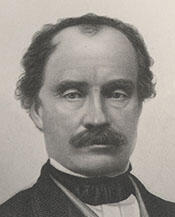
Here you will find contact information for Representative Abner Clark Harding, including email address, phone number, and mailing address.
| Name | Abner Clark Harding |
| Position | Representative |
| State | Illinois |
| District | 4 |
| Party | Republican |
| Status | Former Representative |
| Term Start | December 4, 1865 |
| Term End | March 3, 1869 |
| Terms Served | 2 |
| Born | February 10, 1807 |
| Gender | Male |
| Bioguide ID | H000188 |
About Representative Abner Clark Harding
Abner Clark Harding (February 10, 1807 – July 19, 1874) was a lawyer, state legislator, Union Army brigadier general during the American Civil War, and a Republican U.S. Representative from Illinois who served in Congress from 1865 to 1869. Over the course of his career he was active in law, state constitutional reform, military service, national legislation, banking, railroad development, and higher education in Illinois.
Harding was born in East Hampton, Connecticut, on February 10, 1807. He pursued higher education at Hamilton College in Clinton, New York, where he studied law. After completing his legal studies, he was admitted to the bar and commenced practice in Oneida County, New York, around 1827. His early professional years were devoted to building a legal career in New York, laying the foundation for his later prominence in Illinois public life.
In 1838, Harding moved west to Monmouth, Illinois, where he continued the practice of law and quickly became involved in public affairs. He gained recognition as a leading citizen in his adopted community and in state politics. In 1848 he served as a member of the Illinois state constitutional convention, contributing to the revision of the state’s fundamental law, and in the same year he was elected to the Illinois House of Representatives. He served in the state legislature from 1848 until 1850, participating in the legislative process during a period of significant growth and political change in Illinois.
With the outbreak of the American Civil War, Harding entered military service on the Union side. He enlisted as a private in the 83rd Illinois Volunteer Infantry Regiment, an unusual step for a man of his age and professional standing. He was soon commissioned as a colonel and later promoted to brigadier general in March 1863. Harding distinguished himself in the Battle of Dover in 1863, when his force of approximately 800 Union troops successfully held off about 2,500 Confederate soldiers. This engagement secured Union control of Middle Tennessee and enhanced his reputation as a capable military leader fighting for the North. His active military career was cut short when he resigned a few months after his promotion due to deteriorating eyesight.
Following his wartime service, Harding entered national politics. A member of the Republican Party, he was elected as a Representative from Illinois to the United States Congress and served two terms from 1865 to 1869, encompassing the 39th and 40th Congresses. His tenure in the House of Representatives coincided with the critical early years of Reconstruction after the Civil War, a significant period in American history. During the 39th Congress he served as Chairman of the Committee on the Militia, where his recent military experience informed his work on matters related to the organization and oversight of the militia. As a member of the House, Harding participated in the democratic process and represented the interests of his Illinois constituents, contributing to the legislative debates and measures of the era. He was not a candidate for re-election in 1868 after completing his service in the 40th Congress.
After leaving Congress, Harding returned to private pursuits in Monmouth. He became active in banking and railroad building, reflecting the broader economic development of Illinois and the Midwest in the postwar period. In addition to his business interests, he played a significant role in higher education as a founder and trustee of Monmouth College, helping to establish and guide an institution that would serve the region’s educational needs. His civic, economic, and educational activities underscored his continuing influence in Illinois public life beyond his formal political and military service.
Abner Clark Harding died in Monmouth, Illinois, on July 19, 1874. He was interred in Monmouth Cemetery. His career encompassed service as a lawyer, state legislator, Civil War brigadier general, and U.S. Representative, and he left a lasting imprint on both the civic institutions and the community of Monmouth, Illinois.