Senator Abner Lacock
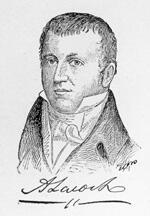
Here you will find contact information for Senator Abner Lacock, including email address, phone number, and mailing address.
| Name | Abner Lacock |
| Position | Senator |
| State | Pennsylvania |
| Party | Republican |
| Status | Former Representative |
| Term Start | November 4, 1811 |
| Term End | March 3, 1819 |
| Terms Served | 2 |
| Born | July 9, 1770 |
| Gender | Male |
| Bioguide ID | L000011 |
About Senator Abner Lacock
Abner Lacock (July 9, 1770 – April 12, 1837) was an American politician and jurist who rose from frontier beginnings to serve in both houses of the Pennsylvania legislature and to represent his state in both the United States House of Representatives and the United States Senate. Frequently referred to as “General Lacock” in recognition of his militia service, he was a prominent public figure in western Pennsylvania during the early decades of the nineteenth century. He is most closely associated with Beaver County and the town of Rochester, Pennsylvania, which became the center of his political and personal life.
Lacock was born on July 9, 1770, near Alexandria in the Colony of Virginia. As a youth he moved with his parents to Washington County, Pennsylvania, then part of the expanding American frontier. In 1796 he relocated to Beaver, Pennsylvania, where he established himself in local affairs. That same year he was appointed a justice of the peace, an early indication of the trust placed in his judgment and character by his community. He also worked as an innkeeper, a common occupation that placed him at the crossroads of local commerce, travel, and political discussion in the region.
Although there is no record of extensive formal education, Lacock’s early appointments and subsequent legislative responsibilities suggest that he was largely self-educated, acquiring legal and political knowledge through practical experience. His work as a justice of the peace, his service on the bench as an associate judge, and his later legislative and congressional duties all required familiarity with law, procedure, and public administration, skills he appears to have developed through direct engagement in public service and local governance rather than through formal schooling.
Lacock’s political career began in the Pennsylvania state legislature. He first served in the Pennsylvania House of Representatives from 1801 to 1803. In 1803 he was appointed an associate judge of the Beaver County Court, serving in that judicial capacity until 1804. He then returned to the Pennsylvania House of Representatives, serving from 1804 to 1808, and was active in shaping the laws and institutions of a rapidly growing state. In 1807 he was commissioned a brigadier general in the Pennsylvania Militia, a role that earned him the enduring title “General Lacock.” From 1808 to 1810 he served as a member of the Pennsylvania State Senate, thereby completing service in both chambers of the state legislature before moving on to national office.
Lacock entered national politics as a Democratic-Republican. He was elected to the United States House of Representatives as a Democratic-Republican to the Twelfth Congress, representing Pennsylvania in the lower house. He was re-elected to the Thirteenth Congress but resigned before that Congress convened, having been chosen by the Pennsylvania legislature for higher office in the United States Senate. Abner Lacock served as a Senator from Pennsylvania in the United States Congress from 1811 to 1819. A member of the Republican (Democratic-Republican) Party, he contributed to the legislative process during two terms in office. Formally elected to the Senate in 1812, he served through a period marked by the War of 1812 and the complex aftermath of that conflict. As a member of the Senate, Abner Lacock participated in the democratic process and represented the interests of his constituents at a time of significant national expansion and political realignment.
During his Senate tenure, Lacock was particularly noted for his work on veterans’ and pension matters. He served as chairman of the United States Senate Committee on Pensions during the Fifteenth Congress, where he played a role in shaping federal policy toward those who had served in the nation’s military. His years in the Senate coincided with a formative era in American history, and his legislative activity reflected the concerns of a young republic dealing with war, economic development, and the integration of new territories. Throughout his service from 1811 to 1819, he remained aligned with the Democratic-Republican Party’s emphasis on states’ rights and limited central authority, while still supporting measures necessary for national defense and infrastructure.
After leaving Congress in 1819, Lacock continued to play an important role in Pennsylvania’s internal improvements and state governance. In 1825 he was appointed a state commissioner to survey routes for canals and railways in Pennsylvania, contributing to the early planning of the transportation networks that would help transform the state’s economy. He returned once more to the Pennsylvania legislature, serving again from 1832 to 1835, thereby extending a state-level legislative career that had begun more than three decades earlier. In 1836 he was appointed to survey and construct the Pennsylvania & Ohio Canal, further underscoring his involvement in the era’s major infrastructure initiatives.
Abner Lacock died near Freedom, Pennsylvania, on April 12, 1837. He was interred in Lacock Cemetery in Rochester, Pennsylvania, a community with which his name and family were closely associated. Over the course of his life, he rose from local innkeeper and justice of the peace to state legislator, judge, militia general, United States Representative, and United States Senator. His career illustrates the opportunities for political advancement in the early republic and reflects the central role played by Pennsylvania statesmen in shaping both state and national policy in the first half of the nineteenth century.