Senator Abraham Baldwin
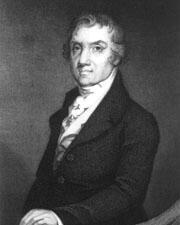
Here you will find contact information for Senator Abraham Baldwin, including email address, phone number, and mailing address.
| Name | Abraham Baldwin |
| Position | Senator |
| State | Georgia |
| Party | Republican |
| Status | Former Representative |
| Term Start | March 4, 1789 |
| Term End | March 4, 1807 |
| Terms Served | 7 |
| Born | November 22, 1754 |
| Gender | Male |
| Bioguide ID | B000084 |
About Senator Abraham Baldwin
Abraham Baldwin (November 22, 1754 – March 4, 1807) was an American minister, patriot, lawyer, educator, politician, and Founding Father who signed the United States Constitution and later served as a United States Senator from Georgia. Born in Guilford in the Connecticut Colony into a large family, he was the son of Lucy (Dudley) Baldwin and Michael Baldwin, a blacksmith, and was descended from Elder John Strong. His half-brother, Henry Baldwin, would later serve as an Associate Justice of the Supreme Court of the United States. Baldwin attended Guilford Grammar School and then Yale College in New Haven, Connecticut, where he was a member of the Linonian Society. He graduated from Yale in 1772.
After completing his undergraduate studies, Baldwin pursued theological training and, three years later, was licensed as a Congregationalist minister. He remained at Yale as a tutor, holding that position from 1775 until 1779. During the American Revolutionary War, he served as a chaplain in the Connecticut Contingent of the Continental Army, although he did not see combat while with the Continental troops. At the conclusion of the war, Yale’s new president, Ezra Stiles, offered him the position of Professor of Divinity, which Baldwin declined. Instead, he turned to the study of law and was admitted to the Connecticut bar in 1783, marking his transition from a clerical to a legal and political career.
In the mid-1780s, encouraged by his former commanding officer General Nathanael Greene, who had settled in Georgia at the Mulberry Grove plantation, Baldwin moved to the state of Georgia. He was recruited by fellow Yale alumnus Governor Lyman Hall, another New England transplant, to help develop a comprehensive state education plan. Baldwin conceived and drafted the plan for a state university, originated the idea of what became the University of Georgia, and drew up its charter. He was named the first president of the University of Georgia and became active in Georgia politics to build support for the institution, which had not yet enrolled its first student. Baldwin remained president of the University of Georgia during its initial development phase until 1800, working closely with the legislature on the college charter. In 1801, Franklin College, the initial college of the University of Georgia, opened to students, with Josiah Meigs succeeding Baldwin as the first acting president and overseeing the inaugural class. The early buildings of the college were architecturally modeled on Yale, where both Baldwin and Meigs had taught, and the later adoption of the bulldog as the university’s mascot paid tribute to their Yale heritage.
Baldwin quickly emerged as a leading figure in Georgia’s public life. He was elected to the Georgia Assembly, where he became very active in legislative affairs and worked to develop support for the new college. Drawing on his own background as the son of a blacksmith, he was able to mediate between the rougher frontiersmen of the backcountry and the aristocratic planter elite of the coastal Lowcountry. He became one of the most prominent legislators in the state, pushing significant measures such as an education bill through a sometimes divided Georgia Assembly. On the national stage, he was appointed as a delegate to the Congress of the Confederation and then to the Constitutional Convention. In September 1787 he was one of Georgia’s signatories to the United States Constitution, thereby securing his place among the Founding Fathers. Baldwin was also a member of the Society of the Cincinnati, reflecting his service and standing among Revolutionary War veterans.
Abraham Baldwin was elected as a representative to the U.S. Congress in 1788, entering federal service at the outset of the new constitutional government. A member of the Republican Party, he contributed to the legislative process during seven terms in office, participating in the democratic process and representing the interests of his constituents during a formative period in American political development. His service in Congress occurred during a significant era in the nation’s history, as the new federal institutions took shape and partisan alignments emerged. In 1799, the Georgia legislature, which at that time chose U.S. senators, elected him as a United States Senator from Georgia. He served in the Senate from 1799 until his death in 1807, and more broadly is recorded as having served in the United States Congress from 1789 to 1807.
During his tenure in the Senate, Baldwin became an influential Republican voice in national affairs. He served as President pro tempore of the United States Senate from December 1801 to December 1802, presiding over the chamber in the absence of the vice president. In that role, he helped guide legislative business during the early years of the Jefferson administration, a period marked by the consolidation of Republican power and the continued definition of federal and state authority. Throughout his Senate service, Baldwin remained closely identified with Georgia’s interests and with the broader Republican program of limited central government and support for agrarian and frontier constituencies.
On March 4, 1807, at age 52, Abraham Baldwin died while serving as a U.S. senator from Georgia. His death in office placed him among the early members of Congress who did not complete their terms. Later that month, the Savannah Republican and Savannah Evening Ledger reprinted an obituary first published in a Washington, D.C., newspaper, which credited him as the originator of the plan for the University of Georgia, noting that he “drew up the charter, and with infinite labor and patience, in vanquishing all sorts of prejudices and removing every obstruction, he persuaded the assembly to adopt it.” His remains were interred at Rock Creek Cemetery in Washington, D.C.
Baldwin’s legacy has been widely commemorated. The United States Postal Service issued a 7-cent stamp in its Great Americans series in his honor. Places and institutions named for him include Baldwin County in both Alabama and Georgia; Abraham Baldwin Agricultural College in Tifton, Georgia; Abraham Baldwin Middle School in Guilford, Connecticut; and Baldwin streets in Madison, Wisconsin, and Athens, Georgia. The University of Georgia erected a statue of Baldwin on its historic North Campus quadrangle, honoring him as the founding father of the institution and, by long-standing tradition, as a central figure in the development of public higher education in the United States.