Representative Abraham Andrews Barker
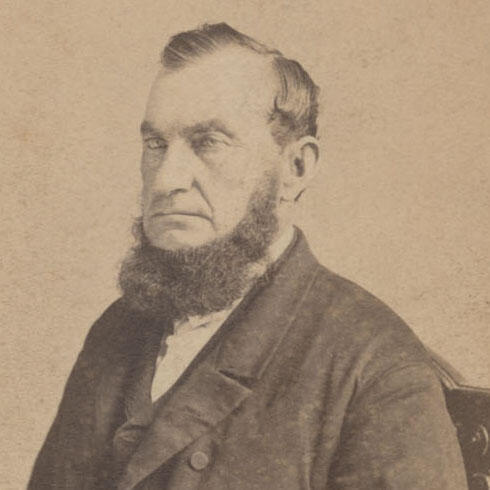
Here you will find contact information for Representative Abraham Andrews Barker, including email address, phone number, and mailing address.
| Name | Abraham Andrews Barker |
| Position | Representative |
| State | Pennsylvania |
| District | 17 |
| Party | Republican |
| Status | Former Representative |
| Term Start | December 4, 1865 |
| Term End | March 3, 1867 |
| Terms Served | 1 |
| Born | March 30, 1816 |
| Gender | Male |
| Bioguide ID | B000142 |
About Representative Abraham Andrews Barker
Abraham Andrews Barker (March 30, 1816 – March 18, 1898) was an American businessman, Civil War soldier, and politician who served as a Republican member of the U.S. House of Representatives from Pennsylvania from 1865 to 1867. His single term in Congress coincided with the early Reconstruction period following the American Civil War, during which he participated in the legislative process and represented the interests of his Pennsylvania constituents.
Barker was born on March 30, 1816, in Lovell, in the District of Maine, then part of Massachusetts. He was the son of Stephen Barker and Betsey Andrews. His formal schooling was limited, and he received only a small education up to the age of sixteen, after which he entered working life. On February 24, 1842, he married Orsina Little, who was the granddaughter of Jonathan Clark and Moses Little, families of some local prominence in New England. Barker’s early years were shaped by rural life in Maine, and he soon became involved in agricultural pursuits as well as in the shook business, manufacturing wooden staves and related products for barrels and packaging.
In the 1850s Barker relocated to Pennsylvania, a move that would define his later business and political career. He moved to Carrolltown, Pennsylvania, in 1854 and later settled in Ebensburg, Pennsylvania, where he continued in the shook business. He expanded his commercial activities by entering the mercantile business in 1858 and later the lumber trade, becoming a significant local businessman. Barker also became president of the Ebensburg and Cresson Branch Railroad, a position he held until the line was taken over by the Pennsylvania Railroad, reflecting his growing influence in regional transportation and commerce.
Barker’s political and reform interests developed alongside his business career. While still connected to Maine, he worked with noted temperance advocate Neal Dow in support of the Maine Law, one of the earliest statewide prohibition statutes, and he remained an ardent prohibitionist throughout his life. After establishing himself in Pennsylvania, he became active in the emerging Republican Party. He served as a delegate to the 1860 Republican National Convention, where he cast his vote for the nomination of Abraham Lincoln, aligning himself with the party’s antislavery and Unionist platform on the eve of the Civil War.
During the American Civil War, Barker served as a soldier in Company E of the Fourth Regiment, Pennsylvania Emergency Troops, a unit raised to respond to Confederate incursions into the state. His wartime service, combined with his Republican activism and local prominence, positioned him for national office. In 1864 he was elected as a Republican to the Thirty-ninth Congress, serving as a Representative from Pennsylvania from March 4, 1865, to March 3, 1867. In this capacity, Abraham Andrews Barker contributed to the legislative process during one term in office at a critical moment in American history, as Congress addressed the immediate aftermath of the Civil War and the beginnings of Reconstruction. He participated in the democratic process as a member of the House of Representatives and represented the interests of his Pennsylvania constituents during debates over the reintegration of the Southern states and the rights of formerly enslaved people.
Barker’s congressional career was limited to a single term. He was an unsuccessful candidate for renomination in 1866, ending his initial service in the House after 1867. He later sought to return to Congress as a Republican candidate in 1872 but was again unsuccessful. Disillusioned with aspects of Republican policy and increasingly devoted to the temperance cause, Barker left the Republican Party in 1876 and joined the Prohibition Party. His shift reflected his long-standing commitment to prohibition and moral reform, which had begun decades earlier in Maine.
In his later political life, Barker became a leading figure in the Prohibition movement in Pennsylvania. From 1878 to 1882, he served as president of the Pennsylvania Prohibition Party, helping to organize the party’s activities and promote its platform throughout the state. During this period he also reengaged in the lumber and shook business until about 1880, maintaining his ties to the commercial enterprises that had underpinned his early success. Barker was also highly involved in Freemasonry, participating actively in Masonic circles and further cementing his status as a respected community leader. In 1896 he received a final nomination for Congress from the Prohibition Party, but he was defeated in the general election, bringing his long, if often unsuccessful, electoral career to a close.
Abraham Andrews Barker spent his final years in Pennsylvania, remaining identified with both his business interests and his prohibition advocacy. While visiting Altoona, Pennsylvania, for medical treatment, he died there on March 18, 1898, just short of his eighty-second birthday. His life spanned the transformation of the United States from the early republic through the Civil War and into the industrial age, and he left a record as a businessman, soldier, reformer, and one-term congressman who participated in national affairs during one of the country’s most consequential eras.