Representative Abraham Walter Lafferty
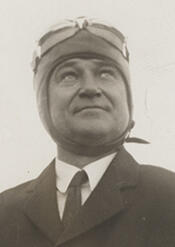
Here you will find contact information for Representative Abraham Walter Lafferty, including email address, phone number, and mailing address.
| Name | Abraham Walter Lafferty |
| Position | Representative |
| State | Oregon |
| District | 3 |
| Party | Republican |
| Status | Former Representative |
| Term Start | April 4, 1911 |
| Term End | March 3, 1915 |
| Terms Served | 2 |
| Born | June 10, 1875 |
| Gender | Male |
| Bioguide ID | L000015 |
About Representative Abraham Walter Lafferty
Abraham Walter Lafferty (June 10, 1875 – January 15, 1964) was a U.S. Representative from the state of Oregon and a member of the Republican Party who served in Congress from 1911 to 1915. He became best known for his long and often controversial career as an attorney and legislator devoted to shifting millions of acres of land formerly owned by the Oregon and California Railroad from federal control to the control and benefit of the state of Oregon and its counties. Over the course of two terms in the House of Representatives, he participated in the legislative process during a significant period in American history, representing the interests of his constituents while pursuing his long-running campaign over the Oregon and California (O&C) land grants.
Lafferty was born near Farber, Audrain County, Missouri, on June 10, 1875, to Abraham M. Lafferty and Helen Kinney Lafferty. He grew up in Missouri and attended the public schools of Pike County. His early years in rural Missouri shaped his familiarity with agricultural and land issues that would later figure prominently in his legal and political work. After completing his primary education, he pursued higher studies in law, preparing for a professional career in the legal field.
Lafferty studied law at the University of Missouri, from which he graduated in 1896. That same year he was admitted to the bar and commenced the practice of law in Montgomery City, Missouri. He quickly entered public service, serving as prosecuting attorney of Montgomery County from 1902 to 1904. In addition to his legal work, he served three years as a captain in the Missouri National Guard, gaining experience in leadership and public responsibility. These early roles established his reputation as a capable attorney and public official and provided the foundation for his later federal appointment and political career in the Pacific Northwest.
In 1905, Lafferty was appointed a special agent for the United States Department of the Interior’s General Land Office in Portland, Oregon. He served in that capacity for about a year, investigating land matters in a region already embroiled in controversy over railroad land grants, before resigning to open a private law practice in Portland. In 1907, he accepted the case that would define much of his professional life: representing 18 western Oregon counties in litigation against the Oregon and California Railroad to secure timber revenues from, and ultimately possession of, the O&C lands. These lands—some three million acres granted by the federal government in 1870 to promote construction of a rail line from Portland to California—were supposed to be sold to settlers at $2.50 per acre. Instead, widespread abuses and fraudulent acquisitions by developers, aided by complicit politicians, culminated in the Oregon land fraud scandal, and in 1903 the Southern Pacific Railroad, which had acquired the O&C, ceased selling the land altogether. Lafferty pursued the case for years, seeking to have the lands and their revenues benefit Oregon and its counties rather than the federal government or the railroad.
With the public prominence he gained from the O&C litigation, Lafferty entered electoral politics in Oregon. In 1910, he was elected as a Republican to the United States House of Representatives from Oregon’s 2nd congressional district, beginning his service in the 62nd Congress on March 4, 1911. Following the 1910 census, Oregon was granted an additional congressional district, and in 1912 Lafferty successfully ran to represent the newly created 3rd congressional district. In that campaign he ran as both a Republican and a Progressive, aligning himself with Progressive presidential candidate Theodore Roosevelt and identifying as a Progressive Republican in the 63rd Congress. During his two terms in Congress, from 1911 to 1915, he continued to press the O&C land issue on behalf of his constituents and supported equal suffrage for men and women, placing himself among those in Congress who favored women’s voting rights during the Progressive Era. In late 1912, when a widely publicized “vice scandal” involving Portland’s gay male subculture broke out, Lafferty vowed to bring the matter to the attention of federal authorities in Washington, though his efforts on that front were brief and did not result in significant legislative action.
Lafferty’s congressional career was also marked by personal controversy. During his first term, he was criticized for soliciting the acquaintance of two young women to whom he had not been formally introduced, including the daughter of a federal official, behavior that violated prevailing social norms and led him to issue a public apology. In 1914, he sought renomination as a Republican for his House seat but was defeated in the primary by Clifton N. McArthur. Undeterred, he ran in the general election as an Independent Progressive, but McArthur prevailed by a narrow plurality over Lafferty, Democrat Austin F. Flegel, and Progressive Arthur Moulton. In 1916, Lafferty again attempted to regain his seat, losing the Republican nomination to McArthur and then running as an Independent in the general election, where McArthur once more defeated him and Democrat John J. Jeffery.
After his 1916 defeat, Lafferty resumed the practice of law in Portland. During World War I, he served as a major at a training camp in San Francisco, continuing his pattern of alternating between legal work and public service. His personal life remained unconventional for the period; he never married and continued to attract controversy. In 1919, a Multnomah County grand jury indicted him for contributing to the delinquency of a 14-year-old girl, a misdemeanor charge. At the time of the indictment he was in New York City and did not return to Oregon to face the charge. Instead, he opened a law practice in New York, where he lived and worked for the next 14 years, largely removed from Oregon’s political scene.
In 1933, Lafferty purchased Riversdale Mansion, a historic estate in Riverdale, Maryland, reflecting both his East Coast residence and his interest in prominent properties. He lived there until 1949, when he sold the mansion to the Maryland-National Capital Park and Planning Commission. Meanwhile, the O&C lands issue continued to evolve. After the federal government had taken back control of the lands in 1915—paying the railroad $2.50 per acre, a resolution Lafferty did not regard as a victory because Oregon did not gain title—Congress enacted legislation in 1916 and again in 1937 directing that half of the federal timber revenues from those lands be paid to the O&C counties. Over time, however, the counties’ share was reduced, setting the stage for renewed legal conflict.
Lafferty returned to Portland in 1946 and immediately resumed his legal battle on behalf of the O&C counties, seeking both increased revenue for them and compensation for his own decades of work. On April 30, 1954, he won a significant appellate decision that returned $6 million in timber revenue to the O&C counties. Yet Congress subsequently passed legislation placing the O&C lands under the control of the U.S. Forest Service, and when Lafferty appealed, arguing that his earlier case should control, the U.S. Supreme Court declined to hear the matter. He continued litigating aspects of the O&C controversy and pressing claims for his legal fees for the rest of his life. Concurrently, he made repeated attempts to reenter Congress, running unsuccessfully as an Independent in 1950 and as a Republican in 1952, 1954, and 1956. To reintroduce himself to voters after his long absence from Oregon, he placed distinctive advertisements that mixed excerpts from letters, poetry, images of figures such as Abraham Lincoln, and references to his long fight for the O&C counties, but these efforts did not restore him to elective office.
Abraham Walter Lafferty died in Portland, Oregon, on January 15, 1964, after several weeks of failing health. At the time of his death, he was still seeking full payment for his fees arising from the O&C litigation and owed several hundred thousand dollars in back taxes, a testament to the financial and personal costs of his protracted legal crusade. He was interred in Fairmount Cemetery in Middletown, Missouri, returning in death to the state where his legal and public career had begun.