Representative Abraham Robinson McIlvaine
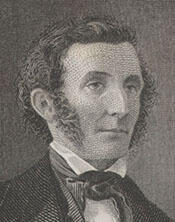
Here you will find contact information for Representative Abraham Robinson McIlvaine, including email address, phone number, and mailing address.
| Name | Abraham Robinson McIlvaine |
| Position | Representative |
| State | Pennsylvania |
| District | 7 |
| Party | Whig |
| Status | Former Representative |
| Term Start | December 4, 1843 |
| Term End | March 3, 1849 |
| Terms Served | 3 |
| Born | August 14, 1804 |
| Gender | Male |
| Bioguide ID | M000474 |
About Representative Abraham Robinson McIlvaine
Abraham Robinson McIlvaine (August 14, 1804 – August 22, 1863) was a Whig member of the U.S. House of Representatives from Pennsylvania who served three consecutive terms in Congress between 1843 and 1849. He was born near Ridley, in Delaware County, Pennsylvania, where he spent his early years in a rural setting typical of the region in the early nineteenth century. Details of his family background and early upbringing are sparse in the historical record, but his later career indicates that he was sufficiently educated and engaged in local affairs to enter public life and win the confidence of his community.
McIlvaine received a basic education in the common schools of Pennsylvania, which provided the foundation for his later professional and political activities. Like many men of his generation who rose to public office without formal higher education, he likely combined schooling with practical experience in business and agriculture. Before entering national politics, he engaged in agricultural pursuits, a common occupation in his part of Pennsylvania, and became identified with the interests and concerns of local farmers and landowners.
Prior to his election to Congress, McIlvaine was active in local and state affairs, aligning himself with the Whig Party as it emerged in opposition to Jacksonian Democracy. His involvement in public life reflected the Whig emphasis on economic development, legislative governance, and cautious expansion. Through his work in his community and party, he built a reputation that enabled him to seek and win national office as a representative of Pennsylvania’s interests in Washington.
Abraham Robinson McIlvaine served as a Representative from Pennsylvania in the United States Congress from March 4, 1843, to March 3, 1849. A member of the Whig Party, he contributed to the legislative process during three terms in office, representing his constituents in the U.S. House of Representatives during the Twenty-eighth, Twenty-ninth, and Thirtieth Congresses. His service in Congress occurred during a significant period in American history, marked by debates over territorial expansion, economic policy, and the balance of power between free and slave states. As a member of the House of Representatives, Abraham Robinson McIlvaine participated in the democratic process and represented the interests of his constituents, taking part in deliberations that shaped national policy in the years leading up to the Compromise of 1850.
During his tenure, McIlvaine served as chairman of the House Committee on Expenditures in the Department of War in the Thirtieth Congress. In this capacity, he was responsible for overseeing and reviewing the financial administration of the War Department, reflecting both the Whig concern for fiscal responsibility and the growing importance of military and defense issues in the era of the Mexican–American War. His committee work placed him at the intersection of questions about federal spending, military readiness, and executive accountability, all central themes in mid-nineteenth-century congressional oversight.
After leaving Congress in 1849, McIlvaine returned to private life in Pennsylvania. He resumed his agricultural pursuits and remained a respected figure in his community, identified with the principles and legacy of the Whig Party even as the national political landscape shifted in the 1850s. Although he did not return to national office, his earlier service in the House of Representatives ensured his place in the political history of Pennsylvania during a transformative period for both the state and the nation.
Abraham Robinson McIlvaine died on August 22, 1863, near Chester, Pennsylvania, in the midst of the American Civil War, a conflict that grew out of many of the sectional tensions that had occupied Congress during his years of service. He was interred in the Friends’ Western Burial Ground in Philadelphia, Pennsylvania. His life and career reflect the trajectory of a nineteenth-century Pennsylvanian who rose from local prominence to national office, participated in the legislative debates of a critical era, and then returned to the pursuits and community ties from which he had come.