Representative Abraham Herr Smith
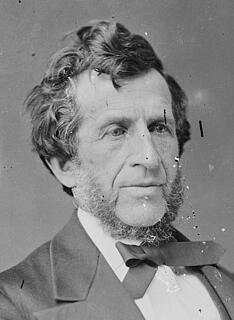
Here you will find contact information for Representative Abraham Herr Smith, including email address, phone number, and mailing address.
| Name | Abraham Herr Smith |
| Position | Representative |
| State | Pennsylvania |
| District | 9 |
| Party | Republican |
| Status | Former Representative |
| Term Start | December 1, 1873 |
| Term End | March 3, 1885 |
| Terms Served | 6 |
| Born | March 7, 1815 |
| Gender | Male |
| Bioguide ID | S000509 |
About Representative Abraham Herr Smith
Abraham Herr Smith (March 7, 1815 – February 16, 1894) was an American politician and attorney who served as a Republican member of the U.S. House of Representatives from Pennsylvania’s 9th congressional district from 1873 to 1885. Over the course of six consecutive terms in Congress, he represented his constituents during a significant period in American history and contributed to the legislative process as a member of several key committees.
Smith was born on March 7, 1815, near Millersville, Lancaster County, Pennsylvania, to Jacob Smith and Elizabeth Herr. Orphaned at the age of eight, he was raised by his paternal grandparents, an early hardship that shaped his upbringing in rural Pennsylvania. Despite these challenges, he pursued education with determination, preparing himself for a professional career and eventual public service.
Smith’s formal education began at Professor Beck’s Academy in Lititz, Pennsylvania, after which he studied at Harrington College. He then enrolled at Dickinson College in Carlisle, Pennsylvania, where he completed his studies and graduated in 1840. Following his graduation, he read law and, after completing his legal studies, was admitted to the bar in 1842. He commenced the practice of law in Lancaster, Pennsylvania, establishing himself as a lawyer in the community and laying the foundation for his later political career.
Smith entered public life as a member of the Whig Party. He served in the Pennsylvania House of Representatives from 1843 to 1844, representing his district in the state legislature. He then advanced to the Pennsylvania State Senate, serving the 7th district from 1845 to 1848. During these years in state government, he gained legislative experience and became a recognized figure in Pennsylvania politics, participating in debates and policymaking at a time of growing sectional tensions in the United States.
With the realignment of political parties in the mid-nineteenth century, Smith became affiliated with the Republican Party. He was elected as a Republican to the Forty-third Congress and to the five succeeding Congresses, serving in the U.S. House of Representatives from March 4, 1873, to March 3, 1885, as the representative for Pennsylvania’s 9th congressional district. During his twelve years in Congress, he participated in the democratic process on behalf of his constituents and took part in national legislative deliberations in the post–Civil War and Reconstruction-era United States.
While in the House of Representatives, Smith held important committee assignments that reflected his colleagues’ confidence in his judgment and experience. He served for six years on the Committee on War Claims and on the Committee on Appropriations, both of which were central to the disposition of Civil War–related claims and the allocation of federal funds. In the Forty-seventh Congress, he was chairman of the House Committee on Mileage, overseeing matters related to the compensation of members for travel to and from the capital. Through these roles, he contributed to the legislative and administrative work of the House during a transformative period in federal governance.
In 1884, Smith was an unsuccessful candidate for renomination to Congress and concluded his federal legislative service the following year. After leaving Congress in 1885, he returned to Lancaster, Pennsylvania, where he resumed the practice of law. He continued to be a respected figure in his community until his death in Lancaster on February 16, 1894. He was interred in Woodward Hill Cemetery in Lancaster. In recognition of his service and his connection to his alma mater, the A. Herr Smith Memorial Hall in the Denny Hall building of the Union Philosophical Society at Dickinson College was named in his honor, commemorating his contributions to public life and education.