Senator Abraham Bedford Venable
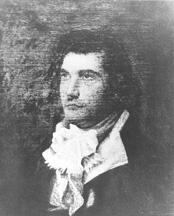
Here you will find contact information for Senator Abraham Bedford Venable, including email address, phone number, and mailing address.
| Name | Abraham Bedford Venable |
| Position | Senator |
| State | Virginia |
| Party | Republican |
| Status | Former Representative |
| Term Start | October 24, 1791 |
| Term End | March 3, 1805 |
| Terms Served | 5 |
| Born | November 20, 1758 |
| Gender | Male |
| Bioguide ID | V000083 |
About Senator Abraham Bedford Venable
Abraham Bedford Venable (November 20, 1758 – December 26, 1811) was a Virginia lawyer, planter, and politician who served in the U.S. House of Representatives, briefly in the U.S. Senate, and in the Virginia House of Delegates during a formative period in the early republic. A member of the Republican (Democratic-Republican) Party, he represented Virginia in Congress from 1791 to 1805, contributing to the legislative process over five terms in office and participating in the evolving democratic institutions of the new nation.
Venable was born at Slate Hill Plantation in what is now Worsham, Prince Edward County, then in the Colony of Virginia, the son of Nathaniel Venable (1733–1804) and Elizabeth Woodson Venable (1740–1791). He was named for his great-grandfather Abraham Venable, who had immigrated to Virginia around 1685, and for his grandfather Abraham Venable (1700–1768), a substantial landowner in Hanover, Louisa, and Goochland Counties and a burgess for Louisa County. His father operated plantations worked by enslaved laborers, held a license to operate an ordinary (tavern/inn), and represented Prince Edward County in the House of Burgesses and later in the Virginia House of Delegates. Nathaniel Venable also helped found the first Presbyterian church in Prince Edward County and was instrumental in the establishment of Hampden–Sydney College. Abraham’s siblings included an elder brother, Samuel Woodson Venable (1756–1821), and younger brothers Richard Nathaniel Venable (1763–1838) and William Lewis Venable (1780–1824), several of whom also pursued legal and political careers.
Receiving the private education customary for members of the Virginia planter elite, Venable attended Hampden–Sydney College, founded in 1775 with his father’s support. He then traveled to New Jersey for further study at the College of New Jersey (now Princeton University), from which he graduated in 1780. Returning to Prince Edward County, he assisted his father and overseers in the management of the family plantations while studying law. Admitted to the bar in September 1784, he established a legal practice centered in Farmville, the county seat. Among his contemporaries at the local bar were his kinsman Richard N. Venable, Patrick Henry, and Paul Carrington Jr., admitted in 1786 and 1788, respectively. In April 1788 he succeeded Robert Lawson as deputy attorney general for Prince Edward County, though he resigned the following May and was succeeded by his cousin and fellow Princeton graduate, Joseph Venable. He never married.
Like other members of his family, Venable was a substantial slaveholder. In 1787, tax records show that he owned eight enslaved people (four adults and four children) in Prince Edward County, along with three horses and nine head of cattle. His elder brother Samuel, who had married a daughter of Judge Paul Carrington and resided in the county, was taxed that year on 15 enslaved people, four horses, and 27 other livestock. Their father Nathaniel was taxed for 26 enslaved people, eight horses, and 44 other livestock and paid taxes on behalf of probable overseers William Anderson and Jessee Hamblet. By the time of the 1810 census, Abraham B. Venable owned 31 enslaved people in Prince Edward County, the largest number held by any of the six men of that surname then residing in the county. The family’s Slate Hill plantation house survived into the twenty-first century and has been the subject of historical investigation and restoration; a historical marker was erected there in 2003.
Venable’s political career developed alongside his legal practice. He became active in public affairs in the 1780s, a period when Prince Edward County was represented at the Virginia Ratification Convention of 1788 by Patrick Henry and Robert Lawson. Within the county, members of the extended Venable family held a variety of local offices: Charles Venable served as sheriff when Virginia became a commonwealth in 1776 and later as one of the county’s magistrates, while Nathaniel Venable also held the sheriff’s office. Against this backdrop, Abraham B. Venable emerged as a political figure in his own right and aligned with the emerging Republican opposition to Federalist policies.
In 1790, Venable was elected unopposed to the U.S. House of Representatives as a Republican from Virginia, beginning service in the Second Congress on March 4, 1791. He was re-elected in 1793 with 79.21 percent of the vote, defeating Independents Thomas Woodson, Joseph Wiatt, and Thomas Scott; in 1795 he won re-election with 90.6 percent of the vote against Independent Tarlton Woodson; and in 1797 he was again returned to Congress without opposition. Serving continuously in the House from 1791 to 1799, he represented the interests of his Virginia constituents during the administrations of George Washington and John Adams. During the Fourth Congress he chaired the Committee on Elections, a key body responsible for adjudicating contested seats and overseeing the integrity of the House’s membership. His tenure in the House coincided with major national debates over federal fiscal policy, foreign affairs, and the scope of federal power, in which he generally supported the Jeffersonian Republican program.
After leaving the U.S. House of Representatives in 1799, Venable returned to Virginia politics. He was elected as one of Prince Edward County’s representatives in the Virginia House of Delegates in 1801 and was re-elected three times, serving until he took a seat in the U.S. Senate. He often served alongside Peter Johnston, who would later become Speaker of the House of Delegates. In the state legislature, Venable continued to advance Republican principles and to represent the interests of his agrarian constituency during the early years of Thomas Jefferson’s presidency.
Venable’s service in the U.S. Senate was brief but marked an important culmination of his federal career. In 1803, the Virginia General Assembly elected him to the Senate to fill a vacancy, and he served from 1803 to 1804. His Senate tenure fell within the Jefferson administration and the period of the Louisiana Purchase, though he did not complete a full term. He resigned in 1804, following the death of his father, in order to return to private life and to practice law in Richmond. Across his combined service in the House and Senate from 1791 to 1805, he participated in the legislative work of the early republic and helped shape the policies of the Jeffersonian era.
In his later years, Venable divided his time between legal practice and business pursuits. A close associate and friend of President Thomas Jefferson, he was involved in the development of Virginia’s financial institutions and became a founder and president of the Bank of Virginia, reflecting the growing importance of banking and commerce in the state’s economy. Although he had relocated his professional base to Richmond, he retained his ties to Prince Edward County and his plantation interests there.
Abraham Bedford Venable died in the Richmond Theatre fire on December 26, 1811, one of the most prominent victims of the disaster, which also claimed the life of Virginia Governor George William Smith. The remains of Venable and other victims were interred beneath a large stone at Monumental Church in Richmond, erected on the site of the fire as both a place of worship and a memorial. His family’s political legacy continued: his brother Richard Nathaniel Venable, a former Revolutionary War officer, became a lawyer, state senator, and delegate to the Virginia Constitutional Convention of 1829, while a nephew, Abraham Watkins Venable, later represented a North Carolina district in the U.S. Congress.