Representative Adam Huntsman
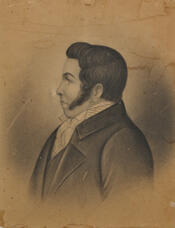
Here you will find contact information for Representative Adam Huntsman, including email address, phone number, and mailing address.
| Name | Adam Huntsman |
| Position | Representative |
| State | Tennessee |
| District | 12 |
| Party | Jackson |
| Status | Former Representative |
| Term Start | December 7, 1835 |
| Term End | March 3, 1837 |
| Terms Served | 1 |
| Born | February 11, 1786 |
| Gender | Male |
| Bioguide ID | H001000 |
About Representative Adam Huntsman
Adam Huntsman (February 11, 1786 – August 23, 1849) was an American lawyer and politician who represented Tennessee’s twelfth district in the United States House of Representatives from 1835 to 1837. A member of the Jackson Party and a Jacksonian Democrat, he served one term in Congress during a significant period in American history, contributing to the legislative process and representing the interests of his constituents. He was a slaveholder.
Huntsman was born in Charlotte County, Virginia, on February 11, 1786. Little is recorded about his early childhood, but by the opening years of the nineteenth century he had moved south and west as part of the broader migration from the Atlantic seaboard into the trans-Appalachian frontier. In 1809 he came to Knox County, Tennessee, where he settled for about three years. During this formative period in East Tennessee, he turned to the study of law, preparing for a profession that would shape his public career.
While residing in Knox County, Huntsman studied law under John Williams, one of Knoxville’s most prominent attorneys in the early nineteenth century and later a United States Senator from Tennessee. Under Williams’s tutelage, Huntsman acquired the legal training and courtroom skills that would earn him a reputation as a capable advocate. After completing his legal studies, he carried the skills he had learned westward as Tennessee’s population expanded into newly organized counties.
Huntsman first moved to Overton County, Tennessee, and later to Madison County, Tennessee, where he established himself as a practicing attorney. On the developing western frontier of the state, he became a highly regarded criminal lawyer, known for his effectiveness in trial work. His growing prominence at the bar naturally led him into state politics, where he aligned with the rising Democratic movement associated with Andrew Jackson.
Huntsman served in the Tennessee State Senate from 1815 to 1821 and again from 1827 to 1831, participating in the legislative life of the state during a period of rapid growth and political realignment. A proponent of revising the state constitution, he was elected a delegate for Madison County to the Tennessee constitutional convention held in Nashville in 1834. At that convention he joined other delegates in reshaping the state’s fundamental law to reflect changes in population, politics, and economic development in the decades since statehood.
In 1835 Huntsman sought national office and won election to the United States House of Representatives as a Jacksonian Democrat, defeating the incumbent David Crockett for Tennessee’s Twelfth Congressional District. Crockett’s defeat in this contest led to his departure for Texas and ultimately to his death at the Alamo in 1836, a connection that gave the election lasting historical resonance. Huntsman’s term in the House lasted from March 4, 1835, to March 4, 1837. During the Twenty-fourth Congress he participated in the democratic process in Washington, D.C., as a member of the House of Representatives, representing the interests of his West Tennessee constituents at a time marked by debates over banking, federal power, and westward expansion. He ran unsuccessfully for re-election to the Twenty-fifth Congress, losing to John Wesley Crockett, the son of the man he had previously unseated.
Beyond his formal congressional service, Huntsman remained a significant figure in Tennessee politics. He was recognized as a leader of the Democratic Party in West Tennessee in the 1830s and 1840s and maintained an active correspondence with many of the most prominent national Democrats of his era, including Andrew Jackson, James K. Polk, James Buchanan, and John C. Calhoun. Through these connections and his party leadership, he helped shape Democratic strategy and opinion in a region that was becoming increasingly important in state and national elections.
Adam Huntsman died in Jackson, Madison County, Tennessee, on August 23, 1849, at the age of 63. He was interred at Old Salem Cemetery near Jackson. His family’s history reflects the realities of slavery in the antebellum South; his daughter, Anne Huntsman Scurlock, placed a grave marker in the “colored section” of Riverside Cemetery in Jackson for an enslaved man named Silas, who died in 1857. The inscription on the marker—“He is not forgotten by his attached mistress”—offers a glimpse into the personal and social world surrounding Huntsman and his family in the years following his death.