Representative Adam Martin Wyant
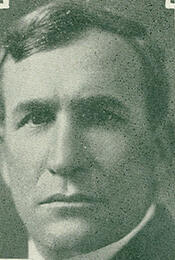
Here you will find contact information for Representative Adam Martin Wyant, including email address, phone number, and mailing address.
| Name | Adam Martin Wyant |
| Position | Representative |
| State | Pennsylvania |
| District | 31 |
| Party | Republican |
| Status | Former Representative |
| Term Start | April 11, 1921 |
| Term End | March 3, 1933 |
| Terms Served | 6 |
| Born | September 15, 1869 |
| Gender | Male |
| Bioguide ID | W000776 |
About Representative Adam Martin Wyant
Adam Martin Wyant (September 15, 1869 – January 5, 1935) was an American educator, athlete, and politician who served as a Republican member of the U.S. House of Representatives from Pennsylvania from 1921 to 1933. Over the course of six consecutive terms, totaling twelve years in Congress, he represented his constituents during a period of significant political and economic change in the United States. He is widely recognized as the first professional football player ever elected to the United States Congress, a distinction that linked his early prominence on the athletic field with his later national public service.
Wyant was born near Greersburg (now Darlington), Beaver County, Pennsylvania. He attended the public schools and showed early academic promise that would later lead him into educational work. In addition to his formal schooling, he developed a strong interest in athletics, particularly football, at a time when the sport was still in its formative years. This combination of intellectual and physical pursuits would shape both his early career and his public reputation.
Wyant pursued higher education at Bucknell University, where he played collegiate football beginning in 1890. He later continued both his studies and his football career at the University of Chicago, playing there through 1893. Under the legendary coach Amos Alonzo Stagg at Chicago, Wyant distinguished himself as a formidable lineman. Stagg cited him as “one of the best men that ever donned the canvas jacket,” referring to the protective canvas jackets then worn as part of the football uniform. Wyant’s brother, Andy Wyant, also played football at Bucknell and the University of Chicago under Stagg, further cementing the family’s association with the early history of the sport.
Following his collegiate career, Wyant played professional football with the Greensburg Athletic Association, an early professional club based in Greensburg, Pennsylvania, from 1895 until 1897. At a time when professional football was still loosely organized and often overshadowed by the college game, his participation with Greensburg placed him among the pioneers of paid play in the sport. His achievements on the field were later recognized with his election to the College Football Hall of Fame in 1962, underscoring his lasting impact on American football long after his playing days had ended.
Parallel to his athletic endeavors, Wyant built a career in education and local public life. He settled in Greensburg, Pennsylvania, where he served as principal of the Greensburg schools, reflecting his commitment to public education and community leadership. His work as an educator and administrator brought him into close contact with civic affairs and helped establish his reputation as a capable and respected local leader. This experience in managing educational institutions and engaging with the public provided a foundation for his subsequent entry into politics.
Wyant’s political career reached its height with his election as a Republican to the U.S. House of Representatives from Pennsylvania. He first entered Congress in 1921 and served continuously until 1933, encompassing six terms and twelve years in office. His tenure in the House of Representatives coincided with the post–World War I era, the prosperity of the 1920s, and the onset of the Great Depression. As a member of the House, Wyant participated in the legislative process and represented the interests of his Pennsylvania constituents, contributing to debates and policymaking during a transformative period in American history. A loyal member of the Republican Party, he aligned with its positions of the era while addressing the economic and social concerns of his district.
After leaving Congress in 1933, Wyant returned to private life in Pennsylvania. His later years were spent away from the national spotlight, but his combined legacy as an educator, pioneering football player, and long-serving congressman remained notable. Adam Martin Wyant died on January 5, 1935. His life and career bridged the worlds of athletics and public service, and his distinction as the first professional football player elected to Congress, together with his posthumous induction into the College Football Hall of Fame, ensured his enduring place in both sports and political history.