Senator Addison Gardner Foster
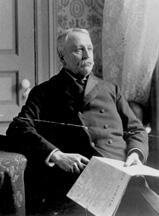
Here you will find contact information for Senator Addison Gardner Foster, including email address, phone number, and mailing address.
| Name | Addison Gardner Foster |
| Position | Senator |
| State | Washington |
| Party | Republican |
| Status | Former Representative |
| Term Start | December 4, 1899 |
| Term End | March 3, 1905 |
| Terms Served | 1 |
| Born | January 28, 1837 |
| Gender | Male |
| Bioguide ID | F000298 |
About Senator Addison Gardner Foster
Addison Gardner Foster (January 28, 1837 – January 16, 1917) was an American businessman and Republican politician who was prominent in Minnesota and Washington and most notable for his service as a United States senator from Washington for one term, 1899 to 1905. He served as a Senator from Washington in the United States Congress from March 4, 1899, to March 3, 1905, during a significant period in American history, and contributed to the legislative process as a member of the Republican Party while representing the interests of his constituents.
Foster was born in Belchertown, Massachusetts, on January 28, 1837, the son of Samuel Foster and Mary Worthington Walker. He was raised and educated in Belchertown until the age of thirteen, when his parents relocated west, first to Oswego, Illinois, and then to Sheboygan Falls, Wisconsin. He attended local schools in Belchertown and Oswego and worked on the family farms, gaining early experience in agricultural labor. In Wisconsin he also worked on his parents’ timberlands, where he acquired his first experience with logging, an industry that would shape much of his later business career. He completed his formal education in Sheboygan Falls and obtained his qualification to teach school.
As a young adult, Foster and one of his brothers set out on a westward journey intending to settle in Colorado. Foster turned back before reaching their destination and returned as far as Missouri, where he accepted a position as a schoolteacher and remained for a time. After this teaching experience, he returned briefly to Wisconsin before deciding to pursue broader business opportunities in the Upper Midwest, ultimately choosing Minnesota as the center of his early commercial and political activities.
In the early 1860s, Foster settled in Wabasha, Minnesota, where he engaged extensively in the logging business. A committed Republican, he entered public service as auditor of Wabasha County, holding that office from 1861 to 1871, and also served a term as county surveyor. Alongside his public duties, he diversified his business interests: he became involved in publishing as a proprietor of the Winona Express newspaper, was a major shareholder in the Wabasha Mill Company, which manufactured flour, and operated a freight forwarding and commission merchant business in Lake City and Red Wing. These ventures established him as a significant regional businessman and political figure.
By the mid-1870s, Foster had moved to Saint Paul, Minnesota, where he became a neighbor, friend, and political ally of Cushman Kellogg Davis. Foster actively supported Davis’s successful campaign for governor in 1874 and later his campaigns for the United States Senate. He also played a key role in other Republican campaigns: in 1874 he successfully managed the U.S. Senate campaign of Samuel J. R. McMillan; in 1882 he managed the gubernatorial campaign of Lucius Frederick Hubbard; and in 1888 he managed the successful U.S. House campaigns of Samuel Snider and Darwin Hall. In 1877, Foster entered into a long‑term business partnership with Chauncey Wright Griggs, a relationship that continued until Griggs’s death in 1910. Their enterprises included the Beaver Dam Lumber Company, the Lehigh Coal & Iron Company, and the Saint Paul & Tacoma Lumber Company. Foster’s other interests extended to the Wilkeson Coal & Coke Company and substantial real estate development in Tacoma, Washington, and other locations. In 1888 he moved to Tacoma to take a more active role in managing his Washington business holdings, which expanded to include cargo shipping and meatpacking. In national politics, he supported Cushman K. Davis for the Republican presidential nomination in 1895 and 1896; Davis did not become an active candidate, and the nomination went instead to William McKinley, who won the general election.
Foster’s prominence as a pro‑business Republican in Washington led to his selection as a candidate for the United States Senate in the late 1890s. In the 1898–1899 legislative contest for the Senate seat held by John L. Wilson, business-oriented Republicans viewed Foster as their best hope of preventing the election of a free silver candidate, particularly in light of the 1896 fusion of Democrats, Populists, and free silver Republicans that had resulted in the election of Democrat George Turner to the Senate. In the 1899 election before the Washington State Legislature, the leading Republican contenders were Wilson, Foster, Thomas J. Humes, and Levi Ankeny. On the twenty‑fourth ballot, Republican legislators coalesced around Foster to block a free silver victory, and he was elected to the Senate.
As a United States senator from Washington, Foster served one full term from March 4, 1899, to March 3, 1905. During his Senate career he was chairman of the Committee on Coast and Insular Survey from 1899 to 1903, a position that involved oversight of federal coastal charting and territorial surveys at a time of expanding American interests overseas. He also served on the Committees on Agriculture, Fisheries, Woman Suffrage, and Revolutionary War Claims, participating in the broader legislative work of the Senate during a transformative era that included the aftermath of the Spanish–American War and the early Progressive period. A loyal Republican, Foster took part in the democratic process and represented the interests of his Washington constituents while maintaining close ties to the business community that had supported his election. He sought reelection in 1905, facing opponents including Charles Sweeny and Samuel H. Piles. After a week of inconclusive balloting in the state legislature, Sweeny shifted his support to Piles, who was then elected, ending Foster’s Senate service after a single term.
After leaving Congress in 1905, Foster returned to private life and resumed active management of his extensive business interests in lumber, coal, real estate, and related enterprises in Washington and elsewhere. He continued in these pursuits until his retirement in 1914. In his personal life, Foster had married Martha Ann Wetherby of Pennsylvania in 1863, whom he met while she was visiting Wabasha, Minnesota. The couple had four children: Harrison Gardner, Francis Walker, Martha Rowena, and Charles Addison. Foster remained a respected figure in both Minnesota and Washington until his death in Tacoma, Washington, on January 16, 1917. He was buried in Oakland Cemetery in Saint Paul, Minnesota, reflecting the enduring ties he maintained to the state where he first rose to prominence in business and politics.