Representative Addison Taylor Smith
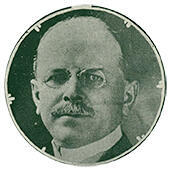
Here you will find contact information for Representative Addison Taylor Smith, including email address, phone number, and mailing address.
| Name | Addison Taylor Smith |
| Position | Representative |
| State | Idaho |
| District | 2 |
| Party | Republican |
| Status | Former Representative |
| Term Start | April 7, 1913 |
| Term End | March 3, 1933 |
| Terms Served | 10 |
| Born | September 5, 1862 |
| Gender | Male |
| Bioguide ID | S000511 |
About Representative Addison Taylor Smith
Addison Taylor Smith (September 5, 1862 – July 5, 1956) was a Republican member of the United States House of Representatives from Idaho who served ten consecutive terms in Congress from 1913 to 1933. Over two decades in the House, he contributed to the legislative process during a significant period in American history, representing the interests of his Idaho constituents through World War I, the postwar era, and the early years of the Great Depression.
Smith was born in Cambridge, Guernsey County, Ohio, on September 5, 1862. Details of his early schooling are not extensively documented, but his later professional path indicates a solid education that prepared him for legal and governmental work. As a young man he moved to Washington, D.C., where he entered public service and began building the political and administrative experience that would shape his long career in federal government.
Smith’s political career began in 1891 in Washington, D.C., when he became secretary to U.S. Senator George L. Shoup, a Republican from Idaho. While working on Capitol Hill, he pursued legal studies and graduated from George Washington University Law School in 1895. He continued to serve on Shoup’s staff until the senator’s defeat in the 1900 election. Remaining closely tied to Idaho’s Republican leadership, Smith joined the staff of another Idaho Republican, U.S. Senator Weldon B. Heyburn, in 1903. During this period he also served as secretary of the Idaho Republican Party, strengthening his connections to the state’s political organization and deepening his involvement in Western issues, particularly those related to land, resources, and development.
By 1905 Smith had established a residence in Twin Falls, Idaho, marking a more permanent personal and political identification with the state he had long served from Washington. In 1907 he was appointed registrar of the United States Land Office in Boise, a position that placed him at the center of federal land administration in a rapidly developing region. His work there, dealing with public lands, settlement, and reclamation, further enhanced his expertise in issues of particular importance to Idaho’s agricultural and rural communities and helped build the reputation that would support his later bid for national office.
In 1913 Smith entered the United States Congress as a Representative from Idaho, beginning a tenure that would last until 1933. A member of the Republican Party, he was repeatedly returned to office, ultimately serving ten terms in the House of Representatives. During these years he participated actively in the democratic process, contributing to debates and legislation affecting both Idaho and the nation. His service spanned the administrations of multiple presidents and coincided with major national developments, including U.S. involvement in World War I, the expansion of federal reclamation and infrastructure projects in the West, and the onset of the Great Depression. In 1918, when Idaho’s congressional representation was reconfigured, he successfully won election under the new designation while serving as an incumbent, underscoring his established standing with voters.
Throughout his congressional career, Smith was recognized as a consistent Republican voice and as an advocate for his constituents’ interests, particularly in matters related to land policy, irrigation, and the economic development of Idaho and the broader Intermountain West. His long service in the House reflected both his political durability and the confidence placed in him by Idaho’s electorate over two decades of often turbulent national change. He left Congress in 1933, at the close of his tenth term, as the country was undergoing political realignment during the early New Deal era.
After his departure from Congress, Smith retired from elective office. He lived to an advanced age, witnessing the continued transformation of the West and the nation he had served for much of his adult life. Addison Taylor Smith died on July 5, 1956. His career, spanning from late nineteenth-century Senate staff work through a lengthy tenure in the House of Representatives, left a record of sustained public service closely tied to the development and representation of Idaho at the federal level.