Representative Adin Ballou Capron
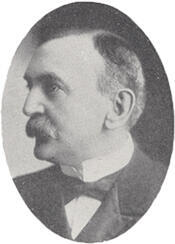
Here you will find contact information for Representative Adin Ballou Capron, including email address, phone number, and mailing address.
| Name | Adin Ballou Capron |
| Position | Representative |
| State | Rhode Island |
| District | 2 |
| Party | Republican |
| Status | Former Representative |
| Term Start | March 15, 1897 |
| Term End | March 3, 1911 |
| Terms Served | 7 |
| Born | January 9, 1841 |
| Gender | Male |
| Bioguide ID | C000135 |
About Representative Adin Ballou Capron
Adin Ballou Capron (January 9, 1841 – March 17, 1911) was an American miller, Civil War veteran, and Republican politician from the state of Rhode Island who served as a Representative in the United States Congress from 1897 to 1911. Over the course of seven consecutive terms in the House of Representatives, he contributed to the legislative process during a significant period in American history and represented the interests of his Rhode Island constituents.
Born on January 9, 1841, Capron came of age in antebellum New England, where the growth of industry and the milling trade shaped the economic and social life of the region. He entered the milling business as a young man, gaining practical experience in an industry that was central to Rhode Island’s development. This early involvement in milling provided him with a grounding in business and local economic affairs that would later inform his public service and political career.
During the American Civil War, Capron served in the Union forces, answering the call to preserve the Union at a time of national crisis. His wartime service placed him among the generation of veterans whose experiences on the battlefield deeply influenced their later roles in civic and political life. The discipline, leadership, and sense of national purpose forged during the conflict helped shape his outlook as he transitioned from military to civilian pursuits after the war.
Following his return to Rhode Island, Capron resumed his work as a miller and became increasingly engaged in public affairs. His familiarity with the concerns of local industry, labor, and commerce positioned him as a figure of growing influence in his community. As he moved into politics, he aligned with the Republican Party, which dominated New England politics in the postwar era and advocated policies that resonated with industrial and business interests in his home state.
Capron was elected as a Republican to the United States House of Representatives and served from 1897 to 1911, a span covering seven terms in office. His congressional service coincided with a transformative era in American history marked by rapid industrialization, expanding overseas interests, and the early stirrings of the Progressive movement. As a member of the House of Representatives, he participated in the democratic process at the national level, contributing to debates and legislation affecting economic policy, infrastructure, and the evolving role of the federal government. Throughout his tenure, he worked to represent the needs and priorities of Rhode Island, particularly those tied to its industrial base and commercial life.
Capron’s years in Congress placed him among the lawmakers who navigated the challenges of the late nineteenth and early twentieth centuries, including questions of tariff policy, monetary issues, and the regulation of growing corporate power. His long service reflected both the confidence of his constituents and his ability to adapt to changing political and economic conditions while maintaining his Republican principles. By the time he left office in 1911, he had become one of Rhode Island’s more experienced and recognizable voices in the national legislature.
Adin Ballou Capron died on March 17, 1911, shortly after the conclusion of his congressional career. His life traced a path from the mills of Rhode Island, through the crucible of the Civil War, to the halls of Congress during a pivotal period in the nation’s development. Remembered as a miller, soldier, and legislator, he embodied the trajectory of many nineteenth-century New Englanders who combined industrial enterprise, military service, and political leadership in the service of both state and nation.