Representative Adolph Joachim Sabath
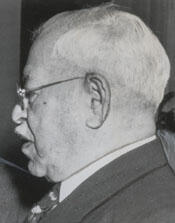
Here you will find contact information for Representative Adolph Joachim Sabath, including email address, phone number, and mailing address.
| Name | Adolph Joachim Sabath |
| Position | Representative |
| State | Illinois |
| District | 7 |
| Party | Democratic |
| Status | Former Representative |
| Term Start | December 2, 1907 |
| Term End | January 3, 1953 |
| Terms Served | 23 |
| Born | April 4, 1866 |
| Gender | Male |
| Bioguide ID | S000001 |
About Representative Adolph Joachim Sabath
Adolph Joachim Sabath (April 4, 1866 – November 6, 1952) was an American politician who served as a Democratic member of the U.S. House of Representatives from Chicago, Illinois, from March 4, 1907, until his death in 1952. Over the course of 23 consecutive terms, he became one of the most enduring figures in the House of Representatives and, beginning on April 1, 1934, served as the dean (longest-serving member) of the House. At the time of his death, he held the record for the longest uninterrupted service in the history of the House, a distinction he retained until Representative John Dingell surpassed him on August 8–9, 2013.
Sabath was born on April 4, 1866, in Záboří, in the Austrian Empire (now in the Czech Republic), into a Jewish family. He spent his early years in Central Europe before immigrating to the United States at the age of 15. Settling in Chicago, Illinois, he became part of the city’s growing immigrant communities, including Jewish and Czech populations, whose interests he would later represent in public office. His early experience as an immigrant in a rapidly industrializing American city helped shape his later political advocacy on behalf of newcomers to the United States and urban working-class constituencies.
After arriving in Chicago, Sabath became active in real estate and pursued legal studies. He attended the Chicago College of Law, later known as Chicago-Kent College of Law, from which he received his LL.B. degree in 1891. His legal training provided the foundation for a career that combined law, local judicial responsibilities, and politics. As he established himself professionally, he also became increasingly involved in Democratic Party affairs at the local and state levels, building connections that would facilitate his entry into elective office.
Sabath’s public career began in local judicial positions in Cook County. He served as a justice of the peace from 1895 to 1897 and then as a police magistrate from 1897 to 1906. In these roles he dealt directly with the problems of urban life, including disputes among immigrants and working-class residents, and gained a reputation as a figure accessible to his community. He remained active in Democratic Party politics, participating in state and national party affairs and attending numerous conventions. In 1911, he received notable positive attention within Chicago’s Czech community for his efforts in the search for missing child Elsie Paroubek; he helped raise funds for the search and later paid for the child’s funeral when her body was discovered, an act that further cemented his standing among his constituents.
In 1906, Sabath was elected to Congress from Chicago’s West Side, an area heavily populated by Jewish and Czech immigrants, and he took his seat in the Sixtieth Congress on March 4, 1907. He would be re-elected continuously, serving 23 terms and remaining in office until his death in 1952. As a member of the House of Representatives, he participated in the legislative process during a period that spanned the Progressive Era, World War I, the 1920s, the Great Depression, the New Deal, World War II, and the early Cold War. He was active in state and national Democratic Party affairs throughout his tenure and became a prominent spokesman for urban, immigrant, and working-class interests in Illinois and nationally.
Sabath emerged as a leading opponent of immigration restrictions and of national prohibition. During the 1920s he denounced prohibitionist forces, including the Anti-Saloon League and what he described as “their allied forces and co-workers, the Ku Klux Klan fanatics.” From 1925 to 1933, he consistently introduced bills in the House of Representatives to amend the Eighteenth Amendment and the Volstead Act to permit the legal commerce of beer and wine. In 1929, responding to claims that immigrants were responsible for the surge in criminal activity during the decade, he defended his large immigrant constituency, arguing that “the bootlegging and gang killings…are not the by-product but the direct product of the Volstead Act, and the supporters of this crime breeding legislation must claim the new cult of American criminals entirely as their own.” His positions reflected both his personal background and his commitment to civil liberties and the integration of immigrants into American civic life.
With the advent of the New Deal, Sabath aligned himself closely with President Franklin D. Roosevelt’s program and became an avid New Dealer. As a senior Democrat, he rose in influence and, after 1937, served as chairman of the powerful House Rules Committee, which controls the flow of legislation to the House floor. Despite the importance of the position, he was widely regarded as an ineffective chairman, hampered by a small and weak staff and an inability to assert firm leadership over the committee. He was frequently at odds with House leadership and was known for writing letters to the President “informing” on Speakers William B. Bankhead and Sam Rayburn, reflecting ongoing tensions within the Democratic caucus. Nonetheless, his long tenure and seniority made him a central figure in legislative maneuvering during the Roosevelt and Truman administrations.
Sabath’s congressional service extended into the era of World War II and the early postwar period. He was an interventionist who strongly supported war against Nazi Germany and backed measures to strengthen American defense and aid the Allies before and after U.S. entry into the conflict. He also played a role in the careers of future leaders, notably nominating a teenage Hyman G. Rickover—later an admiral and a principal architect of the U.S. Navy’s nuclear propulsion program—to the United States Naval Academy. A committed Zionist, Sabath supported the recognition of the State of Israel and urged the lifting of the American arms embargo imposed on both sides during the 1948 Palestine war, reflecting his long-standing concern with Jewish affairs and international developments affecting Jewish communities.
From April 1, 1934, Sabath held the ceremonial but symbolically important role of dean of the United States House of Representatives, denoting his status as the longest-serving member. He remained dean for 18 years, 7 months, and 5 days, the longest tenure in that role until surpassed by John Dingell in August 2013. His service in Congress, which began in 1907 and continued without interruption until 1952, made him a living link across multiple political eras and presidential administrations, and he became a familiar and enduring presence in the House chamber.
Adolph Joachim Sabath died in office of pancreatic cancer on November 6, 1952, in Washington, D.C. At the time of his death, he had served continuously in the House of Representatives for more than 45 years, the longest uninterrupted service in its history to that date. He was buried at Forest Home Cemetery in Forest Park, Illinois, near Chicago. His career, spanning local judicial service, national legislative leadership, and decades of advocacy for immigrants, urban constituencies, and New Deal policies, left a lasting imprint on Illinois politics and on the institutional history of the U.S. House of Representatives.