Representative Alan S. Lowenthal
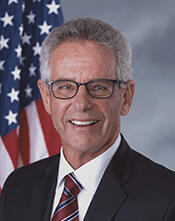
Here you will find contact information for Representative Alan S. Lowenthal, including email address, phone number, and mailing address.
| Name | Alan S. Lowenthal |
| Position | Representative |
| State | California |
| District | 47 |
| Party | Democratic |
| Status | Former Representative |
| Term Start | January 3, 2013 |
| Term End | January 3, 2023 |
| Terms Served | 5 |
| Born | March 8, 1941 |
| Gender | Male |
| Bioguide ID | L000579 |
About Representative Alan S. Lowenthal
Alan Stuart Lowenthal (born March 8, 1941) is an American politician and academic who served as a Representative from California in the United States Congress from January 3, 2013, to January 3, 2023. A member of the Democratic Party, he represented California’s 47th congressional district for five terms and contributed to the legislative process during a significant period in American history. He previously served in the California State Assembly from 1998 to 2004 and the California State Senate from 2004 to 2012, consistently representing the city of Long Beach and its surrounding suburbs.
Lowenthal was born and raised in Queens, New York City, into a Jewish family. He was graduated with a Bachelor of Arts degree from Hobart College and went on to earn a Ph.D. in psychology from Ohio State University. In 1969, he moved to Long Beach, California, where he joined the faculty of California State University, Long Beach, as a professor of community psychology. His academic work focused on urban issues and community well-being, and he remained on the faculty for decades. In 1992, he went on leave from the university after being elected to the Long Beach City Council, and he remained on leave for several years until his retirement from the university in 1998.
Lowenthal’s formal political career began at the local level when he became a Long Beach City Councilman in 1992, a position that gave him experience in municipal governance and urban policy. Building on this local service, in 1998 he ran for the California State Assembly from the 54th district. In that election he defeated Republican nominee Julie Alban by a margin of 50 percent to 47 percent. He was reelected in 2000, defeating Republican Rudy Svorinich, then a Los Angeles City Council member, by 59 percent to 39 percent, and again in 2002, defeating Republican Cesar Castellanos by 60 percent to 40 percent. During his Assembly tenure from 1998 to 2004, Lowenthal authored gun control legislation that banned the sale of guns in private homes, reflecting his interest in public safety. He was a founding member of the Assembly’s Bipartisan Caucus and authored legislation that created California’s first-ever Bipartisan Citizens Redistricting Commission, a significant reform aimed at reducing partisan gerrymandering.
Lowenthal’s work in the Assembly earned him recognition from statewide organizations. The League of California Cities named him Legislator of the Year in 2001 for his advocacy on behalf of local governments. In 2002, the California Firefighters Association named him Legislator of the Year after he sponsored a law limiting liability for organizations that donated firefighting equipment, thereby encouraging greater support for fire services. He also received the “Rivie” Award from the Friends of the Los Angeles River in recognition of his efforts to help clean up and restore the river. These honors underscored his focus on environmental quality, local government empowerment, and public safety.
In 2004, Lowenthal was elected to the California State Senate from the 27th district. He ran unopposed in the Democratic primary and, in the general election, defeated Republican nominee Cesar Navarro Castellanos by a margin of 63 percent to 37 percent. He was reelected to the State Senate in 2008, defeating Republican Allen Wood by 67 percent to 33 percent. In the Senate, he continued his emphasis on environmental policy, transportation, and education. He chaired the Senate Committee on Education and the Select Committee on High-Speed Rail, and he served on the Senate Environmental Quality Committee as well as the Select Committee on California Ports and Goods Movement. Among the legislation he authored and saw signed into law were measures to reduce diesel emissions at California ports by limiting idling time for trucks conducting transactions, a bill establishing a grant program to provide financial incentives for purchasing or leasing electric vehicles, and a bill to protect highways. His expertise and advocacy on clean transportation and environmental issues led to his appearance as a significant commentator in the documentary “Who Killed the Electric Car?”. During this period, with the election of his former spouse Bonnie Lowenthal to the State Assembly and his own reelection in 2008, the two became the first divorced husband and wife to serve concurrently in the California State Legislature.
On November 6, 2012, Lowenthal was elected to the U.S. House of Representatives from the newly created 47th congressional district, defeating Republican Gary DeLong. Although DeLong carried the Orange County portion of the district with 54 percent of the vote, Lowenthal won overwhelmingly in the Los Angeles County portion by more than 38,000 votes, exceeding his overall margin of victory of 30,100 votes. He took office on January 3, 2013, becoming the first non-Hispanic Democrat to represent a significant portion of traditionally heavily Republican Orange County in Congress since Jerry M. Patterson, who served from 1975 to 1985. The 47th district includes the Los Angeles County communities of Avalon, Long Beach, Signal Hill, Lakewood, Cerritos, Artesia, Bellflower, Downey, South Gate, Lynwood, Paramount, Hawaiian Gardens, Florence-Graham, and Willowbrook, as well as the western Orange County cities of Garden Grove, Westminster, Stanton, Buena Park, Los Alamitos, and Cypress, and Catalina Island. He was reelected by similar margins in 2014, 2016, and 2018, and served a total of five terms in Congress from 2013 to 2023. Until Democrats swept every congressional seat in Orange County in the 2018 elections, Lowenthal was the only elected white Democrat above the county level in much of the Orange County portion of his district, though the Los Angeles County portion—particularly the share of Long Beach, which alone accounts for more than half of the district’s population—formed the core of his electoral base.
During his decade in the House of Representatives, Lowenthal participated actively in the democratic process and represented the interests of his constituents on a range of national and regional issues. He served on the House Committee on Transportation and Infrastructure, including the Subcommittee on Highways and Transit, the Subcommittee on Water Resources and Environment, and the Subcommittee on Coast Guard and Maritime Transportation, reflecting his long-standing focus on ports, goods movement, and transportation policy. He also served on the House Committee on Natural Resources, where he sat on the Subcommittee on Energy and Mineral Resources, the Subcommittee on Fisheries, Wildlife, Oceans and Insular Affairs, and the Subcommittee on Water and Power. His committee assignments allowed him to continue his work on environmental protection, coastal and maritime issues, and sustainable infrastructure at the federal level.
Lowenthal aligned with the progressive wing of the Democratic Party and was a member of the Congressional Progressive Caucus. He also belonged to numerous issue and regional caucuses, including the Congressional Asian Pacific American Caucus, the House Baltic Caucus, the Congressional Arts Caucus, the United States Congressional International Conservation Caucus, the Climate Solutions Caucus, the Medicare for All Caucus, the Blue Collar Caucus, and the House Pro-Choice Caucus. His foreign policy positions included strong support for Israel; he stated that what he viewed as “historical denial about the right of Jewish people to have their own homeland” and the Palestinian “refusal to acknowledge Israel as a Jewish state” were critical issues that needed to be addressed. He was also critical of Brazil’s president Jair Bolsonaro; in March 2019, he joined 29 other Democratic lawmakers in signing a letter to Secretary of State Mike Pompeo expressing alarm about the threat Bolsonaro’s agenda posed to the LGBTQ+ community, other minority communities, women, labor activists, and political dissidents in Brazil.
On December 16, 2021, Lowenthal announced that he would not seek reelection to Congress and would retire from the U.S. House of Representatives at the end of his term on January 3, 2023. His departure marked the close of a public career that spanned local government, the California State Legislature, and the United States Congress, during which he consistently emphasized environmental stewardship, transportation and infrastructure policy, and bipartisan approaches to structural reforms such as redistricting.