Representative Alan B. Mollohan
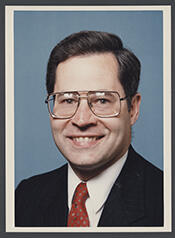
Here you will find contact information for Representative Alan B. Mollohan, including email address, phone number, and mailing address.
| Name | Alan B. Mollohan |
| Position | Representative |
| State | West Virginia |
| District | 1 |
| Party | Democratic |
| Status | Former Representative |
| Term Start | January 3, 1983 |
| Term End | January 3, 2011 |
| Terms Served | 14 |
| Born | May 14, 1943 |
| Gender | Male |
| Bioguide ID | M000844 |
About Representative Alan B. Mollohan
Alan Bowlby Mollohan (born May 14, 1943) is an American politician and attorney who served as the U.S. Representative for West Virginia’s 1st congressional district from January 3, 1983, to January 3, 2011. A member of the Democratic Party and the Blue Dog Coalition, he represented a district encompassing the northern part of West Virginia, based in Wheeling and including Parkersburg, Morgantown, Fairmont, and Clarksburg. Over 14 consecutive terms in the House of Representatives, he contributed to the legislative process during a significant period in American history, participating in the democratic process and representing the interests of his constituents.
Mollohan was born in Fairmont, Marion County, West Virginia, the son of Robert H. Mollohan, who served as a U.S. Representative from West Virginia in two separate stints totaling 18 years. Growing up in a politically active household, he was exposed early to public service and the workings of Congress through his father’s career. He attended Greenbrier Military School in Lewisburg, West Virginia, where he received a structured, military-style secondary education that emphasized discipline and leadership.
Following his preparatory education, Mollohan enrolled at the College of William & Mary in Williamsburg, Virginia, from which he graduated. He then returned to his home state to pursue legal studies, earning a Juris Doctor from the West Virginia University College of Law in Morgantown. His legal training provided the foundation for his subsequent work as an attorney and informed his approach to legislative and committee responsibilities during his congressional career.
In addition to his legal and political pursuits, Mollohan served in the United States Army Reserve from 1970 to 1983, attaining the rank of captain. His military reserve service overlapped with the early part of his congressional tenure, reflecting a parallel commitment to national defense and public service. After establishing himself as an attorney, he would later be associated with the law firm Nelson Mullins Riley & Scarborough, serving as “Of Counsel” in the firm’s Huntington, West Virginia, office, where he drew on his legal background and extensive experience in federal matters.
Mollohan’s entry into Congress was closely tied to his family’s political legacy. When his father, Robert Mollohan, retired from the House in 1982 after 18 years in Congress spread over two periods of service, Alan Mollohan sought to succeed him. He won a highly competitive contest for the open seat in the 1st congressional district and took office on January 3, 1983. He faced another close race in 1984, but by 1986 he was unopposed for a third term. Over the next two decades he generally enjoyed strong electoral security, facing Republican opposition only intermittently—in 1988, 1990, 1994, and 2006—and running unopposed in the general elections of 1992, 1996, 2002, and 2008. In 1998 and 2000 his only general-election opponent was Libertarian candidate Richard Kerr.
Mollohan’s most significant intraparty challenge came in the wake of redistricting following the 1990 Census, when West Virginia lost one of its House seats. The 1992 redistricting merged his district with that of 2nd District Congressman Harley O. “Buckey” Staggers Jr. No other party fielded a candidate, making the Democratic primary effectively decisive. Although the new district contained more of Mollohan’s former territory than Staggers’s, the contest was expected to be difficult. Mollohan ultimately prevailed, winning the nomination with 60 percent of the vote, and continued to represent the reconfigured 1st district. From his first election in 1982 through the end of his tenure, he faced a total of only six Republican challengers, the most recent being former state delegate Chris Wakim in 2006, a race in which Mollohan won 64 percent of the vote.
During his 14 terms in Congress, Mollohan became a senior member of the House Appropriations Committee, one of the most influential panels in the House due to its control over federal spending. Within Appropriations, he served on several key subcommittees, including the Subcommittee on Homeland Security and the Subcommittee on Interior, Environment, and Related Agencies. He was chairman of the Subcommittee on Commerce, Justice, Science, and Related Agencies, where he played a central role in shaping funding for law enforcement, the judiciary, scientific research, and related federal programs. In addition to his appropriations work, he served as the ranking Democrat on the House Committee on Standards of Official Conduct (Ethics Committee) until 2006.
Mollohan’s tenure on the Ethics Committee and his role in directing federal funds to his district drew national attention in 2006. On February 28, 2006, the National Legal and Policy Center filed a 500-page ethics complaint alleging that he had misrepresented his assets on congressional financial disclosure forms. The complaint noted that his real estate holdings and other assets had increased from approximately $562,000 in 2000 to at least $6.3 million in 2004, and alleged that from 1996 through 2004 his reports failed to disclose certain real estate, corporate, and financial assets that public records indicated were owned by Mollohan and his wife. On April 7, 2006, The New York Times reported that he had directed approximately $250 million in earmarked federal funding to five nonprofit organizations in his district—the West Virginia High Technology Consortium Foundation, the Institute for Scientific Research, the Canaan Valley Institute, the Vandalia Heritage Foundation, and the MountainMade Foundation—nonprofits that he had helped create and whose leaders were at times his business partners, raising questions about potential personal financial benefit.
In the wake of these reports, House Minority Leader Nancy Pelosi announced on April 21, 2006, that Mollohan would temporarily step down as the ranking Democrat on the House Ethics Committee; Representative Howard Berman of California succeeded him in that role. Further scrutiny followed when, on April 25, 2006, The Wall Street Journal reported that Mollohan and Dale R. McBride, CEO of FMW Composite Systems Inc. of Bridgeport, West Virginia, had jointly purchased a 300-acre farm along the Cheat River. Mollohan had previously secured a $2.1 million government contract earmark for FMW Composite Systems to develop lightweight payload pallets for space shuttle missions. Federal Bureau of Investigation agents reportedly made inquiries in Washington and West Virginia regarding Mollohan’s investments and whether they were properly disclosed. Mollohan acknowledged that he might have made inadvertent errors on his disclosure forms and in June 2006 filed corrections to his financial disclosure statements. In January 2010, the U.S. Department of Justice informed the watchdog group Citizens for Responsibility and Ethics in Washington that it had closed its investigation and that no charges would be filed against Mollohan.
Mollohan’s long record of electoral security ended in 2010. On May 11, 2010, he faced a serious Democratic primary challenge from West Virginia state senator Mike Oliverio. It was his first contested primary since the 1992 race against Harley Staggers Jr. following the district merger. In a closely watched contest reflecting shifting political currents in his district and within the Democratic Party, Mollohan was defeated by Oliverio, 56 percent to 44 percent. His loss in the primary effectively ended his congressional career, as Oliverio went on to become the Democratic nominee in the general election. Mollohan left office at the conclusion of his fourteenth term on January 3, 2011, after nearly three decades of service in the U.S. House of Representatives.