Representative Alan Wheat
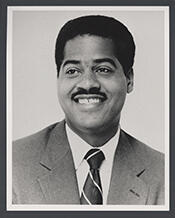
Here you will find contact information for Representative Alan Wheat, including email address, phone number, and mailing address.
| Name | Alan Wheat |
| Position | Representative |
| State | Missouri |
| District | 5 |
| Party | Democratic |
| Status | Former Representative |
| Term Start | January 3, 1983 |
| Term End | January 3, 1995 |
| Terms Served | 6 |
| Born | October 16, 1951 |
| Gender | Male |
| Bioguide ID | W000326 |
About Representative Alan Wheat
Alan Dupree Wheat (born October 16, 1951) is an American economist, lobbyist, and politician who served six terms in the U.S. House of Representatives from the state of Missouri from 1983 to 1995. A member of the Democratic Party, Wheat represented a Kansas City–area district and contributed to the legislative process during a significant period in late twentieth-century American history, participating actively in the democratic process and representing the interests of his constituents in Congress.
Wheat was born in San Antonio, Texas, and spent part of his childhood in different parts of the United States due to his family’s moves. He later settled in the Kansas City area, which would become the base of his political career. Demonstrating an early interest in public affairs and policy, he pursued studies that prepared him for work in economics and government, laying the foundation for his later roles as an economist and elected official.
Wheat attended Grinnell College in Grinnell, Iowa, where he studied economics. His academic training in economics equipped him with analytical tools that he would later apply to public policy, budgetary issues, and legislative decision-making. After completing his education, he began his professional career in public service and policy analysis, working in roles that combined his economic expertise with a growing engagement in politics and community issues.
Before his election to Congress, Wheat worked as an economist and became involved in local and state politics in Missouri. He served in staff and advisory capacities that exposed him to the workings of government and the legislative process, and he developed a reputation as a thoughtful, policy-oriented Democrat. His experience in economic analysis and public policy helped position him as a credible candidate for higher office, particularly at a time when economic issues and federal budget priorities were central concerns for voters.
Wheat was first elected to the U.S. House of Representatives in 1982 and took office on January 3, 1983, as a Democratic Representative from Missouri. He would go on to serve six consecutive terms, remaining in office until January 3, 1995. During his twelve years in Congress, Wheat served through the administrations of Presidents Ronald Reagan, George H. W. Bush, and Bill Clinton, a period marked by debates over federal spending, tax policy, social programs, and the end of the Cold War. As a member of the House of Representatives, he participated in committee work, floor debates, and the development of legislation, contributing to the formulation of national policy while advocating for the needs and priorities of his Kansas City–area constituents.
Throughout his congressional service, Wheat was recognized as a committed Democrat who engaged with a wide range of legislative issues, including economic policy, social welfare, and urban concerns. He worked within the institutional framework of the House to influence legislation, support his party’s positions, and respond to the changing political and economic landscape of the 1980s and early 1990s. His tenure coincided with significant shifts in domestic and international policy, and he took part in the deliberations that shaped federal responses to these developments.
After leaving Congress in 1995, Wheat continued his involvement in public affairs as an economist and lobbyist. Drawing on his legislative experience and policy background, he entered the private sector and advocacy work, advising clients on federal policy, regulatory matters, and the legislative process. In these roles, he remained engaged with national issues and the workings of government, extending his influence beyond elected office while maintaining the professional focus on economics and public policy that had characterized his career. As of the latest information, he remains a living figure whose career reflects a long-standing engagement with both public service and policy advocacy.