Representative Albert Elmer Austin
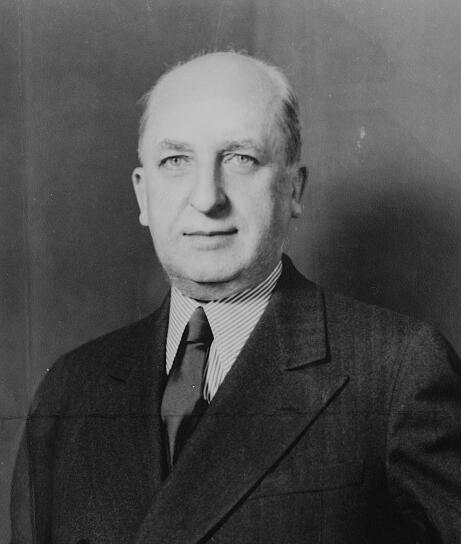
Here you will find contact information for Representative Albert Elmer Austin, including email address, phone number, and mailing address.
| Name | Albert Elmer Austin |
| Position | Representative |
| State | Connecticut |
| District | 4 |
| Party | Republican |
| Status | Former Representative |
| Term Start | January 3, 1939 |
| Term End | January 3, 1941 |
| Terms Served | 1 |
| Born | November 15, 1877 |
| Gender | Male |
| Bioguide ID | A000339 |
About Representative Albert Elmer Austin
Albert Elmer Austin (November 15, 1877 – January 26, 1942) was an American surgeon, banker, state legislator, and Republican member of the United States House of Representatives from Connecticut, serving one term in Congress from 1939 to 1941. Over the course of a varied public career, he served in both the Connecticut House of Representatives and the U.S. House of Representatives and was also known for his prominent role in Masonic affairs and for being the stepfather of author, playwright, and later Congresswoman Clare Boothe Luce.
Austin was born in Medway, Massachusetts, on November 15, 1877. He attended the public schools there and went on to Amherst College, from which he graduated in 1899. Immediately after college he embarked on a brief career in education, serving as a member of the faculty of Attleboro High School in Attleboro, Massachusetts, from 1899 to 1900. Deciding to pursue medicine, he enrolled at Jefferson Medical College in Philadelphia, Pennsylvania, and completed his medical degree in 1905. Early in his adult life he married Anne Tyrell Christy; the marriage ended in divorce in 1916.
Following his medical training, Austin established himself as a practicing physician in Old Greenwich, Connecticut, beginning in 1907. He maintained his medical practice there for more than three decades, from 1907 to 1939, becoming a well-known local physician. In addition to his medical work, he entered the field of banking in Old Greenwich in 1926 and continued in that line of business until his death in 1942. His professional life was thus divided between medicine and finance, both of which provided a foundation for his later public service. During the First World War, he served in the United States Army as a regimental surgeon with the 214th Engineers, Fourteenth (Wolverine) Division, from 1918 to 1919, contributing his medical expertise to the war effort.
Austin’s personal life was marked by several significant marriages. After his divorce from Anne Tyrell Christy in 1916, he married Anne Clara Snyder on May 17, 1919. Snyder was the mother of Clare Boothe, later Clare Boothe Luce, making Austin her stepfather. Anne Clara Snyder was killed in an automobile–train accident in Miami, Florida, in 1938. The following year, on September 3, 1939, Austin married Lillian V. Lounsbury. Through these family connections, he became linked to one of the most prominent female political figures of the mid-twentieth century.
Austin entered public life in Connecticut state politics while continuing his medical and business careers. A member of the Republican Party, he was elected to the Connecticut House of Representatives, serving his first term from 1917 to 1919 and returning for a second period of service from 1921 to 1923. In the state legislature he participated in the formulation of state policy during and immediately after World War I. His legislative service at the state level helped establish his reputation within the Republican Party and among his constituents, setting the stage for his eventual election to national office.
In addition to his political and professional work, Austin was deeply involved in Masonic organizations. He was an active member of Acacia Lodge No. 85 of the Ancient, Free and Accepted Masons in Greenwich, Connecticut, and was raised to the sublime degree of Master Mason on October 31, 1916. He became worshipful master of the lodge in 1919 and served in that capacity for five years, during which he led a successful campaign to raise funds for a permanent Masonic temple in Greenwich. Under his leadership, the lodge acquired land from the old homestead of Oliver D. Mead at the corner of Havemeyer Place and Milbank Avenue, where the temple at 28 Havemeyer Place was constructed. Austin was the first to turn the sod on the Mead lot. He later served as the first District Deputy of the First Masonic District of the Most Worshipful Grand Lodge of the State of Connecticut and was a member of both the York Rite and Scottish Rite bodies. In 1939, in recognition of his contributions to Masonry, public health, and national service, he was conferred the 33rd degree.
Austin’s congressional career came relatively late in his life. He was elected as a Republican to the Seventy-sixth Congress and served as a U.S. Representative from Connecticut from January 3, 1939, to January 3, 1941. His term in the House of Representatives coincided with a critical period in American history, as the United States grappled with the final years of the Great Depression and the mounting international tensions that would lead to World War II. As a member of the House, he participated in the legislative process and represented the interests of his Connecticut constituents in national debates. He sought reelection in 1940 but was an unsuccessful candidate for the Seventy-seventh Congress, thus concluding his federal legislative service after one term.
After leaving Congress, Austin resumed his medical profession in Greenwich, continuing to practice medicine while remaining engaged in banking and civic affairs. He was a member of the American Medical Association, reflecting his continued involvement in professional medical circles. He died in Greenwich, Connecticut, on January 26, 1942, at the age of 64. He was interred at Ferncliff Cemetery in Hartsdale, New York. In recognition of his long record of service, the Most Worshipful Grand Lodge of the State of Connecticut adopted a resolution in its 1942 proceedings honoring Albert E. Austin, concluding that “His death brought to an end a busy life spent for the betterment of his fellowman.”