Senator Albert Jeremiah Beveridge
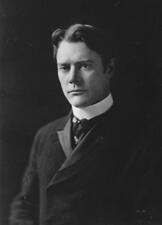
Here you will find contact information for Senator Albert Jeremiah Beveridge, including email address, phone number, and mailing address.
| Name | Albert Jeremiah Beveridge |
| Position | Senator |
| State | Indiana |
| Party | Republican |
| Status | Former Representative |
| Term Start | December 4, 1899 |
| Term End | March 3, 1911 |
| Terms Served | 2 |
| Born | October 6, 1862 |
| Gender | Male |
| Bioguide ID | B000429 |
About Senator Albert Jeremiah Beveridge
Albert Jeremiah Beveridge (October 6, 1862 – April 27, 1927) was an American historian, lawyer, and United States Senator from Indiana. An intellectual leader of the Progressive Era and a prominent American imperialist, he served as a Republican Senator from 1899 to 1911 and later became widely known as a biographer of Chief Justice John Marshall and President Abraham Lincoln. Over the course of two terms in the Senate, Beveridge contributed actively to the legislative process during a significant period in American history, representing Indiana and participating prominently in national debates over expansion, regulation, and reform.
Beveridge was born on October 6, 1862, in Highland County, Ohio, near Sugar Tree Ridge, to Thomas H. and Frances Parkinson Beveridge, both of English descent. Shortly after his birth, his parents moved to Indiana, where his childhood was marked by hard work and limited means. He secured his early education with difficulty, graduating from Sullivan Township High School in 1881. His youth in rural Indiana, combined with the necessity of labor from an early age, helped shape the self-reliant and ambitious character that would later define his public life.
Pursuing higher education despite financial obstacles, Beveridge attended Indiana Asbury University (now DePauw University), from which he graduated in 1885 with a Ph.B. degree. While at DePauw he was a member of the Delta Kappa Epsilon fraternity and began to develop a reputation as a compelling orator. After college he moved to Indianapolis, where he worked as a law clerk while studying law. In 1887 he was admitted to the Indiana bar and commenced the practice of law in Indianapolis. That same year he married Katherine Langsdale; following her death in 1900, he married Catherine Eddy in 1907. Beveridge was also active in fraternal life as a Freemason and was a member of Oriental Lodge No. 500 in Indianapolis.
Beveridge entered politics in 1884 by speaking on behalf of Republican presidential candidate James G. Blaine, and he soon became a sought-after campaign orator. His prominence increased notably during the 1896 presidential campaign, when his speeches attracted national attention. Known for advocating territorial expansion by the United States and for supporting an increased role for the federal government, he quickly emerged as a leading voice in the rising Progressive movement within the Republican Party. In 1899 he was appointed to the United States Senate from Indiana as a Republican, beginning a congressional career that would last until 1911 and place him at the center of debates over American imperialism, domestic reform, and economic regulation.
During his Senate service, Beveridge became one of the most visible advocates of American expansionism and is remembered as one of the era’s most prominent imperialists. He strongly supported the annexation of the Philippines and, along with Republican leader Henry Cabot Lodge, campaigned for the construction of a modern navy. In 1901 he became chair of the Senate Committee on Territories, a position that gave him considerable influence over the admission of new states. From this post he supported statehood for Oklahoma, but he opposed statehood for New Mexico and Arizona, arguing that the territories were too sparsely settled by white people and contained too many Hispanics and Native Americans, whom he described as intellectually incapable of self-government. He framed American expansion and governance of overseas and territorial populations as part of a divinely ordained “white man’s burden,” asserting that God had marked the American people as His chosen nation to bring civilization to the world.
After his election in 1905 to a second Senate term, Beveridge became closely identified with the reform-minded, insurgent wing of the Republican Party. He championed national child labor legislation and played a key role in major regulatory measures of the Progressive Era. He sponsored the Federal Meat Inspection Act of 1906, enacted in the wake of the public outcry following Upton Sinclair’s novel The Jungle, and joined other insurgents in supporting postal savings bank legislation and railroad regulation through the Mann–Elkins Act of 1910. Beveridge broke with President William Howard Taft over the Payne–Aldrich Tariff, aligning himself instead with Theodore Roosevelt’s more aggressive reform program. At the 1908 Republican National Convention, the vice-presidential nomination was urged upon him by Taft’s campaign manager Frank Hitchcock, Senator Reed Smoot of Utah, and the Nebraska delegation, but Beveridge declined. He continued to support Roosevelt’s progressive views and, after losing his Senate seat to Democrat John Worth Kern when the Democrats carried Indiana in the 1910 elections, he served as the keynote speaker at the Progressive Party convention in 1912 that nominated Roosevelt for president.
Following his Senate defeat, Beveridge formally left the Republican Party with Roosevelt in 1912 and became a leader of the new Progressive Party in Indiana. He ran unsuccessfully as the Progressive nominee for governor of Indiana in 1912 and for the United States Senate in 1914, losing both races. When the Progressive Party disintegrated, he returned to the Republican Party, but his political future had been badly damaged. He remained an outspoken critic of President Woodrow Wilson, urging a more interventionist policy during the Mexican Revolution while opposing Wilson’s plan for a League of Nations, which Beveridge believed would undermine American independence. In 1922 he made one final bid for the Senate, defeating incumbent Harry S. New in the Republican primary but losing the general election to Democrat Samuel M. Ralston. He never again held public office.
In his later years, Beveridge increasingly turned away from active politics and devoted himself to historical scholarship, even as he reassessed some of his earlier views on government. In a notable address before the Sons of the Revolution’s annual dinner in June 1923, he criticized the growth of the regulatory state and the proliferation of boards, bureaus, and commissions, arguing that Americans would be happier and more prosperous if many such agencies and regulations were abolished. At the same time, he immersed himself in research and writing and became a leading figure in the American Historical Association, serving as a member and secretary. His four-volume biography The Life of John Marshall, published between 1916 and 1919, linked the Chief Justice’s life to his constitutional jurisprudence and won Beveridge the Pulitzer Prize for Biography or Autobiography. He then undertook a monumental study of Abraham Lincoln; although he completed only half of the projected four-volume work before his death, the first two volumes, Abraham Lincoln, 1809–1858, were published posthumously in 1928 and were noted for stripping away myths to present Lincoln as a complex and imperfect politician.
Beveridge’s public and intellectual life intersected with international figures as well as national ones. In 1901, a decade before Leo Tolstoy’s death, he accompanied American travel lecturer Burton Holmes to Yasnaya Polyana, Tolstoy’s estate in Russia. Holmes filmed Tolstoy with his 60-mm camera as the three men conversed, but Beveridge’s advisers later had the film destroyed, fearing that evidence of his meeting with a radical Russian author might damage his prospects for higher office, including a possible presidential candidacy. In addition to his major biographies and speeches, Beveridge published numerous works, including “The March of the Flag” (1898), “In Support of an American Empire” (1900), The Young Man and the World (1905), Americans of Today and Tomorrow (1908), The Meaning of the Times and Other Speeches (1909), Pass Prosperity Around (1912), and What Is Back of the War? (1916), as well as many articles and addresses on contemporary politics and history.
Albert Jeremiah Beveridge died of a heart attack in Indianapolis, Indiana, on April 27, 1927, and was buried at Crown Hill Cemetery. His widow, together with members of the American Historical Association, later endowed the Beveridge Award in his memory, honoring outstanding historical scholarship and ensuring that his name would remain associated not only with the Progressive Era and American imperialism, but also with the development of professional historical writing in the United States.