Representative Albert Sidney Burleson
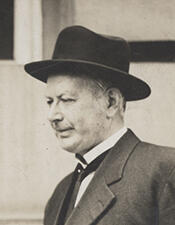
Here you will find contact information for Representative Albert Sidney Burleson, including email address, phone number, and mailing address.
| Name | Albert Sidney Burleson |
| Position | Representative |
| State | Texas |
| District | 10 |
| Party | Democratic |
| Status | Former Representative |
| Term Start | December 4, 1899 |
| Term End | March 3, 1915 |
| Terms Served | 8 |
| Born | June 7, 1863 |
| Gender | Male |
| Bioguide ID | B001110 |
About Representative Albert Sidney Burleson
Albert Sidney Burleson (June 7, 1863 – November 24, 1937) was a progressive Democrat who served as a Representative from Texas in the United States Congress from 1899 to 1915 and later as United States Postmaster General under President Woodrow Wilson. Over eight consecutive terms in the House of Representatives, he contributed to the legislative process during a significant period in American history, representing the interests of his Texas constituents and emerging as an influential party figure at both the state and national levels. A strong supporter of William Jennings Bryan and Woodrow Wilson, he became one of Wilson’s most trusted advisors and played a major role in securing the Texas delegation for Wilson at the Democratic National Convention in 1912.
Burleson’s congressional service, spanning from March 4, 1899, to March 3, 1915, coincided with the Progressive Era, a time of major political and social reform in the United States. As a member of the House of Representatives, he participated actively in the democratic process and aligned himself with the progressive wing of the Democratic Party, advocating reforms consistent with the broader movement that sought to regulate business, expand public services, and address rural concerns. His effectiveness in party politics and his loyalty to Wilson during the 1912 campaign helped elevate his national profile and positioned him for cabinet service once Wilson assumed the presidency.
In 1913, shortly after Wilson took office, Burleson was appointed Postmaster General of the United States, a position he held throughout Wilson’s administration. In this cabinet role heading the U.S. Post Office Department, he oversaw substantial expansion and modernization of postal services. He is credited with initiating and expanding parcel post and air mail services and with increasing mail service to rural areas, thereby strengthening rural free delivery and integrating remote communities more fully into the national economy. He also introduced the “zone system,” under which postage on second-class mail was charged according to distance, an innovation that reshaped the economics of periodical distribution.
Burleson’s tenure as Postmaster General, however, was also marked by policies that generated intense controversy, particularly in the areas of civil rights and civil liberties. Beginning in 1913, he instituted racial segregation within the Post Office Department, separating postal employees by race and reinforcing Jim Crow practices in federal employment. He also dismissed Black postal workers in the South, actions that drew criticism from civil rights advocates and have been widely condemned by historians. In labor relations, he angered organized labor by forbidding postal employees to strike, reflecting a hard line against labor militancy within a critical federal service.
After the United States entered World War I in 1917, Burleson became a central figure in the federal government’s wartime control over information and communications. He vigorously enforced the Espionage Act, ordering local postmasters to send to him any illegal or suspicious material they found in the mails. Under his direction, the distribution of major anti-war magazines, such as Emma Goldman’s Mother Earth and Max Eastman’s The Masses, was drastically slowed or effectively halted, and he banned anti-war material from being delivered by Post Office personnel. These actions clamped down on free speech and press freedoms and have been heavily criticized ever since; civil liberties scholar Samuel Walker has written that Burleson “holds the dubious distinction of being the worst member of the entire Wilson administration on civil liberties,” and historian G. J. Meyer has argued that, although he improved postal services, “it is fair to say…that he may have been the worst human being ever to serve as postmaster general.”
Burleson also became embroiled in conflict with the press early in his tenure. In 1913, he aroused a storm of protest, especially from large daily newspapers, by declaring that he would enforce an existing law requiring publications to print, among other things, a sworn statement of paid circulation. His predecessor had held enforcement in abeyance pending confirmation of the law’s constitutionality, but Burleson moved to apply it, prompting legal challenges. The Supreme Court ultimately enjoined him from enforcing that requirement, further straining his relationship with the press and contributing to a general alienation of newspaper publishers from the Post Office Department during his administration.
During the later years of World War I, Burleson extended his influence beyond the mails to other forms of communication. From June 1918 to July 1919, the Post Office Department, under his leadership, operated the nation’s telephone and telegraph services, an arrangement he had advocated as early as 1913. Following the war, he continued to argue for the permanent nationalization of telephone, telegraph, and cable services, believing that such essential communications infrastructure should remain under federal control. Acknowledging that Congress would be hostile to this idea, he ultimately oversaw the return of these systems to their corporate owners, but his advocacy reflected a broader progressive-era debate over public versus private control of key utilities.
In his later years, after leaving the cabinet with the close of the Wilson administration, Burleson remained a notable, if controversial, figure in discussions of federal power, communications policy, and civil liberties. He died on November 24, 1937, leaving a complex legacy: as a progressive Democrat who significantly expanded and modernized the nation’s postal and communications services, and as an architect of policies that entrenched racial segregation in federal employment and sharply curtailed freedom of expression during wartime.