Representative Albert James Campbell
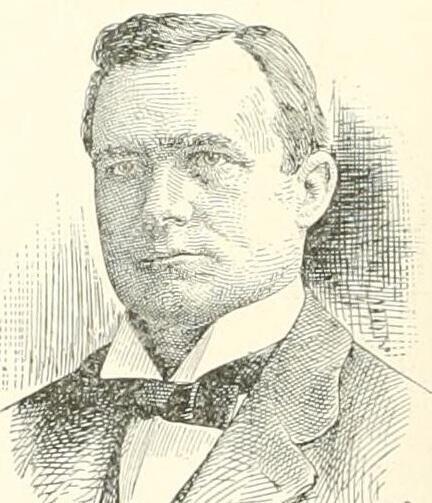
Here you will find contact information for Representative Albert James Campbell, including email address, phone number, and mailing address.
| Name | Albert James Campbell |
| Position | Representative |
| State | Montana |
| District | 1 |
| Party | Democratic |
| Status | Former Representative |
| Term Start | December 4, 1899 |
| Term End | March 3, 1901 |
| Terms Served | 1 |
| Born | December 12, 1857 |
| Gender | Male |
| Bioguide ID | C000074 |
About Representative Albert James Campbell
Albert James Campbell (December 12, 1857 – August 9, 1907) was a U.S. Representative from Montana and an attorney whose career spanned Michigan and the then-new state of Montana. He was born in Pontiac, Oakland County, Michigan, where he attended the local common schools. Demonstrating an early interest in practical and agricultural studies, he pursued further education at the State Agricultural College at Lansing, an institution that later became Michigan State University. His formative years in Michigan provided the educational foundation for his subsequent work as a teacher, lawyer, and public official.
After completing his studies, Campbell taught school for several years, a common path for educated young men of his era and one that introduced him to public service and community leadership. While engaged in teaching, he undertook the study of law, preparing for admission to the bar. In 1881 he was admitted to the bar and commenced the practice of law in Oxford, Michigan. Seeking broader professional opportunities, he moved in 1882 to Clarke, Michigan, where he resumed and expanded his legal practice, establishing himself in the local legal community.
Campbell’s abilities as a lawyer led to his election as prosecuting attorney of Lake County, Michigan, a position he held from 1886 to 1888. In that capacity he was responsible for representing the county in criminal matters and advising local officials, gaining experience in public law and administration. He resigned the office in 1888, and the following year he joined the westward movement that was reshaping the United States. On November 16, 1889, shortly after Montana achieved statehood, he moved to Butte, Montana, a rapidly growing mining center, and continued the practice of law. His arrival in Butte placed him in one of the most dynamic economic and political environments in the Rocky Mountain West.
In Montana, Campbell quickly became involved in public affairs. Building on his legal experience and prior elective service in Michigan, he entered state politics and was elected a member of the Montana House of Representatives in 1897. Serving in the state legislature during a period of intense debate over mining interests, railroad regulation, and the organization of state institutions, he gained prominence within the Democratic Party and developed a reputation as an able legislator. His legislative service helped position him for national office at a time when Montana’s political landscape was still taking shape.
Campbell was elected as a Democrat to the Fifty-sixth Congress and served as Montana’s at-large Representative from March 4, 1899, to March 3, 1901. During his single term in the U.S. House of Representatives, he represented a state whose economy was dominated by mining, ranching, and emerging agricultural interests, and he participated in the national legislative debates of the turn of the twentieth century. Although he had the opportunity to seek continued service, he declined to be a candidate for renomination in 1900, choosing instead to return to private life and his legal career.
After leaving Congress, Campbell resumed the practice of law in Butte, Montana, where he remained professionally active. His post-congressional years were spent in the same community that had launched his Montana political career, and he continued to be associated with the legal and civic life of the city. In the summer of 1907, he traveled to New York City, where he died on August 9, 1907. His body was returned to Montana, and he was interred in Mount Moriah Cemetery in Butte, underscoring his lasting connection to the state he had represented in Congress.