Representative Albert Edward Carter
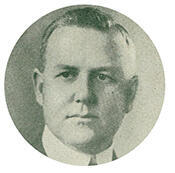
Here you will find contact information for Representative Albert Edward Carter, including email address, phone number, and mailing address.
| Name | Albert Edward Carter |
| Position | Representative |
| State | California |
| District | 6 |
| Party | Republican |
| Status | Former Representative |
| Term Start | December 7, 1925 |
| Term End | January 3, 1945 |
| Terms Served | 10 |
| Born | July 5, 1881 |
| Gender | Male |
| Bioguide ID | C000195 |
About Representative Albert Edward Carter
Albert Edward Carter (July 5, 1881 – August 8, 1964) was an American lawyer and Republican politician who served ten consecutive terms as a United States Representative from California from 1925 to 1945. Over two decades in the House of Representatives, he contributed to the legislative process during a significant period in American history, representing the interests of his constituents through the economic, social, and political upheavals of the interwar years, the Great Depression, and World War II.
Born on July 5, 1881, Carter came of age in an era of rapid industrial and urban growth in the United States, developments that would later shape the issues confronting Congress during his tenure. Details of his early life, including his family background and upbringing, are less extensively documented than his public career, but his subsequent professional path reflects the trajectory of a classically trained lawyer entering public service in the early twentieth century. His formative years coincided with the expansion of California’s population and economy, placing him in a state that was emerging as a major political and economic force within the nation.
Carter pursued legal studies and entered the practice of law, establishing himself as an American lawyer before embarking on a full-time political career. His legal training provided the foundation for his work in public office, equipping him with familiarity in statutory interpretation, legislative drafting, and the institutional workings of government. As a member of the bar, he was part of a professional cohort that often supplied candidates for elective office in the early 1900s, when legal expertise was seen as a natural preparation for legislative responsibilities.
Building on his legal background, Carter entered politics as a member of the Republican Party, aligning himself with a political organization that was particularly influential in California during the first half of the twentieth century. His professional reputation and party affiliation helped pave the way for his election to the United States House of Representatives, where he would become a long-serving figure. By the time he sought national office, he had established himself sufficiently within his community and party to secure the support necessary for a successful congressional campaign.
Carter began his service in the United States Congress in 1925, when he took his seat as a Representative from California in the 69th Congress. He would be reelected nine times, serving continuously until 1945. During these ten terms in office, he participated actively in the democratic process, taking part in debates, committee work, and the consideration of major national legislation. His congressional career spanned the administrations of multiple presidents and coincided with major events such as the stock market crash of 1929, the New Deal era, and the nation’s mobilization for World War II. As a Republican member of the House of Representatives, he worked within his party’s caucus while also representing the specific needs and priorities of his California constituents.
Throughout his two decades in Congress, Carter’s role as a legislator required him to balance national policy concerns with the local and regional interests of his district. California’s rapid growth, its evolving agricultural and industrial base, and its strategic importance on the Pacific coast during the war years all formed part of the context in which he served. His long tenure indicates sustained electoral support and suggests that his constituents regarded him as an effective advocate for their concerns in Washington, D.C. Within the broader institutional life of the House, his repeated reelections also made him part of the experienced core of members who provided continuity across changing political and economic conditions.
After leaving Congress in 1945, Carter concluded his formal legislative career at the close of World War II, a natural transition point as the nation moved from wartime to peacetime priorities. In his later years, he lived away from the daily pressures of elective office, his public legacy defined primarily by his twenty years of service in the House of Representatives and his earlier work as a lawyer. Albert Edward Carter died on August 8, 1964, closing a life that had spanned from the late nineteenth century into the modern era and that had been marked by two decades of continuous service in the United States Congress as a Republican Representative from California.