Representative Albert Gallatin Egbert
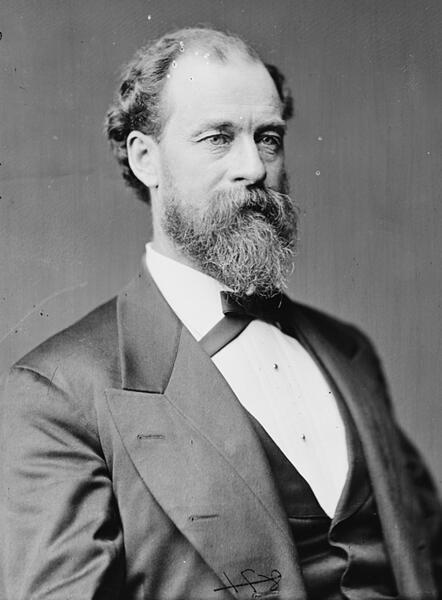
Here you will find contact information for Representative Albert Gallatin Egbert, including email address, phone number, and mailing address.
| Name | Albert Gallatin Egbert |
| Position | Representative |
| State | Pennsylvania |
| District | 27 |
| Party | Democratic |
| Status | Former Representative |
| Term Start | December 6, 1875 |
| Term End | March 3, 1877 |
| Terms Served | 1 |
| Born | April 13, 1828 |
| Gender | Male |
| Bioguide ID | E000087 |
About Representative Albert Gallatin Egbert
Albert Gallatin Egbert (April 13, 1828 – March 28, 1896) was a Democratic member of the U.S. House of Representatives from Pennsylvania who served one term in Congress from 1875 to 1877. As a Representative, he participated in the legislative and democratic processes during a significant period in American history, representing the interests of his constituents in the post–Civil War era.
Egbert was born on April 13, 1828, and came of age in a nation undergoing rapid political, economic, and territorial change. His early life unfolded against the backdrop of the Jacksonian and antebellum periods, developments that would shape the political culture in which he later operated. Details of his family background, childhood, and early influences are not extensively documented in standard reference works, but his subsequent public career indicates that he was sufficiently educated and engaged in civic affairs to enter national politics.
By the time Egbert emerged on the national stage, he had aligned himself with the Democratic Party, which was then contending with the consequences of the Civil War and Reconstruction. His political affiliation placed him within a party that was redefining its positions on federal power, economic policy, and the reintegration of the Southern states. Within this context, Egbert developed the experience and standing necessary to seek and win election to the United States House of Representatives from Pennsylvania.
Egbert was elected as a Democrat to the Forty-fourth Congress and served as a Representative from Pennsylvania from 1875 to 1877. During his single term in office, he contributed to the legislative process at a time when Congress was addressing issues related to Reconstruction, industrial growth, and the evolving relationship between the federal government and the states. As a member of the House of Representatives, Albert Gallatin Egbert participated in the democratic process and represented the interests of his constituents, working within the committee and floor procedures that structured congressional activity in the late nineteenth century.
His service in Congress occurred during a significant period in American history, as the nation continued to grapple with the political, social, and economic aftermath of the Civil War. Although detailed records of his specific legislative initiatives and committee assignments are limited in standard summaries, his tenure placed him among the lawmakers responsible for shaping federal policy in an era marked by contested elections, debates over civil rights, and the early stirrings of the Gilded Age economy. His decision, or that of his party and constituents, not to extend his service beyond a single term concluded his direct role in national legislative affairs in 1877.
After leaving Congress, Egbert returned to private life in Pennsylvania. Like many one-term members of the House in the nineteenth century, he resumed his previous pursuits and remained part of the civic and political fabric of his state without holding further national office. His later years were spent away from the center of federal power, but his experience as a former Representative ensured that he retained a measure of local prominence and respect.
Albert Gallatin Egbert died on March 28, 1896. His life and career, though only briefly intersecting with the national legislature, reflected the experiences of many nineteenth-century American politicians who served a single term in Congress during a transformative period in the nation’s history.