Representative Albert Estopinal
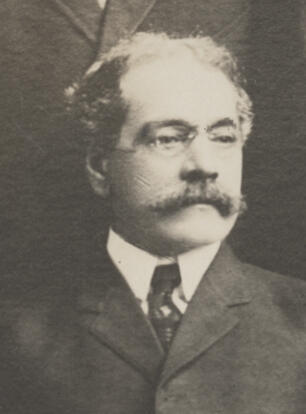
Here you will find contact information for Representative Albert Estopinal, including email address, phone number, and mailing address.
| Name | Albert Estopinal |
| Position | Representative |
| State | Louisiana |
| District | 1 |
| Party | Democratic |
| Status | Former Representative |
| Term Start | December 2, 1907 |
| Term End | March 3, 1921 |
| Terms Served | 7 |
| Born | January 30, 1845 |
| Gender | Male |
| Bioguide ID | E000224 |
About Representative Albert Estopinal
Albert Estopinal (January 30, 1845 – April 28, 1919) was an American Civil War veteran and Democratic politician who served seven terms as a U.S. Representative from Louisiana in the United States Congress during the early twentieth century. Over the course of his national service, he represented his Louisiana constituency in the House of Representatives during a significant period in American history, participating in the legislative process and contributing to the work of Congress from 1907 to 1921 as recorded in some contemporary accounts, and from 1908 to 1919 as reflected in official congressional records.
Estopinal was born in St. Bernard Parish, Louisiana, on January 30, 1845. He was educated in both public and private schools in Louisiana. His formal schooling ended in January 1862, when, as a young man during the Civil War, he left school to enlist in the Confederate Army. This early decision to enter military service shaped much of his subsequent public life and helped establish his standing in postwar Louisiana politics.
During the Civil War, Estopinal served in Company G of the Twenty-eighth Regiment of Louisiana Infantry. Over the course of the conflict he advanced in responsibility, ultimately serving as a sergeant in Company G of the Twenty-second Louisiana Heavy Artillery. He remained in Confederate service throughout the duration of the war. His experience as a noncommissioned officer in a heavy artillery unit during a period of intense national conflict later informed his public reputation as a veteran and community leader in Reconstruction and post-Reconstruction Louisiana.
After the war, Estopinal entered civilian life and engaged in the commission business in New Orleans for several years, participating in the commercial life of the city. Although he conducted business in New Orleans, most of his life was spent at his home, “Kenilworth Plantation,” located near the city. From this base he became increasingly active in local and state politics, building a long career in public service that preceded his eventual election to Congress.
Estopinal first held public office as sheriff of St. Bernard Parish, serving from 1872 to 1876. He then advanced to state-level legislative service as a member of the Louisiana House of Representatives from 1876 to 1880. During this period he also took part in shaping the state’s basic law as a delegate to the Louisiana constitutional convention of 1879. Following his term in the House, he served in the Louisiana State Senate from 1880 to 1900, a two-decade tenure that made him a prominent figure in state government. He continued his involvement in constitutional revision as a member of the Louisiana constitutional convention of 1898, participating again in the restructuring of the state’s political and legal framework at the close of the nineteenth century.
In 1900, Estopinal was elected Lieutenant Governor of Louisiana, serving from 1900 to 1904. As lieutenant governor, he occupied one of the highest executive offices in the state and was among the minority of nonwhite and ethnic-minority individuals who have held gubernatorial or lieutenant gubernatorial posts in the United States. After leaving that office, he remained active in party leadership and, in 1908, served as chairman of the Democratic State central committee, consolidating his influence within the Louisiana Democratic Party at a time when the party dominated state politics.
Estopinal entered national office later that same year. A member of the Democratic Party, he was elected as a Democrat to the Sixtieth Congress to fill the vacancy caused by the death of Representative Adolph Meyer. He took his seat in the U.S. House of Representatives on November 3, 1908. He was subsequently reelected to the Sixty-first and to the five succeeding Congresses, serving continuously from November 3, 1908, until his death on April 28, 1919. Over these seven terms in office, he represented Louisiana in the House of Representatives during a transformative era that included the Progressive Era reforms and the First World War, participating in the democratic process and advocating for the interests of his constituents.
Albert Estopinal died in New Orleans, Louisiana, on April 28, 1919, while still serving in Congress. He was interred in St. Louis Cemetery No. 3 in New Orleans. His long career, spanning local law enforcement, state legislative and executive office, party leadership, and more than a decade in the U.S. House of Representatives, marked him as a significant figure in Louisiana’s political history in the decades following the Civil War.