Senator Albert Bacon Fall
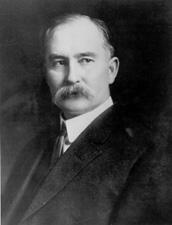
Here you will find contact information for Senator Albert Bacon Fall, including email address, phone number, and mailing address.
| Name | Albert Bacon Fall |
| Position | Senator |
| State | New Mexico |
| Party | Republican |
| Status | Former Representative |
| Term Start | March 27, 1912 |
| Term End | March 4, 1921 |
| Terms Served | 3 |
| Born | November 26, 1861 |
| Gender | Male |
| Bioguide ID | F000011 |
About Senator Albert Bacon Fall
Albert Bacon Fall (November 26, 1861 – November 30, 1944) was a United States senator from New Mexico and Secretary of the Interior under President Warren G. Harding who became infamous for his involvement in the Teapot Dome scandal; he was the only person convicted as a result of the affair. A member of the Republican Party, he served as a Senator from New Mexico in the United States Congress from 1912 to 1921, contributing to the legislative process during three terms in office and representing the interests of his constituents during a significant period in American history. As a captain in the United States Army, he supported a military invasion of Mexico in 1916 as a means of ending Pancho Villa’s raids.
Albert Fall was born in Frankfort, Kentucky, to William R. and Edmonia Taylor Fall. He attended schools as a child in Nashville, Tennessee, but was largely self-educated. By age eleven he was employed in a cotton factory, an experience believed to have caused the respiratory health problems that afflicted him throughout his life. Seeking a more favorable climate because of these illnesses, Fall moved west as a young man, first trying Oklahoma and Texas before eventually settling in Las Cruces in the New Mexico Territory, where he read law and began to build a legal and political career.
Between 1879 and 1881, Fall worked as a teacher while studying law, and he was admitted to the bar in 1891. On May 7, 1883, he married Emma Garland Morgan in Clarksville, Texas; the couple had four children: a son, Jack Morgan Fall, and daughters Alexina Chase, Caroline Everhart, and Jouett Elliott. The family established their principal residence at the Three Rivers Ranch in the Tularosa Basin of New Mexico, and Fall also maintained a home in El Paso, Texas. During the 1918 Spanish influenza pandemic, Jack and Caroline died within a week of each other, a personal tragedy that later observers suggested helped generate sympathy for Fall during his 1918 Senate re-election campaign.
Fall quickly became a prominent figure in territorial politics and the legal community of New Mexico. He served in the New Mexico House of Representatives from 1891 to 1892 and on the Territorial Council from 1892 to 1893. In 1893 he was appointed judge of the third judicial district and later that same year associate justice of the New Mexico Supreme Court. He returned to the Territorial Council from 1896 to 1897 and served as the territory’s attorney general in 1897, again holding that office in 1907. From 1902 to 1904 he once more sat on the Territorial Council, and in 1910 he was a delegate to the New Mexico constitutional convention that framed the basic law under which the territory entered the Union as a state. During the Spanish–American War, Fall served as a captain of an infantry company, experience that reinforced his interest in military affairs and later informed his advocacy of a strong response to cross-border violence during the Mexican Revolution.
Fall’s legal practice and landholdings in southern New Mexico drew him into some of the region’s most notorious controversies. He and his neighbor, rancher Oliver M. Lee, were substantial landowners and political allies, and they became bitter rivals of attorney and reformer Albert Jennings Fountain. Fall’s association with Lee began when he represented Lee in criminal matters. Lee, known for violence and intimidation, employed gunmen William McNew and Jim Gilliland and was repeatedly accused of cattle rustling and brand alteration. Fall’s legal skill helped keep Lee and his associates free from conviction, and when they were arrested, he intervened on their behalf. Fountain openly challenged the Fall–Lee faction in court and politics. On February 1, 1896, Fountain and his eight-year-old son, Henry, disappeared near White Sands while traveling from Fall’s Three Rivers Ranch north of Tularosa to their home in Mesilla. Lee, McNew, and Gilliland were eventually tried for Henry Fountain’s murder in Hillsboro, and Fall successfully defended them. Evidence suggested Lee’s involvement in the disappearance, but the absence of the bodies of Fountain, his son, and their horse, combined with what contemporaries described as a corrupt court system and Fall’s effective advocacy, hampered the prosecution. Charges against McNew were dismissed, and Lee and Gilliland were acquitted. In 1908, Fall also successfully defended Jesse Wayne Brazel, accused of killing former Sheriff Pat Garrett, the lawman famous for having killed Billy the Kid in 1881 and who had pursued suspects in the Fountain case.
With New Mexico’s admission to the Union in 1912, Fall emerged as one of the state’s first United States senators. As a Republican, he was elected in 1912, reportedly after forging a political alliance with Thomas B. Catron, who served alongside him in the Senate, to ensure that both men would be chosen by the state legislature. This arrangement was controversial within the local Republican Party, whose leaders believed Fall had not contributed sufficiently to the drive for statehood and was therefore unworthy of nomination. The selection of Catron and Fall also disappointed many Hispanic leaders and voters who had hoped that at least one of the new senators would be Hispanic. Fall was similarly unpopular with Democrats. Under Senate rules, his initial term ended in March 1913, and his name was again placed before the legislature. After a series of votes, the legislature re-elected him, but Democratic Governor William C. McDonald, acting on the advice of his legal counsel Summers Burkhart, refused to sign the credentialing papers, arguing that the legislative procedure had been illegal and seeking to force a special session and new vote. The maneuver failed; Fall prevailed in the special legislative election and retained his seat. When re-election approached in 1918, he was ambivalent about running but accepted the Republican nomination and defeated Democrat William B. Walton in a bitter contest, despite making no campaign speeches. Contemporary commentators suggested that public sympathy over the recent deaths of his two children in the influenza pandemic contributed to his victory.
During his Senate service from 1912 to 1921, Fall chaired the Committee on Expenditures in the Department of Commerce and Labor and took positions that reflected both progressive and conservative currents of the era. He was noted for his support of the woman suffrage movement, while at the same time espousing pronounced isolationist views, particularly during and after the United States’ entry into World War I. A leading antagonist of Democratic President Woodrow Wilson, Fall opposed Wilson’s internationalist policies and the League of Nations. In October 1919, as Wilson lay incapacitated by a stroke, Fall was among the small group of senators permitted to visit the President in his White House bedroom in an effort to assess his capacity to remain in office. Seeking to express goodwill, Fall told Wilson, “I have been praying for you, Sir,” to which Wilson famously replied, “Which way, Senator?”—a retort that underscored their political rivalry. Fall also became close to several figures who would later be associated with the “Ohio Gang,” the informal circle of political allies around Warren G. Harding, a relationship that helped secure him a cabinet post when Harding became president in 1921. Despite opposition from many local politicians in New Mexico, Fall’s personal popularity among many residents of the state was reported to be high.
In March 1921, President Harding appointed Fall Secretary of the Interior. Soon after taking office, Fall persuaded Harding and Secretary of the Navy Edwin Denby that the Navy’s petroleum reserves at Elk Hills and Buena Vista in California and at Teapot Dome in Wyoming should be transferred from the Navy Department to the Department of the Interior. Once the transfer was accomplished, Fall arranged for his friends, oilmen Harry F. Sinclair of the Mammoth Oil Company and Edward L. Doheny of the Pan-American Petroleum and Transport Company, to receive leases to drill in portions of these naval reserves without competitive bidding. In exchange, Fall accepted large sums of money and other considerations from the oilmen. The arrangement became public in April 1922 when The Wall Street Journal reported the secret leasing of Teapot Dome, triggering a series of congressional investigations. These inquiries eventually revealed that Fall had received approximately $385,000 from Doheny and other benefits from Sinclair, payments that investigators and prosecutors characterized as bribes. On October 24, 1929—coinciding with Black Thursday, the onset of the stock market crash—Fall was found guilty of bribery and conspiracy. He was sentenced to one year in prison, becoming the first former cabinet officer in United States history to be imprisoned for misconduct in office. Doheny was acquitted of the charge of bribing Fall, but his corporation foreclosed on Fall’s Tularosa Basin ranch on the basis of “unpaid loans” that were later understood to be the same funds at issue in the bribery case. Sinclair was fined and served six months in prison for contempt of Congress arising from his conduct during the investigation.
After serving his prison sentence, Fall lived in straitened financial circumstances. He and his wife resided in El Paso, Texas, where his long-standing health problems worsened. He died there on November 30, 1944, after a prolonged illness, and was buried in Evergreen Cemetery in El Paso. Although some later commentators suggested that the American slang expression “fall guy” derived from his surname, the phrase was in use well before the Teapot Dome scandal and is not believed to originate with him.