Representative Albert Taylor Goodwyn
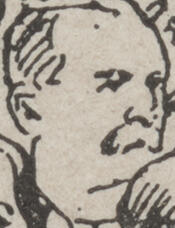
Here you will find contact information for Representative Albert Taylor Goodwyn, including email address, phone number, and mailing address.
| Name | Albert Taylor Goodwyn |
| Position | Representative |
| State | Alabama |
| District | 5 |
| Party | Populist |
| Status | Former Representative |
| Term Start | December 2, 1895 |
| Term End | March 3, 1897 |
| Terms Served | 1 |
| Born | December 17, 1842 |
| Gender | Male |
| Bioguide ID | G000305 |
About Representative Albert Taylor Goodwyn
Albert Taylor Goodwyn (December 17, 1842 – July 1, 1931) was a U.S. Representative from Alabama and a prominent Populist Party figure in the state’s late nineteenth-century politics. Born at Robinson Springs, Elmore County, Alabama, he spent his early years in that community and attended Robinson Springs Academy. He later pursued higher education at South Carolina College at Columbia (now the University of South Carolina), laying the academic foundation for his later public career.
With the outbreak of the Civil War, Goodwyn enlisted in the Confederate Army and served throughout the conflict until June 1865. Over the course of his military service he rose to the rank of captain, commanding a company of sharpshooters. At the close of the war he was mustered out of service and was later decorated with the Southern Cross of Honor, reflecting recognition of his Confederate service. After the war, he resumed his education and graduated from the University of Virginia at Charlottesville in 1867, where he was a member of the St. Anthony Hall fraternity.
Following his graduation, Goodwyn returned to Alabama and engaged in agricultural pursuits near his native Robinson Springs. His work as a planter and farmer kept him closely connected to the economic concerns of rural Alabamians during the Reconstruction and post-Reconstruction eras. This agricultural background would later inform his political alignment with agrarian reform movements and the Populist Party, which drew much of its support from farmers and rural communities.
Goodwyn’s formal public career began with his appointment as state inspector of convicts, a position he held from 1874 to 1880. In this role he was involved in overseeing Alabama’s convict system during a period when the state relied heavily on convict labor. He subsequently entered elective office, serving as a member of the Alabama House of Representatives in 1886 and 1887. Building on this legislative experience, he advanced to the Alabama Senate, where he served from 1892 to 1896, participating in state-level lawmaking during a time of significant political and economic change in the South.
In 1894, Goodwyn, running as a Populist, challenged incumbent Democrat James E. Cobb for the congressional seat from Alabama’s 5th District. The initial official returns declared Cobb re-elected by a vote of 10,651 to 9,903. Goodwyn, however, contested the result before the U.S. House of Representatives. After a successful contest, he was seated in the Fifty-fourth Congress, obtaining the seat and serving as a Representative from Alabama from April 22, 1896, until March 3, 1897. During this single term in the United States Congress, he served as a member of the Populist Party and contributed to the legislative process, representing the interests of his constituents at a time marked by debates over monetary policy, agrarian distress, and political realignment.
Goodwyn sought to extend his national political career but was unsuccessful in his bid for reelection to the Fifty-fifth Congress in 1896. Running as the nominee of both the Populist and Republican parties, he was defeated by Silver Democrat Willis Brewer, receiving 8,742 votes (39.2 percent) to Brewer’s 13,587 votes (60.2 percent). That same year, he also ran as the Populist nominee for governor of Alabama. In the gubernatorial race he was defeated by Democrat Joseph F. Johnston, receiving 89,290 votes (41 percent) to Johnston’s 128,540, although contemporary and later observers have suggested that the official returns may have been affected by electoral fraud. Despite these defeats, his dual candidacies in 1896 underscored his prominence within the Populist movement in Alabama.
After his congressional service and statewide campaigns, Goodwyn returned to private life and resumed his agricultural pursuits near Robinson Springs. He remained active in veterans’ affairs and in the public life of the postwar South. Reflecting his longstanding association with the Confederate veteran community, he was elected commander in chief of the United Confederate Veterans on May 8, 1928, a ceremonial but symbolically important position that recognized his wartime service and his standing among former Confederate soldiers.
Albert Taylor Goodwyn died while on a visit to Birmingham, Alabama, on July 1, 1931. He was interred in Oakwood Cemetery in Montgomery, Alabama. His life spanned from the antebellum era through the Civil War, Reconstruction, the Populist insurgency of the 1890s, and into the early twentieth century, and his career combined military service, agricultural pursuits, state legislative work, and a brief but notable tenure in the United States House of Representatives.