Senator Albert Collins Greene
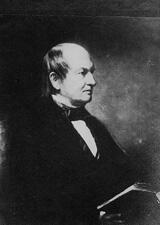
Here you will find contact information for Senator Albert Collins Greene, including email address, phone number, and mailing address.
| Name | Albert Collins Greene |
| Position | Senator |
| State | Rhode Island |
| Party | Whig |
| Status | Former Representative |
| Term Start | December 1, 1845 |
| Term End | March 3, 1851 |
| Terms Served | 1 |
| Born | April 15, 1792 |
| Gender | Male |
| Bioguide ID | G000424 |
About Senator Albert Collins Greene
Albert Collins Greene (April 15, 1792 – January 8, 1863) was an American lawyer and politician from Rhode Island who served as a United States senator and Attorney General of Rhode Island. A member of the Whig Party, he represented Rhode Island in the United States Senate from 1845 to 1851 and played a prominent role in state politics over several decades. His public career unfolded during a significant period in American history, spanning the post-Revolutionary era through the antebellum years.
Greene was born in East Greenwich, Rhode Island, the son of Perry Greene and Elizabeth (Belcher) Greene. He was a member of a distinguished Rhode Island family; his uncle was Nathanael Greene, the major general of the Continental Army in the American Revolutionary War. Greene received his early education at Kent Academy in East Greenwich. He then pursued legal studies, completing formal legal training at the Litchfield Law School in Litchfield, Connecticut, from 1812 to 1813. Admitted to the bar in 1812, he commenced the practice of law in his native East Greenwich, establishing himself as a lawyer while still a young man.
On May 16, 1814, Greene married Catherine Celia Greene, daughter of Rhode Island Governor William Greene, further strengthening his ties to the state’s political leadership. The couple had five children: William Albert Greene, Mary Eliza Greene, Ann Frances Greene, Catharine Celia Greene, and Susan Eliza Greene. Their daughter Catharine later married Richard Ward Greene, who became Chief Justice of the Rhode Island Supreme Court. After the death of his first wife, Greene married Julia Bourne on August 22, 1841. These family connections, combined with his professional standing, helped situate him within Rhode Island’s political and legal elite.
Greene entered public life early, winning election to the Rhode Island House of Representatives in 1815. He served in the House from 1815 to 1825 and rose to a leadership position as speaker of the State House from 1821 to 1825. Concurrently, he was active in the state militia, serving first as a brigadier general and then as a major general of the Fourth Brigade of State Militia from 1816 to 1823, reflecting the continued importance of citizen-soldiers in the early republic. In recognition of his growing prominence, Brown University conferred upon him an honorary Master of Arts degree in 1827.
Greene’s most sustained state-level service came as Attorney General of Rhode Island, a position he held from 1825 to 1843. During these eighteen years, he oversaw the state’s legal affairs and prosecutions, helping to shape Rhode Island’s legal framework in a period marked by economic growth and political change. Following his long tenure as attorney general, he continued his legislative career as a member of the Rhode Island Senate from 1843 to 1844, positioning himself for national office as debates over expansion, slavery, and federal power intensified across the country.
Elected as a Whig candidate to the United States Senate, Greene served one full term from March 4, 1845, to March 3, 1851. As a senator from Rhode Island, he participated in the legislative process during a critical era that included the Mexican–American War and the mounting sectional tensions that would later culminate in the Civil War. In the Senate he represented the interests of his Rhode Island constituents and contributed to the broader national deliberations characteristic of the mid-nineteenth century Congress. He did not seek reelection at the conclusion of his term in 1851.
After leaving the United States Senate, Greene returned to state politics. He was again elected to the Rhode Island Senate in 1851 and 1852, continuing his long record of legislative service. In 1857, he served once more in the Rhode Island House of Representatives, demonstrating his ongoing engagement with public affairs even after his national service. Following these final periods in office, he gradually retired from public life.
Greene spent his later years in Rhode Island, withdrawing from active politics but remaining a figure of note due to his extensive service in both state and national government. He died in Providence, Rhode Island, on January 8, 1863. He was interred in Grace Church Cemetery in Providence, closing a life that had been closely intertwined with the legal, military, and political institutions of his native state.