Senator Albert Wahl Hawkes
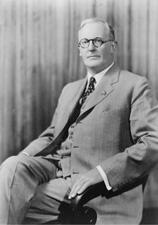
Here you will find contact information for Senator Albert Wahl Hawkes, including email address, phone number, and mailing address.
| Name | Albert Wahl Hawkes |
| Position | Senator |
| State | New Jersey |
| Party | Republican |
| Status | Former Representative |
| Term Start | January 6, 1943 |
| Term End | January 3, 1949 |
| Terms Served | 1 |
| Born | November 20, 1878 |
| Gender | Male |
| Bioguide ID | H000365 |
About Senator Albert Wahl Hawkes
Albert Wahl Hawkes (November 20, 1878 – May 9, 1971) was an American businessman and Republican Party politician who represented New Jersey in the United States Senate from 1943 to 1949. A prominent figure in the conservative wing of the New Jersey Republican Party, he served one term in the Senate during a critical period encompassing the final years of the Second World War and the immediate postwar era. During and after his term in office, he remained an influential voice for conservative economic policies and for a return to what he regarded as traditional free enterprise.
Hawkes was born in Chicago, Illinois, on November 20, 1878. He left school at the age of 15 to work as an office boy for a chemical company, an early experience that introduced him to the chemical industry and industrial business practices. While working, he pursued his education at night, studying law at Chicago College of Law. He graduated in 1900 at the age of 21 and was admitted to the bar that same year. In addition to his legal training, Hawkes studied chemistry at Lewis Institute (now the Illinois Institute of Technology) for two years, combining legal and technical expertise that would shape his subsequent business career.
Hawkes engaged in the chemical business in the early decades of the twentieth century and rose steadily in corporate leadership. During the First World War, from 1917 to 1918, he served in Washington, D.C., as director of the Chemical Alliance, an organization involved in coordinating aspects of the chemical industry for the war effort. By the mid-1920s he had become a senior executive in the industry; in 1926 he was serving as executive vice president of General Chemical Company when he was elected president of Congoleum-Nairn, Inc., a major flooring manufacturer headquartered in Kearny, New Jersey. He assumed the chairmanship of the corporation’s board in 1937, consolidating his position as a leading industrialist. His prominence in business and labor relations led to broader national responsibilities: in 1941 he became president of the United States Chamber of Commerce, and from 1941 to 1942 he served as a member of the Newark Labor Board and the Board to Maintain Industrial Peace in New Jersey, reflecting his role in efforts to manage labor-management relations during a period of mobilization and economic strain.
In 1942 President Franklin D. Roosevelt appointed Hawkes to the National War Labor Board, which was charged with helping to resolve labor disputes that might disrupt wartime production. That same year, Hawkes entered electoral politics. Running as a Republican, he sought a United States Senate seat from New Jersey. He defeated Gill Robb Wilson in the Republican primary and went on to unseat Democratic incumbent William H. Smathers in the general election. Taking office in January 1943, Hawkes served one full term, leaving the Senate in January 1949. His service in Congress thus coincided with the latter part of World War II and the beginning of the Cold War, and he participated in the legislative process at a time of major domestic and international transition, representing the interests of his New Jersey constituents while advancing his broader economic views.
As a senator, Hawkes was known as an ardent conservative, particularly on economic issues. Early in his term, Senate Minority Leader Charles L. McNary reportedly remarked of him, “His economic thinking goes back to B.C.,” a quip that underscored Hawkes’s reputation for staunch opposition to expansive federal economic intervention. He supported the wartime measures taken by the Roosevelt administration as necessary for victory, but he consistently advocated a postwar return to “free enterprise” policies and a reduction in what he saw as excessive government control over the economy. In June 1946 he argued that the federal government, having acted to correct monopoly in capital, should also address what he described as monopoly by labor leaders “who apparently have the power without restraint of law to bring the nation to its knees,” reflecting his concern about the growing power of organized labor in the postwar period.
During Hawkes’s term, Governor Alfred E. Driscoll emerged as the dominant figure in the New Jersey Republican Party and sought to steer the party toward a more moderate course. By early 1948, as Hawkes prepared to seek re-election, Driscoll and other party leaders concluded that his strongly conservative profile and controversial public statements endangered Republican prospects. In January 1948 they called on Hawkes to end his re-election bid and endorsed State Senator David Van Alstyne Jr., a wealthy Englewood stockbroker, as their preferred candidate for the Senate nomination. Critics of Hawkes pointed in particular to a fundraising dinner speech in which he declared, “I have never hated anyone in my life longer than overnight. There is one exception—and he [Franklin D. Roosevelt] lies buried in Hyde Park,” a remark widely regarded as a serious political misstep.
Hawkes responded sharply to the effort to displace him, charging that “this choice has been made by whipping recalcitrant supporters into line and by utilizing other pressures of power politics—in short, by substituting one-man control for the right of the people to choose their own candidate. We are being treated to the emergence of a Republican oligarchy in New Jersey in which the titular head of the party becomes the state, not the representative of the people in the state.” However, the attempt by Driscoll and his allies to unify the party behind a single alternative faltered. On February 13, 1948, State Treasurer Robert C. Hendrickson announced his own candidacy for the Senate seat, bringing with him the endorsements of 17 of New Jersey’s 21 county Republican leaders. Only Bergen County endorsed another candidate, State Labor Commissioner and native son Harry Harper, while Atlantic, Ocean, and Cape May counties remained neutral. Hawkes, by contrast, had no institutional support, though he initially insisted he would remain in the race. On March 5, 1948, he ended his campaign, denouncing “Boss Driscoll” and other party leaders as “New Deal Republicans.” Hendrickson subsequently secured the Republican nomination and won the general election, and Hawkes’s Senate service concluded in January 1949.
After leaving the Senate, Hawkes returned to Congoleum-Nairn, resuming his corporate responsibilities before retiring from active business in 1951. He remained engaged in national Republican politics and in the ideological debates within the party. At the 1952 Republican National Convention, he supported his former Senate colleague, Senator Robert A. Taft of Ohio, for the presidential nomination over General Dwight D. Eisenhower, aligning himself with the party’s conservative, “Old Guard” faction. In subsequent years he continued to speak out in favor of a more conservative Republican position, particularly on economic and labor issues. He also served as a trustee of the Freedoms Foundation at Valley Forge, Pennsylvania, an organization dedicated to promoting American constitutional principles and civic values, where the Hawkes Library was named in his honor.
Hawkes’s family life reflected both professional accomplishment and personal loss. He and his wife had a son, A. Whitfield Hawkes, and a daughter, Morgan. A. Whitfield Hawkes attended Montclair Academy, Phillips Academy Andover, Princeton University, and Columbia University College of Physicians and Surgeons. He became a neurologist in New York City and married Jane White in 1937. During the Second World War he served as a major in the United States Army Medical Corps in the South Pacific, where he died in 1942 from a tick-borne disease. His widow later married journalist and broadcaster Alistair Cooke, who became widely known as the host of “Masterpiece Theatre.” Hawkes’s daughter, Morgan Hawkes Paddelford, lived in Pasadena, California.
In his later years, Hawkes divided his time between New Jersey and California. He died on May 9, 1971, in Palm Desert, California. He was interred in Mount Hebron Cemetery in Montclair, New Jersey, closing a long life that had encompassed a rise from office boy in Chicago’s chemical industry to corporate leadership, national prominence in business and labor affairs, and service in the United States Senate during one of the most consequential eras in modern American history.