Representative Albert Cole Hopkins
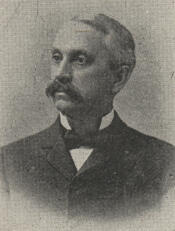
Here you will find contact information for Representative Albert Cole Hopkins, including email address, phone number, and mailing address.
| Name | Albert Cole Hopkins |
| Position | Representative |
| State | Pennsylvania |
| District | 16 |
| Party | Republican |
| Status | Former Representative |
| Term Start | December 7, 1891 |
| Term End | March 3, 1895 |
| Terms Served | 2 |
| Born | September 15, 1837 |
| Gender | Male |
| Bioguide ID | H000769 |
About Representative Albert Cole Hopkins
Albert Cole Hopkins (September 15, 1837 – June 9, 1911) was a Republican member of the U.S. House of Representatives from Pennsylvania who served two terms in Congress from 1891 to 1895. Over the course of his public life he represented the interests of his constituents during a period of significant political and economic change in the United States and contributed to the legislative process as a member of the House of Representatives.
Born on September 15, 1837, Hopkins came of age in the decades preceding the American Civil War, a time marked by sectional tensions and rapid industrial and social transformation. His early life unfolded in an era when Pennsylvania was emerging as a center of manufacturing, transportation, and commerce, developments that would shape the concerns and priorities of many of the state’s political leaders. The formative experiences of his youth in this environment helped prepare him for later service in public office.
As a young man, Hopkins pursued the education and professional grounding necessary for a career in public life. Coming from a state with a strong tradition of civic engagement and legal and commercial development, he would have been exposed to the political debates of the mid-nineteenth century, including questions of federal power, economic policy, and the rights and responsibilities of citizenship. This background informed his eventual alignment with the Republican Party, which, in the post–Civil War era, was closely associated with industrial growth, protective tariffs, and a strong national government.
Before his election to Congress, Hopkins established himself sufficiently in his community and party to earn the confidence of Republican leaders and voters in Pennsylvania. His rise to national office reflected both his personal reputation and the broader strength of the Republican Party in the state during the late nineteenth century. By the time he sought a seat in the U.S. House of Representatives, he was positioned as a credible advocate for the interests of his district within the larger framework of Pennsylvania’s economic and political priorities.
Hopkins was elected as a Republican to the U.S. House of Representatives and served two consecutive terms from 1891 to 1895. His tenure in Congress coincided with the Fifty-second and Fifty-third Congresses, a period marked by debates over tariffs, monetary policy, and the regulation of interstate commerce. Serving during a significant period in American history, he participated in the democratic process at the national level and took part in shaping legislation that affected both Pennsylvania and the country as a whole. As a member of the House, he represented the interests of his constituents, contributing to deliberations on issues that reflected the concerns of a rapidly industrializing society.
During his congressional service, Hopkins worked within the Republican Party’s legislative agenda, which at the time emphasized economic development, support for American industry, and policies intended to foster national growth and stability. His role in the House placed him among the lawmakers responsible for responding to the economic challenges and political realignments of the 1890s, including the effects of financial instability and shifting public attitudes toward federal involvement in economic affairs. Through committee work, floor debates, and constituent advocacy, he fulfilled the responsibilities of a Representative from Pennsylvania in an era of considerable change.
After leaving Congress in 1895, Hopkins returned to private life while remaining identified with the principles and legacy of the Republican Party in Pennsylvania. His post-congressional years unfolded against the backdrop of the Progressive Era, as the nation continued to grapple with the consequences of industrialization, urbanization, and reform movements. Although no longer in federal office, his earlier service in the House of Representatives remained part of the institutional history of Congress and of his state’s political development.
Albert Cole Hopkins died on June 9, 1911. His life spanned from the antebellum period through the Civil War and Reconstruction into the early twentieth century, and his two terms in the U.S. House of Representatives from 1891 to 1895 placed him among those Pennsylvanians who helped shape national policy during a pivotal era in American history.