Representative Albert Gallatin Jenkins
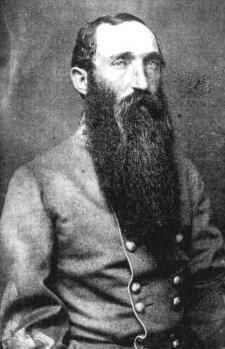
Here you will find contact information for Representative Albert Gallatin Jenkins, including email address, phone number, and mailing address.
| Name | Albert Gallatin Jenkins |
| Position | Representative |
| State | Virginia |
| District | 11 |
| Party | Democratic |
| Status | Former Representative |
| Term Start | December 7, 1857 |
| Term End | March 3, 1861 |
| Terms Served | 2 |
| Born | November 10, 1830 |
| Gender | Male |
| Bioguide ID | J000081 |
About Representative Albert Gallatin Jenkins
Albert Gallatin Jenkins (November 10, 1830 – May 21, 1864) was an American politician, lawyer, and planter who served two terms in the United States Congress from 1857 to 1861 and later sat in the First Confederate Congress. A member of the Democratic Party representing Virginia, he became a senior officer in the Confederate States Army during the American Civil War and played a prominent role in cavalry operations in western Virginia, Kentucky, and Pennsylvania.
Jenkins was born on November 10, 1830, in Cabell County, in what was then Virginia (now West Virginia), to Capt. William Jenkins, a wealthy plantation owner, and his wife Jeanette Grigsby McNutt. Raised on his family’s large slave plantation at Greenbottom along the Ohio River, he received a private education in his youth. At age fifteen he entered Marshall Academy in what is now Huntington, Virginia (later West Virginia). He continued his studies at Jefferson College in Canonsburg, Pennsylvania, from which he graduated in 1848. He then pursued legal training at Harvard Law School, earning his degree in 1850, an education that prepared him for a career in law and politics.
Admitted to the Virginia bar in 1850, Jenkins established a law practice in Charleston, then part of Virginia. His professional and social position was reinforced in 1859 when he inherited part of his father’s extensive slave plantation at Greenbottom, further entrenching him in the slaveholding planter class of western Virginia. He quickly became active in Democratic Party politics and was chosen as a delegate to the Democratic National Convention in Cincinnati in 1856. That same year he was elected as a Democrat to the Thirty-fifth Congress, and in 1858 he won reelection to the Thirty-sixth Congress, serving in the U.S. House of Representatives from March 4, 1857, to early 1861. In Congress he represented Virginia during a period of mounting sectional tension, participating in the legislative process and advocating the interests of his constituents and the pro-slavery Democratic position.
With the secession crisis following the election of Abraham Lincoln and Virginia’s decision to leave the Union, Jenkins resigned his seat in Congress in early 1861 and returned home. He promptly raised a company of mounted partisan rangers in western Virginia, initially organized to protect a Virginia flag raised in the town of Guyandotte. By June 1861 this company was enrolled in the Confederate Army as part of the 8th Virginia Cavalry, with Jenkins commissioned as its colonel. On July 17, 1861, he fought at the Battle of Scary Creek, where he assumed command of the Confederate force after Col. George S. Patton Sr. was wounded and led his men to a tactical victory over Union troops. By the end of 1861 his cavalry operations had become such a persistent problem for Federal authorities in western Virginia that the Unionist governor, Francis H. Pierpont, appealed to President Abraham Lincoln to send a strong commander to suppress Confederate resistance in the region.
In early 1862, while still an active military figure, Jenkins was elected as a delegate to the First Confederate Congress, reflecting his continued political prominence within the Confederacy. On August 1, 1862, he was promoted to brigadier general and returned to full-time field command. Throughout the fall of 1862 his brigade harassed Union forces and supply lines, including attacks on the strategically important Baltimore and Ohio Railroad. In September 1862, his cavalry conducted a far-ranging raid through what is now West Virginia into northern Kentucky and briefly crossed into extreme southern Ohio near Ravenswood, making his command one of the first organized Confederate units to enter a Northern state. By November 1862, a grand jury in Cabell County returned misdemeanor indictments against him, likely related to his raiding activities, though no copies of the indictments survive. In December 1862, at the request of Gen. Robert E. Lee, Jenkins and his men were transferred to the Shenandoah Valley.
After spending the winter of 1862–1863 foraging and refitting, Jenkins led a raid in March 1863 through western Virginia aimed in part at influencing the popular vote on the creation of the new state of West Virginia. During the Gettysburg Campaign in the summer of 1863, his brigade served as the cavalry screen for Lt. Gen. Richard S. Ewell’s Second Corps. Jenkins led his men through the Cumberland Valley into Pennsylvania, seizing the town of Chambersburg and burning nearby railroad facilities and bridges. Under his direction, his brigade abducted hundreds of African Americans in Pennsylvania—most of them free people of color, along with some fugitive slaves—and forcibly sent them south to be sold into slavery, an episode that underscored his role as a staunch defender of slavery. He accompanied Ewell’s column to Carlisle and skirmished with Union militia at the Battle of Sporting Hill near Harrisburg. During the Battle of Gettysburg, Jenkins was wounded on July 2, 1863, and was unable to participate in the remainder of the fighting.
Jenkins did not recover sufficiently to resume active field command until the fall of 1863. In early 1864 he operated in and around Monroe County, in what is now West Virginia, assembling cavalry units for service under Maj. Gen. John C. Breckinridge in the Department of Western Virginia. By early May 1864, Confederate leaders in southwestern Virginia learned that a large Union force under Brig. Gens. George Crook and William W. Averell had departed Charleston and was advancing with the apparent objective of severing the vital Virginia and Tennessee Railroad. At the same time, Maj. Gen. Franz Sigel was moving up the Shenandoah Valley, threatening the left flank of Gen. Robert E. Lee’s main army as it confronted Lt. Gen. Ulysses S. Grant in central Virginia. On May 4, 1864, Breckinridge received orders to move with all available infantry to the Shenandoah Valley to confront Sigel, and he left his headquarters at Dublin, Virginia, the following evening. Before departing, he appointed Jenkins as the new commander of the Department of Western Virginia.
In response to the Union advance, Jenkins took the field to oppose Crook’s force approaching from the Kanawha Valley. On May 9, 1864, he fought at the Battle of Cloyd’s Mountain in Pulaski County, Virginia, where he was severely wounded and captured in a Union victory that resulted in the destruction of the last railroad line linking Tennessee and Virginia. A Union surgeon amputated his arm in an effort to save his life, but Jenkins never recovered from his wounds and died on May 21, 1864, twelve days after the battle. He was initially buried in the New Dublin Presbyterian Cemetery. After the war, his remains were moved to his Greenbottom estate near what became Huntington, West Virginia, and were later reinterred in the Confederate section of Spring Hill Cemetery in Huntington.
In his personal life, Jenkins married Virginia Southard Bowlin of St. Louis, Missouri, on July 15, 1858. The couple had four children: James Bowlin, Alberta Gallatin, Margaret Virginia, and George. His Greenbottom home, once the center of his plantation, later came under the administration of the U.S. Army Corps of Engineers and has been preserved as a historic site. His legacy has been the subject of continuing public debate. In 1937, Marshall University in Huntington constructed Jenkins Hall and named it in his honor. In 2018, the university reviewed the building’s name in light of Jenkins’s history as a slaveholder and ardent defender of slavery, ultimately deciding at that time to retain the name while providing historical context about racism and slavery. On July 7, 2020, however, the Marshall University Board of Governors voted unanimously to remove his name from the education building. A monument to General Jenkins erected in 2005 in Mechanicsburg, Pennsylvania, to commemorate his role in the Gettysburg Campaign was likewise removed in the summer of 2020, reflecting evolving public views of Confederate leaders and their commemoration.