Representative Albert Johnson
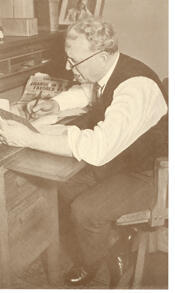
Here you will find contact information for Representative Albert Johnson, including email address, phone number, and mailing address.
| Name | Albert Johnson |
| Position | Representative |
| State | Washington |
| District | 3 |
| Party | Republican |
| Status | Former Representative |
| Term Start | April 7, 1913 |
| Term End | March 3, 1933 |
| Terms Served | 10 |
| Born | March 5, 1869 |
| Gender | Male |
| Bioguide ID | J000114 |
About Representative Albert Johnson
Albert Johnson was born in 1869 and later became a prominent political figure in the state of Washington, ultimately serving as a United States Representative. A member of the Republican Party, he emerged in public life during a period of rapid economic and social change in the United States, as the nation moved from the Gilded Age into the Progressive Era. His early years preceded Washington’s development into a fully settled and politically influential state, and he would eventually help shape its representation at the federal level.
Details of Johnson’s formal education are less extensively documented than his public career, but his later legislative work and long tenure in office indicate a background that prepared him for sustained engagement with complex national issues. Coming of age in the late nineteenth century, he would have been educated in an era when questions of industrialization, immigration, and American expansion were central to public debate. This intellectual and political environment framed the perspectives he brought with him when he entered public service.
Johnson’s political career took shape in Washington State, where he aligned with the Republican Party, then dominant in many western states. By the early twentieth century, he had established himself sufficiently within party and civic circles to seek national office. His rise coincided with a period when Washington was growing in population and economic importance, particularly through resource extraction, agriculture, and trade, and his political work reflected the interests of a rapidly developing region seeking a stronger voice in Congress.
Albert Johnson was elected as a U.S. Representative from Washington and served in the United States Congress from 1913 to 1933, holding his seat for ten consecutive terms. His congressional service began on March 4, 1913, at the outset of the Woodrow Wilson administration, and continued through the administrations of Warren G. Harding, Calvin Coolidge, and Herbert Hoover, ending on March 3, 1933. As a member of the House of Representatives, Johnson participated in the democratic process during a significant period in American history that encompassed World War I, the postwar adjustments of the 1920s, and the onset of the Great Depression. Throughout these two decades, he represented the interests of his Washington constituents, contributing to the legislative process on matters affecting both his state and the nation.
During his ten terms in office, Johnson took part in debates and votes on major national questions of his era, including wartime mobilization, veterans’ issues, economic policy, and evolving federal responsibilities in social and regulatory matters. His work reflected the priorities of a Republican lawmaker from the Pacific Northwest, attentive to regional concerns such as infrastructure, commerce, and the development of the state’s resources, while also engaging with the broader national agenda shaped by war, prosperity, and economic crisis. In this capacity, he helped to give Washington a consistent and influential presence in the House over a twenty‑year span.
Johnson’s congressional career concluded in 1933, at the close of the 72nd Congress, just as Franklin D. Roosevelt and the New Deal coalition were coming to power. Leaving office at that turning point, he had already witnessed and participated in the transition from the Progressive Era through the Roaring Twenties and into the early years of the Great Depression. His departure from Congress marked the end of a long period of continuous service that had made him one of the more enduring Republican voices from his region in the early twentieth century.
Albert Johnson lived for many years after his congressional service, spanning a lifetime from 1869 to 1957. In his later life, he remained part of a generation of former lawmakers whose careers bridged the nineteenth and twentieth centuries and who had seen the United States transformed by industrialization, global conflict, and economic upheaval. He died in 1957, closing a life that had been closely intertwined with the political development of Washington State and the broader evolution of American national politics in the first half of the twentieth century.