Representative Albert Lee Reeves
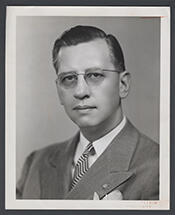
Here you will find contact information for Representative Albert Lee Reeves, including email address, phone number, and mailing address.
| Name | Albert Lee Reeves |
| Position | Representative |
| State | Missouri |
| District | 5 |
| Party | Republican |
| Status | Former Representative |
| Term Start | January 3, 1947 |
| Term End | January 3, 1949 |
| Terms Served | 1 |
| Born | May 31, 1906 |
| Gender | Male |
| Bioguide ID | R000137 |
About Representative Albert Lee Reeves
Albert Lee Reeves Jr. (May 31, 1906 – April 15, 1987) was an American attorney, politician, and businessman who served as a Republican Representative from Missouri in the United States Congress from 1947 to 1949. During his single term in the House of Representatives, he contributed to the legislative process at a significant moment in American history, representing the interests of his Missouri constituents in the early post–World War II period.
Reeves was born on May 31, 1906, in Steelville, Missouri. He moved with his family to Kansas City, Missouri, where he attended public schools. Demonstrating early academic promise, he enrolled at William Jewell College in Liberty, Missouri, and graduated in 1927. Immediately after completing his undergraduate studies, he began an academic career, teaching at Baylor University in Waco, Texas, from 1927 to 1928. He then pursued further studies at Harvard University from 1928 to 1929, broadening his intellectual and professional foundation before turning to the law.
Reeves continued his education at the University of Missouri School of Law in Columbia, from which he graduated in 1931. That same year he was admitted to the bar and commenced the practice of law in Kansas City, Missouri. Over the next decade he established himself as a practicing attorney, building a legal career that would later underpin his work in public service and business. His early professional life was rooted in the legal and commercial life of Kansas City, positioning him within the civic and political networks of the region.
With the onset of World War II, Reeves entered military service. In July 1942 he went on active duty with the United States Army Corps of Engineers as a captain in the Missouri River Division. During the war he served overseas in the India-Burma-China theater, an important logistical and engineering front in support of Allied operations in Asia. He was promoted through the ranks to lieutenant colonel, reflecting increasing responsibility and leadership. Reeves was relieved from active duty on April 23, 1946, and returned to Kansas City to resume the practice of law.
Reeves’s wartime service and legal background helped propel him into elective office. A member of the Republican Party, he was elected to the Eightieth Congress as a Representative from Missouri, serving from January 3, 1947, to January 3, 1949. His term coincided with a pivotal period in American history marked by postwar reconstruction, the beginning of the Cold War, and major domestic policy debates. As a member of the House of Representatives, Albert Lee Reeves Jr. participated in the democratic process and contributed to the legislative work of Congress while representing the interests of his constituents. He sought reelection in 1948 but was unsuccessful, concluding his congressional service after one term.
Following his departure from Congress, Reeves returned to private life and resumed his legal career. He practiced law in both Kansas City, Missouri, and Washington, D.C., maintaining a presence in legal and governmental circles. Expanding his professional activities into the corporate sector, he became senior vice president of Utah Construction & Mining Co. in San Francisco, California, a major firm involved in large-scale construction and resource development. He also served as director and secretary of Marcona Corporation and its affiliates, further extending his influence in business and industry.
In his later years, Reeves resided in Pauma Valley, California. He remained there until his death in La Jolla, California, on April 15, 1987. He was cremated, and his ashes were buried at St. Francis Church in Pauma Valley. His life encompassed service as an attorney, military officer, businessman, and one-term member of the United States House of Representatives from Missouri during a transformative era in the nation’s history.