Representative Albert May Todd
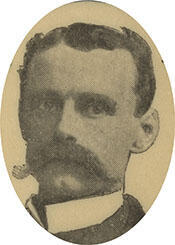
Here you will find contact information for Representative Albert May Todd, including email address, phone number, and mailing address.
| Name | Albert May Todd |
| Position | Representative |
| State | Michigan |
| District | 3 |
| Party | Democratic |
| Status | Former Representative |
| Term Start | March 15, 1897 |
| Term End | March 3, 1899 |
| Terms Served | 1 |
| Born | June 3, 1850 |
| Gender | Male |
| Bioguide ID | T000291 |
About Representative Albert May Todd
Albert May Todd (June 3, 1850 – October 6, 1931), known as “The Peppermint King of Kalamazoo,” was an American chemist, businessman, philanthropist, bibliophile, and politician from Michigan. A member of the Democratic Party in Congress and an advocate of public ownership of utilities, he made his fortune as the founder of the A.M. Todd Company, which became a world leader in the production of peppermint oil and other botanical extracts. He served one term as a Representative from Michigan in the United States Congress from 1897 to 1899, during the Fifty-fifth Congress, contributing to the legislative process at a time of significant political and economic change in the United States.
Todd was born on June 3, 1850, near Nottawa in St. Joseph County, Michigan, the tenth and youngest child of Alfred and Mary Ann Hovey Todd, who had migrated to Michigan from upstate New York. The family lived modestly, farming 45 arable acres of an 80‑acre homestead, and Todd’s early years were shaped by the demands of agricultural life on the frontier. He received his primary education in one-room rural schoolhouses and later attended Sturgis High School in the nearby town of Sturgis, from which he graduated. Showing an early aptitude for science, he went on to study chemistry at Northwestern University in Evanston, Illinois, laying the technical foundation for his later career in essential oils and flavorings.
From an early age, Todd was fascinated by peppermint, which was an important agricultural crop in southern Michigan. Together with his brother Oliver, he began growing mint on a small scale and experimenting with methods to distill it into peppermint oil at a time when the process was still crude and inefficient. After his studies at Northwestern, Todd traveled to Europe to study mint cultivation and distillation techniques, returning with new varieties of mint and improved methods. In 1869, at just 19 years old, he established the A.M. Todd Company in southwestern Michigan to commercially extract flavorings and essential oils from mint. In 1875 he introduced the “Crystal White” brand of peppermint oil, prominently featuring his own name on the label as a guarantee of quality; this trademarked product remained in use into the twenty-first century.
The A.M. Todd Company moved its operations to Kalamazoo in 1891, and under Todd’s leadership the region became the global center of peppermint production. By the early twentieth century, an estimated 90 percent of the world’s peppermint supply was grown within 75 miles of Kalamazoo, most of it refined by Todd’s company, earning him the popular moniker “The Peppermint King of Kalamazoo.” To secure a steady supply of raw material, he established two vast plantations: “Mentha,” in what is now Pine Grove Township, and “Campaignia” near Fennville, the latter then the largest mint plantation in the world. At its height, the company grew and harvested approximately 10,000 acres annually of peppermint, spearmint, and other aromatic herbs. Todd and his firm pioneered scientific methods for testing and grading mint distillates and later led efforts to develop disease-resistant strains of mint following the emergence of verticillium wilt in 1924. Remarkably, Todd returned to formal study late in life and in 1922 earned a master’s degree with honors in chemistry from the University of Michigan. The A.M. Todd Company remained a leading producer of mint oil in Kalamazoo for more than a century, ultimately being sold in 2011 to Swiss flavoring company Wild Flavors GmbH, which in turn was acquired by Archer Daniels Midland in 2014.
Todd’s political views evolved over time and were shaped by the broader realignment of American parties in the late nineteenth century. His father was a supporter of the Republican Party, then often regarded as the more reformist of the two major parties, and Todd cast his first votes as a Republican. As the Republicans increasingly aligned with large commercial interests, high protective tariffs, and the gold standard in the late 1870s and 1880s, Todd grew disillusioned. He shifted his allegiance to the Prohibition Party, which advanced a broad reform agenda beyond temperance, and became one of its leading figures in Michigan. In 1894 he ran unsuccessfully for governor on the Prohibition Party ticket, winning just under 19,000 votes and finishing fourth behind the Republican, Democratic, and People’s Party candidates. Still intent on public office, he sought a seat in Congress in a 1895 special election, attempting a fusion candidacy backed by both the Prohibition and People’s Parties. The Republican-controlled Michigan legislature quickly passed a law to prohibit such fusion, leading to litigation that was ultimately resolved narrowly in Todd’s favor, but he was defeated at the polls in the 1895 race.
In 1896 Todd again sought election to the U.S. House of Representatives from Michigan’s 3rd Congressional District. This time he secured the combined nominations of the Democratic, Prohibition, and People’s Parties and ran on a platform that reflected the agrarian and populist reform currents of the era. In November he narrowly defeated his Republican opponent by 425 votes. Formally elected as a Democrat, with whom he caucused, Todd nonetheless devoted much of his energy to working with members and supporters of the People’s Party and advancing their agenda. During his term in the Fifty-fifth Congress, from 1897 to 1899, he represented his Michigan constituents while advocating public ownership of utilities, regulation of railroads, opposition to monopolies, and a more flexible national money supply through the unlimited coinage of silver. His tenure coincided with intense national debates over currency, corporate power, and economic reform. In 1898, however, his bid for reelection in the predominantly Republican district was narrowly defeated by an energized opposition, ending his congressional service after a single term. He remained active in state politics, serving on the State Central Committee of the Michigan Union Silver Party in 1899 in an effort to build a liberal opposition to Republican dominance.
Beyond elective office, Todd became one of the nation’s most prominent advocates of public ownership of railways and utilities. In May 1912 he embarked on an extended study tour of Europe, visiting 13 countries over more than a year to examine various systems of public ownership and the regulation of monopolies. Seeking to promote these ideas in the United States, he founded the Public Ownership League of America in 1916 and served as its president and later honorary president until his death in 1931. In this capacity he testified before congressional committees and authored influential works on municipal and public ownership, including Federal Operation of Transportation Systems (1918), Municipal Ownership, with a Special Survey of Municipal Gas Plants in America and Europe (1918), and Public Ownership of Railroads (1919). He also contributed an essay, “Relation of Public Ownership to Democracy and Social Justice,” to the Proceedings of the Academy of Political Science in 1920, articulating his belief that public control of essential services was vital to democracy and social welfare.
Todd’s travels in Europe also deepened his passion for collecting rare books and art. Over his lifetime he assembled a library of more than 11,000 volumes, including illuminated manuscripts and clay tablets dating back to the twenty-third century B.C., as well as an art collection of 228 paintings, sculptures, pottery, and porcelain from around the world. A noted philanthropist, he helped establish the Kalamazoo Public Museum (now the Kalamazoo Valley Museum) in 1927 and created the A.M. Todd Rare Book Room at the Upjohn Library of Kalamazoo College. Subsequent bequests by his family restored a significant portion of his original collection there, while other manuscripts and artworks entered the holdings of Western Michigan University and the University of Michigan. Portions of his library were later dispersed through public sales, but his influence as a collector and patron of learning remained evident in these institutional collections.
Albert May Todd died on October 6, 1931, at his home in Kalamazoo, Michigan, at the age of 81. He was survived by his wife, Augusta Allman Todd, and five children, and was interred at Mountain Home Cemetery in Kalamazoo. The Todd family became a notable political family in Michigan: two of his sons, Albert J. Todd and Paul H. Todd, served as mayors of Kalamazoo, and his grandson, Paul H. Todd Jr., served in the U.S. House of Representatives from 1965 to 1966. In addition, his nephew Laurence Todd was for three decades the Washington correspondent for the Soviet news agency TASS, a role that twice brought him under scrutiny in congressional investigations. Through his pioneering work in the mint oil industry, his single but consequential term in Congress, his leadership in the public ownership movement, and his extensive cultural and educational philanthropy, Todd left a lasting imprint on both Michigan and the broader national landscape.