Representative Albert Clinton Vaughn
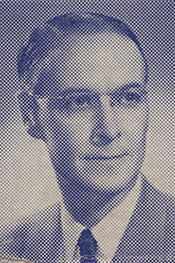
Here you will find contact information for Representative Albert Clinton Vaughn, including email address, phone number, and mailing address.
| Name | Albert Clinton Vaughn |
| Position | Representative |
| State | Pennsylvania |
| District | 8 |
| Party | Republican |
| Status | Former Representative |
| Term Start | January 3, 1951 |
| Term End | January 3, 1953 |
| Terms Served | 1 |
| Born | October 9, 1894 |
| Gender | Male |
| Bioguide ID | V000077 |
About Representative Albert Clinton Vaughn
Albert Clinton Vaughn Sr. (October 9, 1894 – September 1, 1951) was an American politician and businessman who served as a Republican member of the U.S. House of Representatives from Pennsylvania. His brief tenure in Congress, from January 3, 1951, until his death on September 1, 1951, took place during a significant period in American history marked by the early Cold War and the Korean War. As a member of the House of Representatives, he participated in the legislative process and represented the interests of his Pennsylvania constituents during one term in office.
Vaughn was born on October 9, 1894, in West Catasauqua, Lehigh County, Pennsylvania. He was educated in local schools and pursued business studies at Allentown Business College in Allentown, Pennsylvania, from which he graduated in 1911. In addition to his formal business college training, he completed an extension course in business administration, preparing him for a career that combined technical, administrative, and commercial responsibilities.
For approximately twenty-five years, Vaughn was engaged in private industry, where he held positions in engineering, administration, and sales. This experience in the industrial and business sectors reflected the economic character of eastern Pennsylvania in the early twentieth century and provided him with practical knowledge of management and operations. His professional background helped shape his later public service, giving him familiarity with the concerns of both employers and workers in a region heavily influenced by manufacturing and related enterprises.
Vaughn’s entry into public life began at the local level. In 1929, he was elected a school director in Whitehall Township, Pennsylvania, for a six-year term. In this role, he participated in the governance of local education, contributing to decisions affecting schools and the community during the challenging years that included the onset of the Great Depression. His service as a school director marked his first significant elective office and established his reputation as a civic-minded leader in his home area.
During World War II, Vaughn served his country in the United States Navy. He held the rating of yeoman, a position that typically involved clerical, administrative, and record-keeping duties essential to naval operations. His wartime service added a dimension of military experience to his background and further demonstrated his commitment to national service at a time of global conflict.
Following the war, Vaughn moved into federal legislative work as a congressional aide. In 1945, he became an executive assistant to Representative Charles L. Gerlach of Pennsylvania, and in 1947 he served in the same capacity to Representative Franklin H. Lichtenwalter, also of Pennsylvania. In these roles, he gained direct experience with the workings of Congress, including legislative procedures, constituent services, and the administration of a congressional office. This staff work provided him with detailed knowledge of federal policymaking and positioned him for his own candidacy for national office.
Vaughn was elected as a Republican to the Eighty-second Congress from Pennsylvania and took his seat in the U.S. House of Representatives on January 3, 1951. His service in Congress occurred during a significant period in American history, as the nation confronted the challenges of post–World War II reconstruction, the intensification of the Cold War, and the ongoing Korean War. As a member of the House of Representatives, Albert Clinton Vaughn participated in the democratic process and contributed to the legislative work of the chamber while representing the interests of his Pennsylvania constituents. His tenure, however, was cut short; he served only part of his first term before his death.
Albert Clinton Vaughn Sr. died in office on September 1, 1951, in Fullerton, Pennsylvania, while still serving as a member of the Eighty-second Congress. He was interred at Fairview Cemetery in his birthplace of West Catasauqua, Pennsylvania. His death placed him among the members of the United States Congress who died in office in the mid-twentieth century and brought an abrupt end to a career that had spanned local education governance, military service, congressional staff work, and finally service as a U.S. Representative.