Representative Albert Henry Vestal
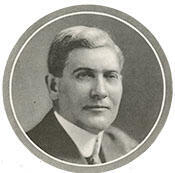
Here you will find contact information for Representative Albert Henry Vestal, including email address, phone number, and mailing address.
| Name | Albert Henry Vestal |
| Position | Representative |
| State | Indiana |
| District | 8 |
| Party | Republican |
| Status | Former Representative |
| Term Start | April 2, 1917 |
| Term End | March 3, 1933 |
| Terms Served | 8 |
| Born | January 18, 1875 |
| Gender | Male |
| Bioguide ID | V000092 |
About Representative Albert Henry Vestal
Albert Henry Vestal (January 18, 1875 – April 1, 1932) was an American lawyer and Republican politician who served eight terms as a United States Representative from Indiana between 1917 and 1932. His long tenure in the House of Representatives spanned a transformative period in American history, during which he participated in the legislative process and represented the interests of his Indiana constituents.
Vestal was born on a farm near Frankton, in Madison County, Indiana, on January 18, 1875. He attended the local common schools and, in his youth, worked in steel mills and factories, gaining early exposure to the industrial life of his region. Seeking further education, he attended the Indiana State Normal School at Terre Haute, now Indiana State University. After his studies there, he taught school for several years, reflecting an early commitment to public service and education.
Pursuing a career in law, Vestal enrolled in the law department of Valparaiso University and graduated in 1896. That same year he was admitted to the bar and commenced the practice of law in Anderson, Indiana. Establishing himself as an attorney in Madison County, he quickly became active in local legal and political affairs, building the professional foundation that would support his later congressional career.
Vestal entered public office as prosecuting attorney of the fiftieth judicial circuit of Indiana, a position to which he was elected and in which he served from 1900 to 1906. His work as a prosecutor enhanced his reputation as a capable lawyer and public servant. He sought to extend his public service to the national level, but his early attempts were unsuccessful: he was an unsuccessful candidate for the Republican nomination for Congress in 1908 and again an unsuccessful candidate for election to the Sixty-fourth Congress in 1914.
Persistence in political life ultimately led to Vestal’s election to Congress. He was elected as a Republican to the Sixty-fifth Congress and to seven succeeding Congresses, serving from March 4, 1917, until his death on April 1, 1932. Over the course of these eight terms, he contributed to the legislative process during a period that encompassed World War I, the postwar era, and the onset of the Great Depression. As a member of the House of Representatives, he participated in the democratic process and worked to represent the interests of his Indiana constituents at the federal level.
During his congressional service, Vestal held several important leadership and committee positions. He served as chairman of the Committee on Coinage, Weights, and Measures during the Sixty-sixth through Sixty-eighth Congresses, overseeing legislation related to the nation’s monetary standards and systems of measurement. He later chaired the Committee on Patents in the Sixty-ninth through Seventy-first Congresses, where he was involved in matters affecting intellectual property and innovation. In addition to his committee chairmanships, Vestal served as majority whip from the Sixty-eighth through the Seventy-first Congresses, playing a key role in party organization and legislative strategy within the House Republican leadership.
Albert Henry Vestal died in office in Washington, D.C., on April 1, 1932, while still serving as a member of Congress. His death placed him among the ranks of United States representatives who died while in service between 1900 and 1949. He was interred in East Maplewood Cemetery in Anderson, Indiana, returning to the community where he had begun his legal and political career.