Representative Albert Smith White
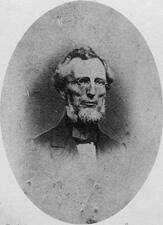
Here you will find contact information for Representative Albert Smith White, including email address, phone number, and mailing address.
| Name | Albert Smith White |
| Position | Representative |
| State | Indiana |
| District | 8 |
| Party | Republican |
| Status | Former Representative |
| Term Start | September 4, 1837 |
| Term End | March 3, 1863 |
| Terms Served | 3 |
| Born | October 24, 1803 |
| Gender | Male |
| Bioguide ID | W000351 |
About Representative Albert Smith White
Albert Smith White (October 24, 1803 – September 4, 1864) was a 19th-century American lawyer, politician, and jurist who served as a United States representative from Indiana, a United States senator from Indiana, and a United States district judge of the United States District Court for the District of Indiana. Over the course of his public career he held office in both houses of Congress and on the federal bench, and he was active in state politics and railroad development in Indiana.
White was born on October 24, 1803, in Blooming Grove, Orange County, New York. He pursued a classical education and graduated from Union College in Schenectady, New York, in 1822. After college he studied law by reading law, completing his legal preparation in 1825. That same year he was admitted to the bar and began practicing law in New York. He remained in private practice there from 1825 to 1829, gaining experience that would underpin his later legal and political career.
In 1829 White moved west to Indiana and established a law practice in Lafayette, where he practiced from 1829 to 1836. He quickly became involved in state legislative affairs, serving as assistant clerk of the Indiana House of Representatives from 1830 to 1831. He was an unsuccessful candidate for the United States House of Representatives from Indiana in 1832, but remained influential in state politics, serving as clerk of the Indiana House of Representatives from 1832 to 1835. By the mid-1830s he was identified with the emerging Whig Party, and in 1836 he served as a Presidential Elector on the Whig ticket, reflecting his growing prominence in Indiana political circles.
White entered national office when he was elected as a Whig from Indiana’s 7th congressional district to the United States House of Representatives for the 25th Congress, serving from March 4, 1837, to March 3, 1839. During this term he participated in the legislative process and represented the interests of his Indiana constituents at a time of economic and political realignment following the Panic of 1837. He did not seek renomination in 1838. Instead, he successfully pursued a seat in the United States Senate, where he served as a Whig senator from Indiana from March 4, 1839, to March 3, 1845. In the Senate he held important committee assignments, serving as chairman of the Committee to Audit and Control the Contingent Expenses during the 27th Congress and as chairman of the Committee on Indian Affairs during the 27th and 28th Congresses. He declined to be a candidate for reelection to the Senate in 1845.
After leaving the Senate, White returned to private life and resumed the practice of law in Stockwell, Indiana, from 1845 to 1861. During this period he also became a significant figure in the development of Indiana’s railroad infrastructure. He served as president of several railroad companies, including the Indianapolis and La Fayette Railroad and the Wabash and Western Railway, roles that placed him at the center of efforts to expand transportation and commerce in the Midwest. His combined experience in law, politics, and business positioned him as an influential figure in the state’s economic growth in the decades before the Civil War.
With the advent of the Civil War era, White returned to national legislative service. He was elected as a Republican from Indiana’s 8th congressional district to the United States House of Representatives for the 37th Congress, serving from March 4, 1861, to March 3, 1863. In this capacity he served as a Representative from Indiana in the United States Congress during a significant period in American history, contributing to the legislative process over this term in office and participating in the democratic governance of the Union during the early years of the conflict. He did not seek renomination in 1862. In 1863 President Abraham Lincoln appointed him as one of three commissioners to adjust the claims of citizens of Minnesota and the Dakota Territory against the United States government for Indian depredations arising from the Sioux uprising and related events in 1862, sometimes referred to as the Sioux Indian Massacre. This commission work drew on his prior Senate experience with Indian affairs.
White’s long legal and political career culminated in his appointment to the federal judiciary. On January 14, 1864, President Lincoln nominated him to a seat on the United States District Court for the District of Indiana, filling the vacancy created by the death of Judge Caleb Blood Smith. The United States Senate confirmed his nomination on January 18, 1864, and he received his commission the same day, formally beginning his service as a United States district judge. His tenure on the bench was brief; he served a little more than seven months before his death.
Albert Smith White died on September 4, 1864, in Indiana, seven and a half months after his appointment to the federal district court. He was interred in Greenbush Cemetery in Lafayette, Indiana. His career spanned service in both houses of Congress, important committee leadership in the Senate, participation in critical Civil War–era legislation in the House, leadership in railroad development, and final service as a United States district judge.