Senator Alexander Campbell
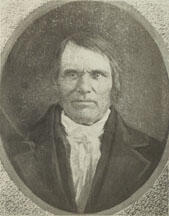
Here you will find contact information for Senator Alexander Campbell, including email address, phone number, and mailing address.
| Name | Alexander Campbell |
| Position | Senator |
| State | Ohio |
| Party | Republican |
| Status | Former Representative |
| Term Start | May 22, 1809 |
| Term End | March 3, 1813 |
| Terms Served | 1 |
| Gender | Male |
| Bioguide ID | C000076 |
About Senator Alexander Campbell
Alexander Campbell (August 4, 1779 – November 5, 1857) was an American politician from Ohio who served as a United States Senator from 1809 to 1813. He was a member of the Republican Party of the era, commonly known as the Democratic-Republican Party, and participated actively in the legislative process during a single term in the Senate. Campbell’s public life unfolded during a formative period in the early republic, as the United States navigated issues of expansion, party development, and mounting tensions that culminated in the War of 1812.
Campbell was born on August 4, 1779, in Frederick County, Virginia. Little is recorded about his early childhood, but like many families of the post-Revolutionary generation, his family moved westward as new territories opened for settlement. He eventually settled in Ohio, a frontier region that had only recently transitioned from the Northwest Territory to statehood in 1803. This westward move placed Campbell among the early cohort of political figures who would shape Ohio’s political institutions and represent its interests at the national level.
Details of Campbell’s formal education are sparse, and no specific college or university affiliation is documented. His subsequent legal and political career, however, indicates that he received sufficient training—likely through reading law in a practitioner’s office, as was customary at the time—to enter public life and participate in legislative affairs. His rise in Ohio politics suggests that he possessed both the literacy and legal familiarity necessary to navigate the emerging political structures of the new state.
Campbell’s political career developed in tandem with Ohio’s early growth. Identified with the Republican (Democratic-Republican) Party, he became part of the dominant political movement that opposed Federalist centralization and generally favored agrarian interests and states’ rights. His standing in Ohio politics led to his selection for national office, where he would represent the state in the United States Senate. In this capacity, he joined a generation of western legislators who brought the concerns of new states and frontier communities into the federal deliberative process.
From March 4, 1809, to March 3, 1813, Alexander Campbell served as a United States Senator from Ohio. During this single term in office, he contributed to the legislative process at a time of significant national strain and transformation. His service coincided with the presidency of James Madison and with rising conflicts over British interference with American shipping and frontier security, issues that helped precipitate the War of 1812. As a member of the Senate, Campbell participated in the democratic process, deliberating on matters of war, trade, and national policy, and he represented the interests of his Ohio constituents in the upper chamber of Congress. His tenure placed him among the early voices articulating the priorities of a rapidly growing western state within the federal system.
After leaving the Senate in 1813, Campbell did not return to the national legislature, and he completed his public life outside the halls of Congress. While the surviving record of his later activities is limited, he remained associated with Ohio and with the broader political community shaped by the Democratic-Republican tradition. He lived through a period that saw the dissolution of his original party, the rise of new political alignments, and the continued expansion of the United States westward beyond the Ohio Valley.
Alexander Campbell died on November 5, 1857, in Ripley, Brown County, Ohio. His career as a United States Senator from 1809 to 1813 situates him among the early federal representatives of Ohio, a state still in its political infancy when he took office. Though only a one-term senator, his service during a critical juncture in American history ensured that Ohio’s interests were present in national debates over war, commerce, and the evolving character of the republic.