Senator Alexander Gilmore Cattell
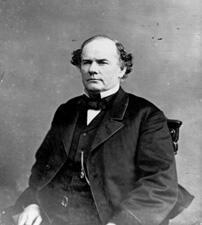
Here you will find contact information for Senator Alexander Gilmore Cattell, including email address, phone number, and mailing address.
| Name | Alexander Gilmore Cattell |
| Position | Senator |
| State | New Jersey |
| Party | Republican |
| Status | Former Representative |
| Term Start | January 1, 1866 |
| Term End | March 3, 1871 |
| Terms Served | 1 |
| Born | February 12, 1816 |
| Gender | Male |
| Bioguide ID | C000254 |
About Senator Alexander Gilmore Cattell
Alexander Gilmore Cattell (February 12, 1816 – April 8, 1894) was a Republican politician, banker, and public official who served as a United States senator from New Jersey from 1865 to 1871, holding his Senate seat from September 19, 1866, to March 3, 1871. His term in the Senate coincided with the critical Reconstruction era following the Civil War, during which he participated in the legislative process and represented the interests of his New Jersey constituents.
Cattell was born in Salem, New Jersey, where he received an academic education before entering mercantile pursuits. He engaged in business in Salem until 1846, establishing himself in commercial affairs at a relatively young age. He came from a large family of five brothers and two sisters; one of his brothers, William Cassady Cattell, later became the sixth president of Lafayette College, indicating the family’s engagement in public and educational life.
Cattell’s political career began in state government. He was elected to the New Jersey General Assembly in 1840 and served as clerk of the Assembly from 1842 to 1844. In 1844 he was a member of the New Jersey constitutional convention, which revised the state’s fundamental law and helped shape its mid-nineteenth-century political structure. In 1846 he moved to Philadelphia, Pennsylvania, where he shifted his focus more fully to business and banking, pursuits that would underpin much of his later public service.
In Philadelphia, Cattell became a prominent figure in municipal affairs and finance. He served on the Philadelphia Common Council from 1848 to 1854, participating in the governance of one of the nation’s leading cities during a period of rapid urban and economic growth. He organized the Corn Exchange Bank, an institution closely tied to the city’s commercial and grain interests, and served as its president from 1858 to 1871. His leadership in banking enhanced his reputation as a capable financial administrator and provided a foundation for his later federal appointments.
Cattell returned to New Jersey in 1863, settling in Merchantville. A committed member of the Republican Party, he was elected to the United States Senate to succeed John P. Stockton, whose seat had been declared vacant. He served one full term, from September 19, 1866, to March 3, 1871, and did not seek reelection. His tenure in Congress occurred during a significant period in American history, as the nation grappled with Reconstruction, the reintegration of the Southern states, and the reshaping of federal authority. While in the Senate, Cattell was chairman of the Joint Committee on the Library during the Forty-first Congress, giving him a role in overseeing the Library of Congress and related cultural and educational matters.
After leaving the Senate, Cattell continued to hold important federal and state posts. President Ulysses S. Grant appointed him a member of the first United States Civil Service Commission, where he served for two years in the early 1870s, participating in the initial efforts to reform and professionalize the federal civil service. He resigned from the commission to accept appointment as United States financial agent in London, a position he held in 1873 and 1874, reflecting continued confidence in his financial expertise and his ability to represent American interests abroad.
In his later years, Cattell remained active in New Jersey public affairs. He served on the New Jersey Board of Tax Assessors from 1884 to 1891 and was president of the board from 1889 to 1891, contributing to the administration of the state’s tax system during a period of industrial and demographic change. In 1891 he was appointed a member of the New Jersey State Board of Education for a three-year term, extending his public service into the field of education and aligning with his family’s broader involvement in academic institutions.
Alexander Gilmore Cattell died in Jamestown, New York, on April 8, 1894. He was interred in Colestown Cemetery in Cherry Hill, New Jersey. His career spanned local, state, and federal office, and combined legislative service with significant roles in banking, civil service reform, and public administration.