Representative Alexander White Gregg
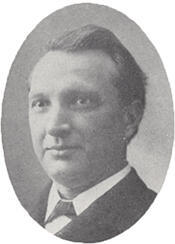
Here you will find contact information for Representative Alexander White Gregg, including email address, phone number, and mailing address.
| Name | Alexander White Gregg |
| Position | Representative |
| State | Texas |
| District | 7 |
| Party | Democratic |
| Status | Former Representative |
| Term Start | November 9, 1903 |
| Term End | March 3, 1919 |
| Terms Served | 8 |
| Born | January 31, 1855 |
| Gender | Male |
| Bioguide ID | G000441 |
About Representative Alexander White Gregg
Alexander White Gregg (January 31, 1855 – April 30, 1919) was an American politician and lawyer who served as a Democratic member of the United States House of Representatives from Texas between 1903 and 1919. Over the course of eight consecutive terms in Congress, he represented his constituents during a significant period in American history, contributing to the legislative process and participating actively in the democratic governance of the nation.
Gregg was born on January 31, 1855, in Centerville, Leon County, Texas, to Susan C. Gregg and James W. Gregg. He attended public schools in his early years. His childhood was marked by the upheaval of the American Civil War; his father was killed during the conflict, and his mother later remarried. Following these events, Gregg was sent to Mississippi to live with an aunt, an arrangement that shaped his upbringing and early education away from his native Texas.
Pursuing higher education, Gregg attended King College (now King University) in Bristol, Tennessee, from which he graduated in 1874. He subsequently studied law at the University of Virginia in Charlottesville, receiving a formal legal education that prepared him for a career at the bar. After completing his legal studies, he returned to Texas, where he was admitted to the Texas bar in 1878. He then commenced the practice of law in Palestine, Anderson County, Texas, establishing himself as a practicing attorney in the region.
Gregg’s public career began at the state level. He was elected to the Texas Senate from District 7 and served from 1886 to 1888. In the state legislature he gained experience in lawmaking and public affairs, building a reputation that would later support his candidacy for national office. After his term in the Texas Senate, he continued his legal practice in Palestine while remaining active in Democratic Party politics and local civic life.
In 1902, Gregg ran as a Democrat for the United States House of Representatives from Texas’s 7th congressional district. He was elected and took his seat in the Fifty-eighth Congress on March 4, 1903. He was subsequently reelected to seven additional terms, serving continuously until March 3, 1919. During these eight terms in office, he represented the interests of his Texas constituents in the House of Representatives and participated in deliberations on major national issues in the early twentieth century. His congressional service spanned the Progressive Era and World War I, a period of significant political, economic, and social change in the United States.
Within the House, Gregg held an important committee leadership role. From 1913 to 1919, he served as chairman of the Committee on War Claims, overseeing the consideration of claims arising from wartime activities and related matters. In this capacity he played a part in shaping federal responses to financial and legal issues connected to past conflicts, reflecting both his legal background and his party’s priorities. A member of the Democratic Party throughout his career, Gregg worked within the majority during the Woodrow Wilson administration, contributing to the legislative agenda of his party during a time of domestic reform and international engagement.
Gregg chose not to run for re-election in 1918, bringing his sixteen-year tenure in Congress to a close at the end of the Sixty-fifth Congress on March 3, 1919. He returned to Palestine, Texas, where he had long maintained his home and law practice. His retirement from public office was brief. He died in Palestine on April 30, 1919, just a month after his final term in Congress ended. He was interred in East Hill Cemetery in Palestine, Texas.
Gregg’s legacy in his home community has been recognized by the placement of a historical marker at his former residence in Palestine. Erected in 1970 by the Texas State Historical Survey Committee, the marker commemorates his service as a lawyer, state senator, and eight-term United States Representative, and stands as a reminder of his role in Texas and national political history.