Senator Alexander Martin
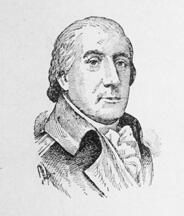
Here you will find contact information for Senator Alexander Martin, including email address, phone number, and mailing address.
| Name | Alexander Martin |
| Position | Senator |
| State | North Carolina |
| Party | Republican |
| Status | Former Representative |
| Term Start | December 2, 1793 |
| Term End | March 3, 1799 |
| Terms Served | 1 |
| Gender | Male |
| Bioguide ID | M000166 |
About Senator Alexander Martin
Alexander Martin (October 17, 1740 – November 2, 1807) was a Founding Father of the United States, a framer of the U.S. Constitution, an infantry officer in the American Revolutionary War, and a leading North Carolina statesman who served as the state’s fourth and seventh governor and later as a United States Senator. He was born in Hunterdon County in the Province of New Jersey in 1740, the son of James Hugh Martin and Jane Hunter, immigrants from Ireland. In private life, Martin was a lawyer, merchant, planter, and slave owner. Over the course of his career he witnessed and participated in several formative episodes in American history, including the Regulator Rebellion, the Revolutionary War, the drafting of the federal Constitution, and the North Carolina ratification debates.
Martin received a rigorous education and became one of the most erudite political figures of his generation. He earned both a bachelor’s degree and a master’s degree from the College of New Jersey (now Princeton University), completing his studies in the 1760s. After graduating, he moved south to Salisbury, North Carolina, where he first worked as a merchant before establishing himself as an attorney. His growing legal practice coincided with rising unrest in the North Carolina backcountry. During the Regulator Rebellion, on September 24, 1770, angry Regulators seized the Hillsboro Court, and when their protest spilled into the streets of Hillsboro, several lawyers, including Martin—who likely was serving as a justice of the peace—were whipped and beaten, an early indication of the volatile political climate in which he would build his career.
By 1774, Martin had advanced to the position of judge of the Salisbury District. With the outbreak of the American Revolutionary War, he entered military service. On September 1, 1775, he was commissioned a lieutenant colonel under Colonel Robert Howe in the North Carolina forces and, on April 10, 1776, was promoted to colonel of the 2nd North Carolina Regiment when Howe became a brigadier general. Initially part of the North Carolina state troops, Martin’s regiment joined General George Washington’s Continental Army on November 28, 1775. His military career, however, was marred by the confusion of battle. At the Battle of Germantown in October 1777, thick fog led Martin and the soldiers under his command to mistake British troops for Continental soldiers. This episode resulted in a court-martial on charges of cowardice. Although he was not convicted, the strain of the proceedings, combined with poor health, prompted him to resign his commission on November 22, 1777.
Martin’s political career accelerated even as he recuperated from military service. In 1778 he was elected to the North Carolina Senate, where he quickly became a central figure in wartime governance. He served as president of the Senate’s Board of War and, in 1781, became acting governor of North Carolina after Governor Thomas Burke was kidnapped by Tory forces. In 1782, the General Assembly formally elected Martin as governor. During this first gubernatorial tenure, he confronted the complex aftermath of the Revolution, particularly the disposition of Tory and Loyalist property. Martin resisted popular demands for wholesale confiscation and redistribution, instead advocating the return of property to all but the most notorious Loyalists, a stance that reflected both his legal training and his concern for stability in the new state. When his term ended, he returned to the General Assembly and again served as speaker of the North Carolina Senate.
In 1787, the General Assembly chose Martin as a delegate to the Federal Constitutional Convention in Philadelphia, where the weaknesses of the Articles of Confederation were under review. He arrived before the convention formally opened and remained until late August 1787, departing a few weeks before its close. Although he played only a modest public role—seconding several minor motions and serving on no committees—his presence placed him among the framers of the U.S. Constitution, even though he did not sign the final document because of his early departure. A supporter of the new federal framework, Martin later sought election to the Hillsborough Constitutional Convention of 1788, where North Carolina would consider ratification. Running in predominantly Anti-Federalist Guilford County, he was defeated by the Anti-Federalist Presbyterian minister David Caldwell, whose congregation secured several seats. Martin thus became the only Federal Convention delegate who sought, but failed to win, election to his state’s ratifying convention.
Despite this setback, Martin’s standing in the state legislature remained strong. In 1789 he was again elected governor of North Carolina and served until 1792, when he reached the term limit. His second administration was notable for major institutional developments. In 1789, under his leadership, the University of North Carolina was established, laying the foundation for public higher education in the state. During this period, the General Assembly also designated a permanent seat of government in Wake County; the new capital was named Raleigh, and Martin presided over the early stages of its development as the political center of North Carolina. His continued influence in state affairs underscored his reputation as a key architect of North Carolina’s post-Revolutionary political order.
Immediately after leaving the governor’s office in 1792, Martin entered national service in the United States Congress. Alexander Martin served as a Senator from North Carolina in the United States Congress from 1793 to 1799. A member of the Republican Party, Alexander Martin contributed to the legislative process during 1 term in office. His service in Congress occurred during a significant period in American history, when the new federal government was still defining its powers and party alignments were in flux. As a member of the Senate, Alexander Martin participated in the democratic process and represented the interests of constituents. His broader legislative record in the 1790s reveals nuanced political views: although he had supported ratification of the Constitution and had long campaigned as a Federalist, he frequently voted against the Federalist leadership in the Senate. During the crisis surrounding the XYZ Affair, his outlook shifted, and he supported all of the Alien and Sedition Acts, aligning himself more closely with Federalist national security policies. In 1799, having lost the backing of North Carolina Federalists, he was not returned to the Senate.
Martin’s personal life and later career reflected both continuity and change. At some point in the early 1780s, he began a long-term relationship with Elizabeth (Lewis) Strong, the widow of Thomas Strong of Virginia, who had settled near her family in Guilford County, North Carolina. Their only known child, Alexander Strong Martin, was born in July 1787. By 1789, census records show Elizabeth Strong and their son residing at Martin’s Danbury estate in Rockingham County. In his will, Martin formally recognized Alexander Strong Martin as his son, his only acknowledged child. In 1797, Martin’s intellectual and public stature was further recognized when he was elected a member of the American Philosophical Society in Philadelphia. After his Senate defeat, he returned to state politics, reentering the North Carolina General Assembly in 1804 and, in 1805, once again becoming speaker of the North Carolina Senate. Alexander Martin died on November 2, 1807, leaving a legacy as a Revolutionary War officer, constitutional framer, multiple-term governor, and U.S. Senator who helped shape both North Carolina and the early United States.