Senator Alexander McDonald
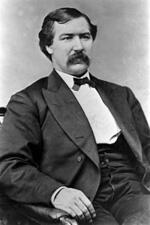
Here you will find contact information for Senator Alexander McDonald, including email address, phone number, and mailing address.
| Name | Alexander McDonald |
| Position | Senator |
| State | Arkansas |
| Party | Republican |
| Status | Former Representative |
| Term Start | January 1, 1868 |
| Term End | March 3, 1871 |
| Terms Served | 1 |
| Born | April 10, 1832 |
| Gender | Male |
| Bioguide ID | M000408 |
About Senator Alexander McDonald
Alexander McDonald, commonly referred to as Alexander McDonald (American politician), was a United States Senator from Arkansas who served one term in the United States Congress from 1867 to 1871. A member of the Republican Party, he held office during the tumultuous Reconstruction era following the Civil War and participated in the legislative process at a time when the nation was redefining its political and social order. He represented the interests of his Arkansas constituents in the Senate and contributed to the broader national debates that shaped the postwar settlement.
Born in 1832, Alexander McDonald came of age in the antebellum period, a time of mounting sectional tensions that would culminate in the Civil War. Although detailed records of his early life and family background are limited, his later prominence in public affairs suggests that he acquired the education, business experience, and political awareness that enabled him to navigate the rapidly changing political landscape of mid-nineteenth-century America. His formative years coincided with the expansion of the United States westward and the intensifying national conflict over slavery and states’ rights, developments that would frame his later public service.
By the time of the Civil War and its aftermath, McDonald had aligned himself with the Republican Party, which emerged as the principal political vehicle for Union victory and Reconstruction. His political career developed in the context of Arkansas’s reintegration into the Union after the Confederacy’s defeat. As a Republican in a former Confederate state, McDonald was part of a new political coalition that included Unionists, newly enfranchised African American citizens, and others who supported the Reconstruction policies of Congress. His rise to the Senate reflected both the shifting balance of power in the South and the federal government’s efforts to reconstruct state governments on loyal and republican principles.
McDonald’s service in Congress, from 1867 to 1871, coincided with a significant period in American history, as the federal government sought to restore the seceded states, protect the rights of formerly enslaved people, and redefine the relationship between the states and the national government. As a United States Senator from Arkansas, he participated in the democratic process at the highest legislative level, engaging in debates and votes on measures central to Reconstruction, economic recovery, and the readjustment of Southern society. During his single term in office, he contributed to the legislative process at a time when Congress was enacting constitutional amendments and civil rights legislation that would have lasting implications for American law and governance.
Within the Senate, McDonald’s role as a Republican from a reconstructed Southern state placed him at the intersection of national policy and regional transformation. He represented Arkansas’s interests as the state rebuilt its institutions, infrastructure, and economy in the wake of war and emancipation. His tenure overlapped with the enforcement of Reconstruction Acts and the implementation of new state constitutions, and he served as one of the principal federal voices for Arkansas during this critical transition. Although the detailed record of his committee assignments and specific legislative initiatives is limited in surviving summaries, his presence in the Senate during these years ensured that Arkansas had representation in the formulation of national policy.
After leaving the Senate in 1871, McDonald’s subsequent life reflected the broader trajectory of many Reconstruction-era Republicans who had served in the South. He remained identified with the political and economic changes that had marked his years in office, even as the region moved toward the end of Reconstruction and the reassertion of Democratic control. His public career, however, is most clearly defined by his service in the United States Senate during this formative period.
Alexander McDonald died in 1903, closing a life that spanned from the pre–Civil War era through Reconstruction and into the dawn of the twentieth century. His career as a U.S. Senator from Arkansas, serving from 1867 to 1871 as a Republican, placed him among the key political figures who helped guide the nation through the immediate aftermath of the Civil War. His participation in the Senate during Reconstruction ensured that Arkansas had a voice in the federal government at a time when the foundations of modern American constitutional and civil rights law were being laid.