Representative Alexander Mitchell Palmer
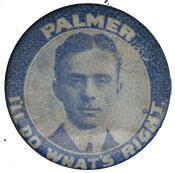
Here you will find contact information for Representative Alexander Mitchell Palmer, including email address, phone number, and mailing address.
| Name | Alexander Mitchell Palmer |
| Position | Representative |
| State | Pennsylvania |
| District | 26 |
| Party | Democratic |
| Status | Former Representative |
| Term Start | March 15, 1909 |
| Term End | March 3, 1915 |
| Terms Served | 3 |
| Born | May 4, 1872 |
| Gender | Male |
| Bioguide ID | P000035 |
About Representative Alexander Mitchell Palmer
Alexander Mitchell Palmer served as a Representative from Pennsylvania in the United States Congress from 1909 to 1915. A member of the Democratic Party, Alexander Mitchell Palmer contributed to the legislative process during 3 terms in office.
Alexander Mitchell Palmer’s service in Congress occurred during a significant period in American history. As a member of the House of Representatives, Alexander Mitchell Palmer participated in the democratic process and represented the interests of constituents.
Alexander Mitchell Palmer (May 4, 1872 – May 11, 1936) was an American attorney and politician who served as the 50th United States attorney general from 1919 to 1921. He is best known for overseeing the Palmer Raids during the Red Scare of 1919–20. He became a member of the Democratic Party and won election to the United States House of Representatives, serving from 1909 to 1915. During World War I, he served as Alien Property Custodian, taking charge of the seizure of enemy property. President Woodrow Wilson appointed Palmer to be Attorney General in 1919. In reaction to domestic unrest, Palmer created the General Intelligence Unit and recruited J. Edgar Hoover to head the new organization. Beginning in November 1919, Palmer launched a series of raids that rounded up and deported numerous suspected radicals. Though the American public initially supported the raids, Palmer’s raids earned backlash from civil rights activists and legal scholars. He received further backlash when a series of attacks on May Day 1920 that he had raised grave concerns about did not materialize. Palmer sought the presidential nomination at the 1920 Democratic National Convention, but he faced strong opposition from labor groups and the nomination went to James M. Cox. He resumed the private practice of law and remained active in Democratic politics until his death in 1936.